

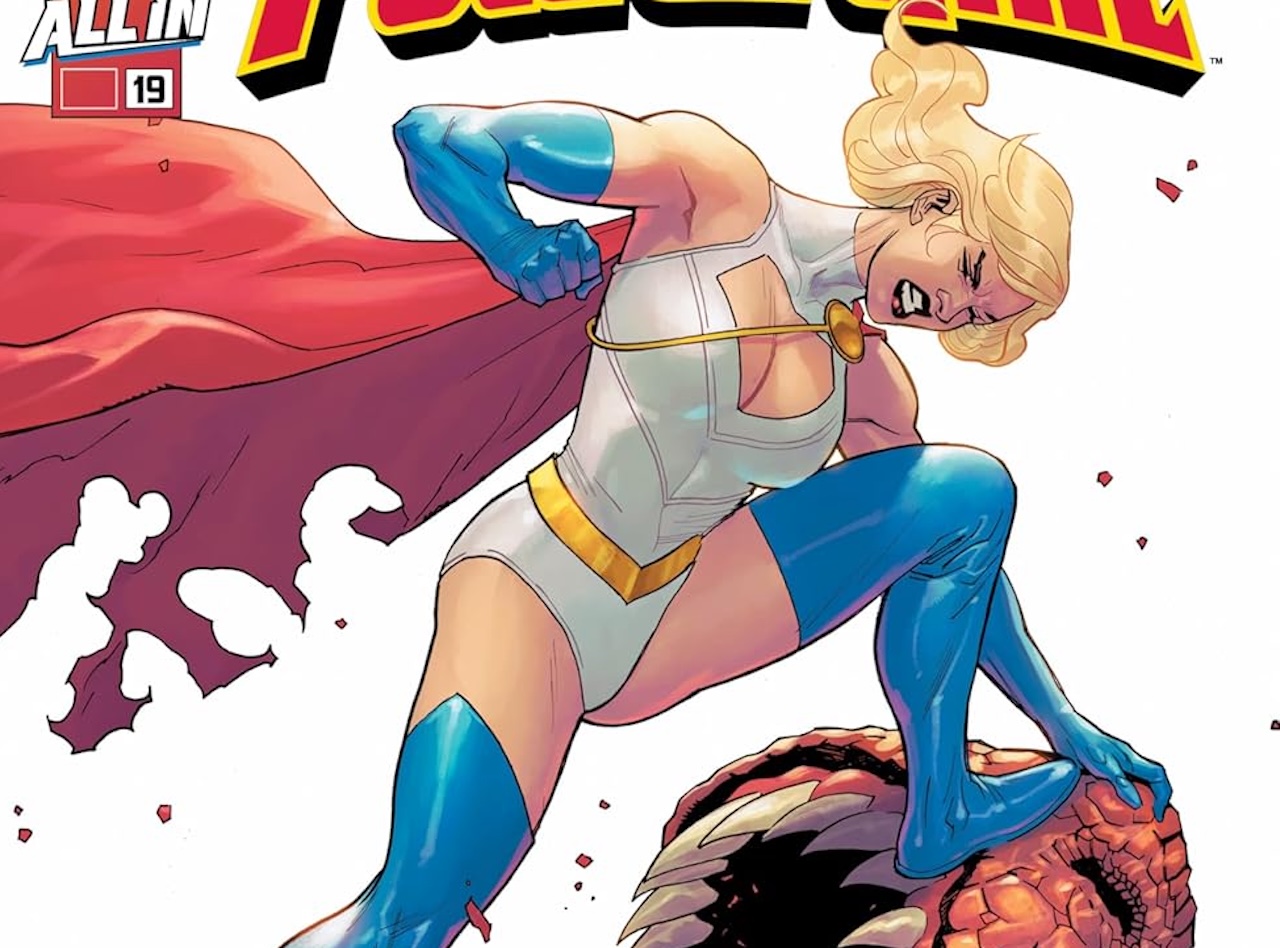

“Your invitation didn’t mention it was a dino-themed party.”
Power Girl’s biggest struggle lately is caused by the title’s conclusion coming just around the corner. The frustration is felt in the script and ultimately this affects most superhero titles. The industry is built around numbers, special covers, and collections. That alone creates a ground where the creative teams of these comics lose the energy or drive to keep the book going. However, theorizing doesn’t justify the actual contents of the comic. Leah Williams comes into Power Girl #19 with awkward writing but fun moments that littered throughout the comic.
The comedy brought by Mariposa continues to be the strongest part of Williams’ script work in this arc, with her many scenes of ignoring the chaos of the situation as she tries to continue on with The Star’s opening party, ignoring as the Void Three fight Power Girl, Omen, and Steel. The villains themselves, much like the previous installment, continue to fail to impress. In this issue they have turned into baseless enemies, feeling more like regular cannon fodder than new and dangerous foes. The way they’re thrown to the side in the end reinforces this as they’re punished by the goddess they worship, making them feel like a mobster’s goon squad rather than dangerous threats.
Additionally, Omen’s characterization has become weaker and weaker as this arc progresses, having gone from the weird but lovable roommate/best friend of Power Girl to randomly having a crush on Axel’s cousin Siegfried. The height of her writing had come from the beginning of the series and the arc with Ejecta which allowed for both a strong evolution for Paige and Lilith and their connection, but also a strong setup for a villain. The Void Three unfortunately didn’t strike that chord.

DC
Another character who has been subjected to faulty writing is Steel (the other one). Natasha’s writing throughout the series has had highs and lows but in this arc especially, Natasha feels like a hothead, her comedic writing comes off as dry, and her role as a member of The Star has no importance to it. As Natasha Irons, she is a strong asset to Steelworks and Supercorp, but this third entity doesn’t add anything to her strengths or intelligence, nor does it add any actual growth to her character outside of Steel (the ’90s one) not liking Power Girl and co.
As for the art, the biggest strength of this arc remains the line work and coloring from David Baldeon and Romulo Fajardo Jr. Their creativity never ceases to run out and that shows with the fast-paced and colorful setting piece of The Star. They both help Williams stick the landing with her script and the comic wouldn’t be the same if not for their cartoon-inspired work. Every character is expressive and is given a lot to do in the comic whether in background or with full focus. I can also appreciate Baldeon’s visible love for manga as a lot of his panel work feels inspired by Shonen.
Despite the team’s best efforts to the contrary, Power Girl #19 is an underwhelming issue. Though much of the typical comedy is there to entertain and the art elevates the atmosphere and action, the lackluster villains simply detract from the story and feel as though they do not have the stature for the grand purpose that is already being cut short. Hopefully what has been setup for the last chunk of the story is able to bring it home.




You must be logged in to post a comment.