

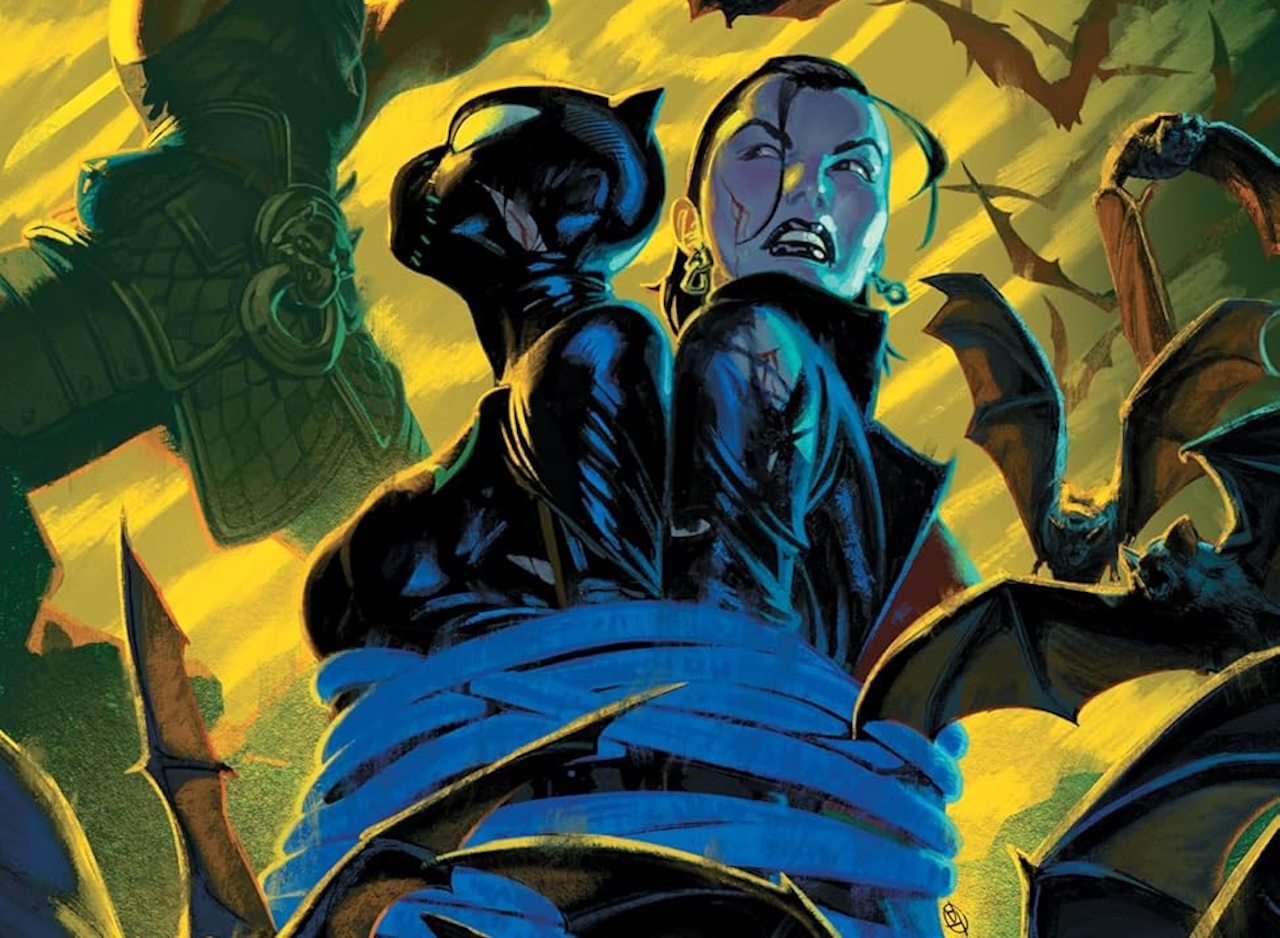

Batgirl #6 by Tate Brombal and Takeshi Miyazawa is thankfully not the end of this series, something I was a bit unsure about. However, this issue still acts as a landmark in that the book is now half a year old! Awesome, love that for my girl. Let’s dig into the contents, shall we?
This does genuinely feel like a culmination of some sort – even if it is technically billed as one, it’s not necessarily a six-issue contained story wrapped up in a neat little bow. It feels more like a thematic conclusion than a storyline one, and I’m cool with that! I like the long-running format more than the “made for the trade” style by a long shot, so I find having a bit of a thematic end and renewal to be a good compromise.
This issue closes the book on Cass’ grappling with her parenthood to a degree. When pushed up against a wall, even after moments before telling Shiva to her face she would still never choose her as a mother, she crumbles. She breaks down and admits she does love her mother, for all it pains her. And frankly, who hasn’t been there with a parent before? Sometimes family hurts you, and you’re left wallowing in that hurt and the confusion you feel from the mixed emotion of it all. It’s complicated, and it’s not easy to deal with. Mind you, most people’s parents aren’t world-class assassins with their own dedicated cults (or are Batman… unless…?), but this is a comic book, so we know where to suspend disbelief. The point is, Brombal is touching on something tangible and real here, something that a lot of people, neurodivergent kids especially (I would know) deal with: the complicated relationship you have with your family and how you influence and appear to each other. That’s a recipe for a truly great Cass Cain story, finding something real and relatable and raw, and exposing that nerve to explore the pain of it in order to move on in some way, shape, or form.

DC
It’s a massive step in growth for Shiva’s character as well, because she chooses the ultimate sacrifice: dying for her child. It’s genuinely moving, and a reminder that anybody can change if you push them to, if you give them that chance and they’re willing to meet you half way. Shiva proves in this story that her love for her daughter isn’t just a smokescreen, it comes off as genuine, and she proved that in probably the only way Cass (and the readers) would probably ever buy: letting herself die for her child. In the real world, toxic relationships between parent and child are complicated, and don’t always end well for a lot of parties. But here, in the heightened world of fiction, we can explore that kind of relationship, that pain, in a different way and context, and maybe give a bit of wish fulfillment for those who need to see somebody reconciling with a dark spot on their past. Or maybe it just reminds of the hurt, that too, is a symptom of art that exposes a raw nerve like this.

DC
The art by Miyakawa is just as stunning as always, and does a great job framing all that I’ve previously said about the story in this review. Cass and Shiva move together like a dance, feeling truly in sync and operating on a level of understanding perhaps for the first time ever in their lives. It’s beautiful to see, and I implore you to just read the issue yourself to experience it yourself.

DC
Batgirl#6 is a heartfelt, raw, and beautifully complex story about bitterness, pain, resentment, forgiveness, and so much more. It’s a love letter to Lady Shiva and Cassandra Cain alike, to their relationship, its ups and downs, and all that they’ve been and failed to be in the decades since Cassandra was confirmed to be her child. This is a story about complex emotions, and thus, may not be reflective of everybody, or appeal to everybody. You might read this and feel hurt, or you might read it and feel moved. Ultimately, that’s up to you to decide. However, there’s one thing I’m sure about:
You should still try and read it.




You must be logged in to post a comment.