


There has been a recent rash of “flashback”-style Marvel books. Books like New Fantastic Four by the late, great Peter David and Warlock: Rebirth by Rons Marz and Lim have featured famous creators stepping back into the worlds they helped create. This seems like a no-brainer: these are absolute legendary creators being allowed to play within the sandbox of their definitive storylines.
But often these stories show signs of slippage. These creators are separated from these pivotal stories by decades of ongoing careers; it doesn’t seem easy to step back through the years and keep hold of important details of characterization and continuity. The stories feel like pale, inessential diversions, unable to capture that original lighting in their narrative bottles.

Marvel
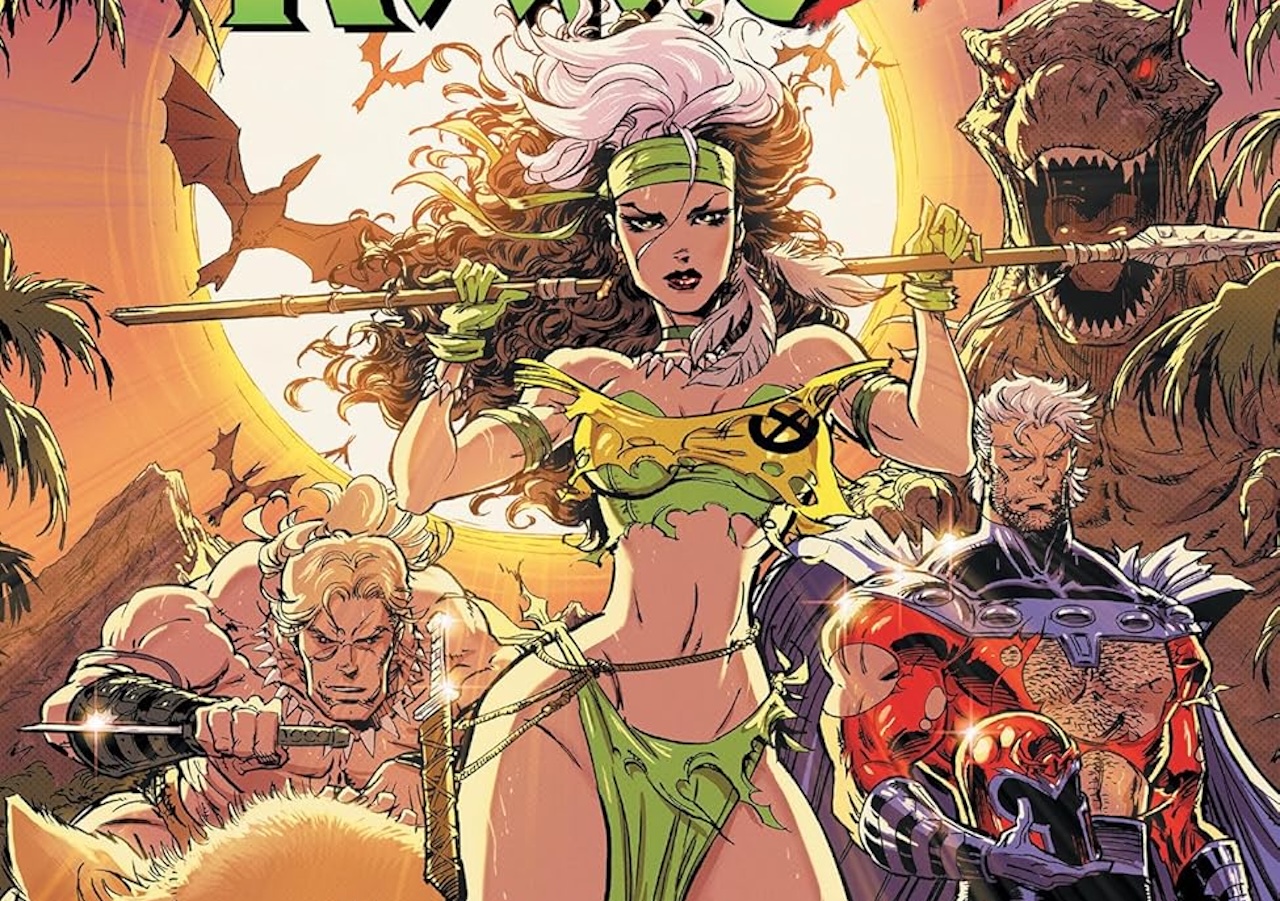
Rogue: The Savage Land, from writer Tim Seeley and artists Zulema Scotto Lavina and Von Randal, feels vibrantly and lovingly a part of the original narrative. Younger creators completely unattached to the original Uncanny X-Men story from which they pull, they appear to come at the project not to rekindle the fire of an era but to play in a beloved sandbox with a fan’s obsessive attention to detail.
The Savage Land attempts what should be an impossible task: set in the tail-end of Chris Claremont’s decade-and-a-half run on the X-Men books, the story takes place in a period famously dense with complicated continuity and convoluted eccentricity. What made Claremont’s run so special is how uniquely imaginative and bonkers it could get; Seeley and company were already playing a dangerous game. How to step into that soupy narrative density and attempt to open space for a new story?

Marvel
But the story, which is meant to slot into the space between issues #269 and #274 of Uncanny X-Men (published way back in 1990), does an incredible job; it could easily be read alongside a read-through of Claremont’s X-Men and not feel out of place (aside from some of Marvel’s ‘sliding timeline’ anachronisms). Essentially self-contained, The Savage Land only hints at the ongoing drama in which it nests. When it does refer to the larger continuity, it does so with confidence: the creators have done all their homework, and they know exactly where their characters reside in their complicated timelines. Even references to characters who aren’t in the book, like Magneto’s heroic daughter Polaris, are referenced with an encyclopedic reverence.
Hell, Ka-Zar’s wife Shanna is treated with more respect than she was in the original; she was ignored completely back in 1990, and while her role in The Savage Land is decidedly small and a little damsel-in-distress-y, the acknowledgment of her existence does a lot of work at rooting the other characters in their place in time.

Marvel
Perhaps most importantly, the book is fun; Rogue is a persistent (if naive) protagonist who rises to face a bizarre adventure. Her co-stars – Ka-Zar, Zabu, and Magneto, plus all the weirdos and mutates of the Savage Land – are rendered with just as much care and affection. The artwork sings, not only succeeding in keeping pace with the iconic Jim Lee artwork of those old issues of Uncanny and feeling all the more valid and realized by the comparison. It’s lush, beautifully colored by Rachelle Rosenberg, and it presents its characters wonderfully.
Rogue: The Savage Land does what other flashback stories rarely do: it perfectly recalls the era from which it pulls inspiration. More, it allows itself to be its own, without undue pandering or nostalgia-baiting. It’s what other flashback stories deserve to be.




You must be logged in to post a comment.