

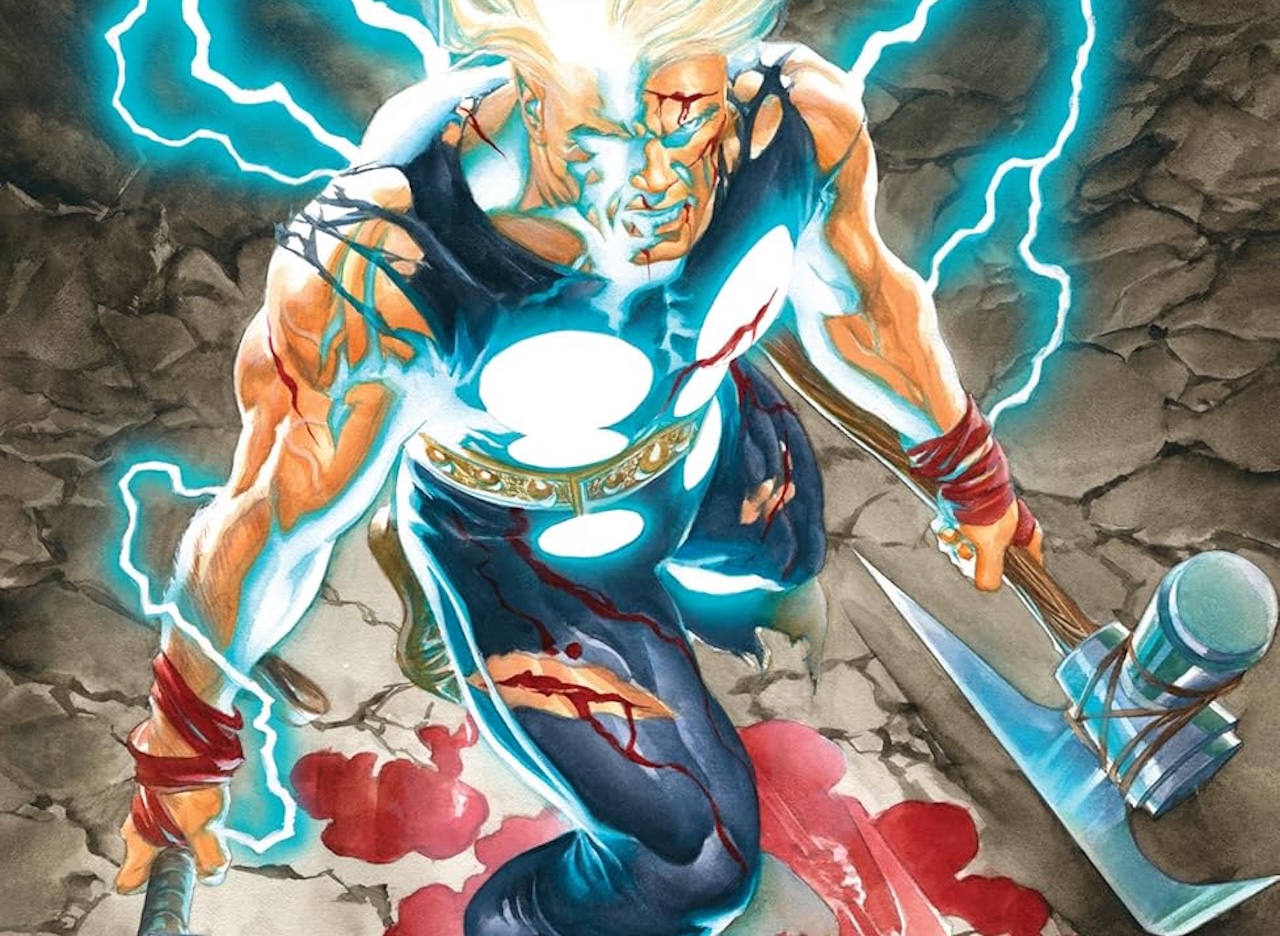

Writer Al Ewing’s run on Immortal Thor has been a scattered, somewhat disorganized book. There is a lot going on, with compelling idea seeds being planted throughout the 25 issues and left to grow in their own time. A small army of villains have been manipulated into narrative strategic spots – Dario Agger, recently murdered, has returned in a clone body and aims to retake his corporation, which Enchantress now presides over. A veritible cornucopia of ancient gods has been teased, ready to inflict doom on our protagonist. Our heroes have been put in dire situations: Thor has been framed for Agger’s murder; Hermod has been erased from existence; Loki has been banished from Thor’s sight. Thor’s son from an alternate reality has been brought forth, played with slightly, and seemingly forgotten.

Marvel
All these lingering plot threads are meant to carry forward into Mortal Thor, of course, which means Immortal Thor’s final collection, The Death of the Immortal Thor, doesn’t have to scramble to bring things to an end. It, thankfully, narrows its focus in a way the title has had trouble doing. It tackles one problem and one problem only.
Manipulated by various forces, Thor must finally confront a villain introduced in the title’s opening issues: The Utgard-Loki, a sort of primal elder god predecessor to Thor’s annoying sibling. Seemingly responsible for book’s most exciting conflict, way back in the first two issues of the series, Utgard-Loki resides in a realm that, for all intents and purposes, doesn’t exist: it resides outside the bounds of reality.

Marvel
Death of the Immortal Thor brings Thor to that never-never land, has him square up against a series of challenges (including an anticlimactic battle with Executioner, who has had a confusing role throughout the series), rescue some lost heroes (Hermod, lost to oblivion, and long-dead Heimdall), and kill a couple of elder gods.
Then, as promised, he dies.
The book brings a few concepts to meaningful conclusion, but swings wide a gate (both narratively and figuratively) for Thor’s next chapter. More importantly, it feels like a substantial adventure on its own, a complete chapter for a series that hasn’t felt to have had any. Focused, driven, Thor feels much more substantially in charge than he has for the preceding twenty issues.
Finally, it fulfills on the promise made in the book’s opening issue: to put Thor through a meaningful trial. It’s a fine conclusion to one title without being the conclusion to the larger, continuing story.




You must be logged in to post a comment.