


The story goes that Francis Ford Coppola obsessed over Megalopolis for decades. And when it did finally hit theaters in September 2024, it was still an achievement from one of the most brilliant directors of our time. (Damn the reviews otherwise.) Now, the story that’s taken years of time and millions of dollars to unfold is branching into a new medium: comics.
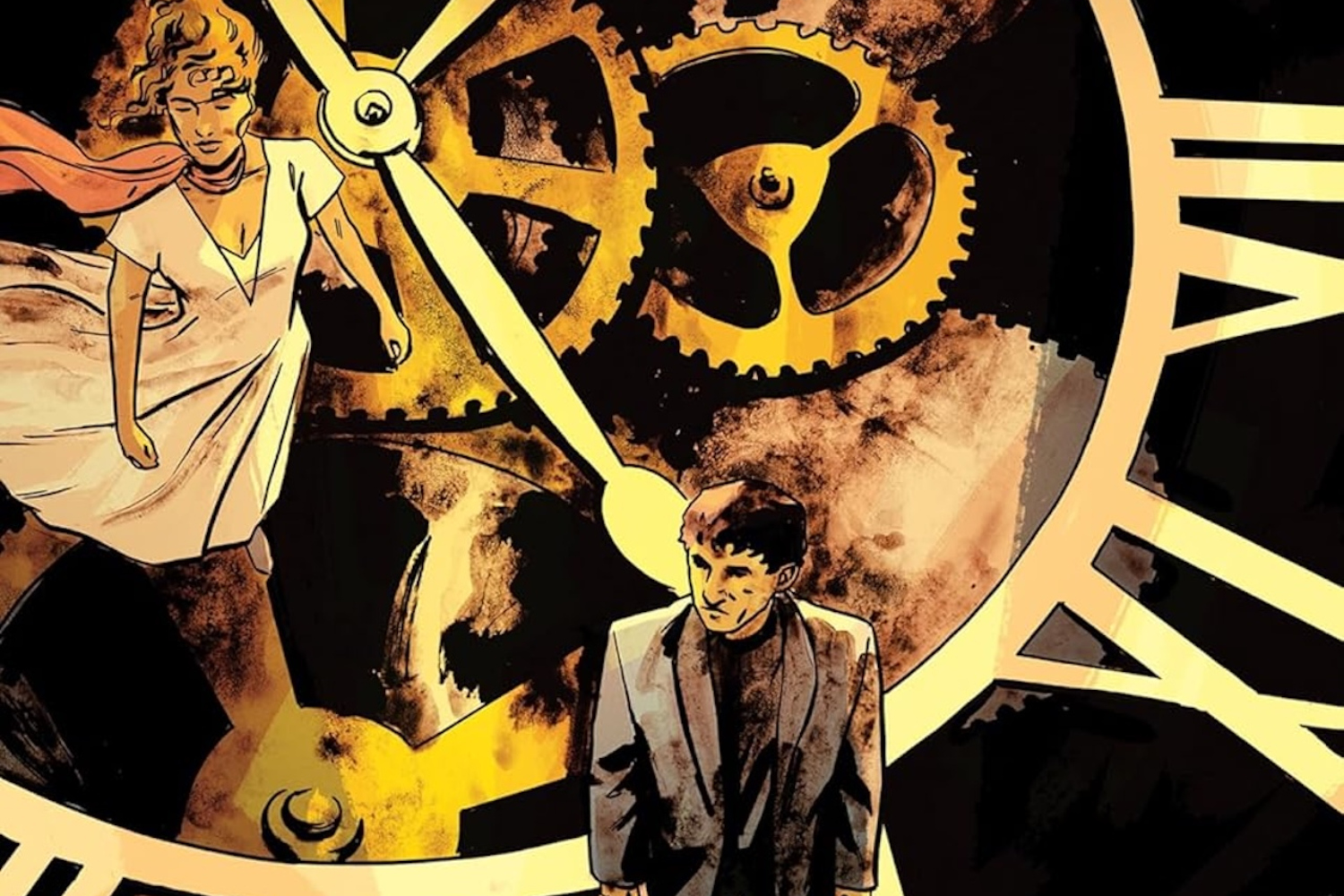
This week (October 7), Abrams ComicArts publishes Megalopolis: An Original Graphic Novel, a 160-page adaptation by writer Chris Ryall and Eisner Award–winning artist Jacob Phillips. Billed by Coppola himself as a “sibling of the film, rather than just an echo,” the book presents an immersive reimagining of the director’s most ambitious story of utopia and corruption while also embracing the unique possibilities of the comics form.
For Ryall, the starting point was Coppola’s own screenplay, which already contained material that didn’t make it into the final cut of the movie. From there, he approached the adaptation with a mix of reverence and practicality.
“It was more a matter of making the scenes and the overall story work as well as possible in graphic novel form,” Ryall said. That meant tweaking dialogue, adding transitions, and rethinking sequences that relied on sound and movement to function on screen. As Ryall put it, “I never strayed too far from the source material, though. I felt presumptuous enough to just be adding and subtracting dialogue and story elements written by Francis.”

Courtesy of Abrams.
It’s also not Ryall’s first time navigating the work of legendary creators. He’s previously adapted stories by Stephen King and Clive Barker, and he found Coppola to be equally supportive of bold changes.
“All three were very encouraging in terms of telling me to change whatever I thought needed changing,” Ryall said. “It’s very freeing, but it’s also with that sort of freedom that you have to be even more careful not to make the wrong choices.”
The themes of Megalopolis — idealism versus corruption, the possibility of a utopian future, etc. — are as timely as they are timeless. Coppola originally built the story with the Roman Empire in mind, but Ryall noted how easily its ideas map onto contemporary politics.
“Certainly I saw the connection to modern times through its exploration of one possible end of the American empire,” Ryall said.
Still, Coppola’s hopeful outlook remained central, a driving force for this singular world.
“His thinking all along has been to present a world that might work more effectively and more in unison for the good of mankind,” Ryall said. “So I tried to emulate that positivity in the book as well.”
Bringing the ideological clash between architect Cesar Catilina and Mayor Franklyn Cicero to life visually fell largely to Jacob Phillips, who approached the futuristic New Rome without relying on footage from the film. Instead, he worked from Ryall’s script and a handful of concept sketches.


“There’s very much a hard line drawn between the recognizable parts of a modern city like New Rome and the more organically developed city that Cesar helps bring about,” Ryall said. “It was fun to see Jacob change from precision to more loose and organic, depending on the setting.”
At times, Ryall and Phillips leaned into the comic form to reinterpret iconic moments. One key sequence involves Cesar literally stopping time, a scene that plays simply on film but proves more complex in comics, where every panel is already frozen.
“How then to as effectively communicate time stopping,” Ryall said. “That was definitely one area where Jacob and I had to figure out how to use the comic form to show that scene just as effectively.”
As such, Ryall is effusive in his praise for Phillips’ contribution.
“The moment, for me, is the entire book,” Ryall said. “He managed to nail so many scenes very close to how they eventually appeared in the finished cut of the film. He creates realistic settings and body language and facial expressions without ever being phot-reference-y, and his lush grayscaling and color work just fit the mood so well.”
As a bonus, Phillips slipped cameos of himself, Ryall, and Coppola into the story — a playful Easter egg for sharp-eyed readers.
As for Ryall himself, he jokes that Coppola never cast him as an extra during his various on-set visits. Still, if given the choice, he admits he’d want to step into Cesar’s shoes — at least for the power to stop time.
“To actually get done in a day what I would like to get done would be really helpful,” Ryall said.
With Coppola’s film still sparking both debate and admiration, Megalopolis: An Original Graphic Novel stands as both companion and reinvention. It carries forward the filmmaker’s monumental vision while allowing Ryall and Phillips to showcase what comics can uniquely achieve: a different, yet equally compelling way of dreaming about what kind of future humanity might actually build.



You must be logged in to post a comment.