

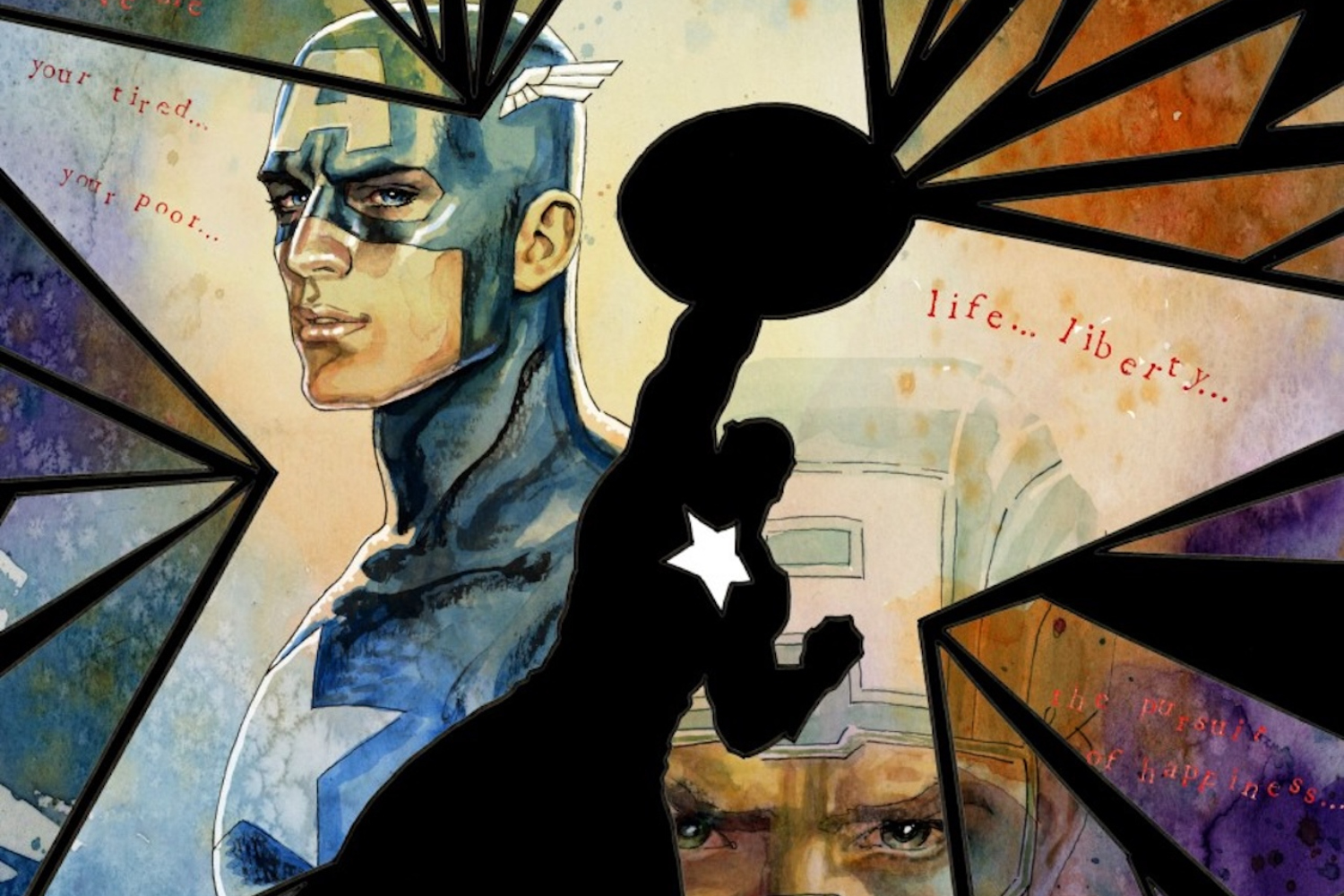

With Captain America #4, writer Chip Zdarsky and artist Valerio Schiti have reached the boiling point of a story that has, from the start, been about fracture — among nations, ideals, and people.
The issue, solicited as “A Nation Doomed,” pits Steve Rogers against Doctor Doom in a battle for Latveria’s soul. Yet underneath the energy blasts and betrayals, lies something quieter and more resonant: What does America (and its very heroes) mean in the age of exhaustion?
Zdarsky was kind enough to dig into that question, and what he’s co-building across Captain American. He says the structure of the story, the energy at its very core, was always designed to create this massive clash.
“So much of the build-up revolved around Steve learning about the modern world, learning about Doom, and contrasting that to David [Colton]’s past as he learns about war and his place in the world,” Zdarsky said. “Telling those stories simultaneously was the challenge, with both characters making big, hard decisions concerning freedom and democracy in issue four.”
Those dual narratives — Rogers, the man out of time, and Colton, the soldier haunted by modern war — define the series’ emotional backbone. Zdarsky credits his collaborators, both Schiti alongside colorist Frank Martin, for grounding both the spectacle and the humanity.
“Valerio’s the best,” Zdarsky said. “He’s been going non-stop on big events, so I wanted to see him focus on the emotion of characters. Seeing him tackle Dave’s past has been like watching a masterclass in visual pacing, and Frank knows exactly what color palette to use to heighten the feelings.”

Courtesy of Marvel.
Old Ideals, New Wars
In Captain America #3, Zdarsky and company began pushing Rogers into uncertain territory — a man perpetually defined by moral clarity finds himself dropped into a world built on blurred lines.
That discomfort, Zdarsky said, is central to the run’s themes.
“That’s the root of Cap as a character, especially in modern times,” Zdarsky said. “Understanding what’s right and standing up for it no matter what any institution says. He had less of that in his WWII days since the mission was clear-cut. Now he’s in observation mode — the stranger in a strange land.”
Meanwhile, Colton reflects the other side of the coin, a war-torn soldier wrestling with trauma rather than triumph. Zdarsky took special care in portraying Colton’s PTSD and disillusionment.
“It’s definitely been the biggest challenge, balancing the super-fiction with real-world history,” Zdarsky said. “When I started on this job, I did a lot of reading on American conflicts and regime changes. There was no shortage of heartbreaking stories to draw from for David, sadly.”
Where Rogers represents an idealized past, Colton embodies the painful present, the soldier left behind after the propaganda fades. Zdarsky admits that contrast was intentional.
“WWII had that clear, moral drive for America, but there was still trauma and confusion. You can’t get around that,” Zdarsky said. “But it’s heightened in modern conflicts, especially when the cultures involved are so different from each other. America’s changed, sure. But not as much as people think.”

Courtesy of Marvel.
The Weight of Duality
Across the run, Zdarsky and Schiti balance moral philosophy and big-budget spectacle, meditations on democracy interwoven with supervillain battles and sci-fi intrigue. Zdarsky insists that the secret is keeping Captain America himself at the story’s emotional center.
“It’s easy when Captain America is at its heart,” Zdarsky said. “No matter how complicated things get, Steve Rogers holds down the center. He’s human and moral, and when you lose your way in the story, you just have to bring it back to him.”
With #4’s showdown between Cap and Doom, Zdarsky sees the story as more than just a geopolitical chess match.
“Captain America in the modern age represents what America should be, what it should strive for,” Zdarsky said. It’s a story about holding onto ideals when the institutions that built them have eroded — a mirror of America’s current and painful identity crisis.
.

Courtesy of Marvel
Looking Ahead
As for where the series goes next, Zdarsky teases that Doom still maintains a characteristically large presence.
“The next arc is definitely about Doom’s shadow, set in the current day and the fallout from One World Under Doom,” Zdarsky said. “There’s some déjà vu happening and Steve has to make some hard decisions against some big enemies. After that, he really gets thrown out of his comfort zone. By the end of the second arc, we set the stage for the future of the Marvel Universe. Everything spins out of this.”
Zdarsky’s Captain America isn’t just a fight between heroes and villains; it’s a reckoning between history and the present, between who America was and what it might still become. And as Rogers and Colton both struggle to define their own versions of heroism, Zdarsky’s message is clear: Sometimes the hardest battles are the ones fought within.
Captain America #4 releases this week (October 15) wherever comic books are sold.



You must be logged in to post a comment.