

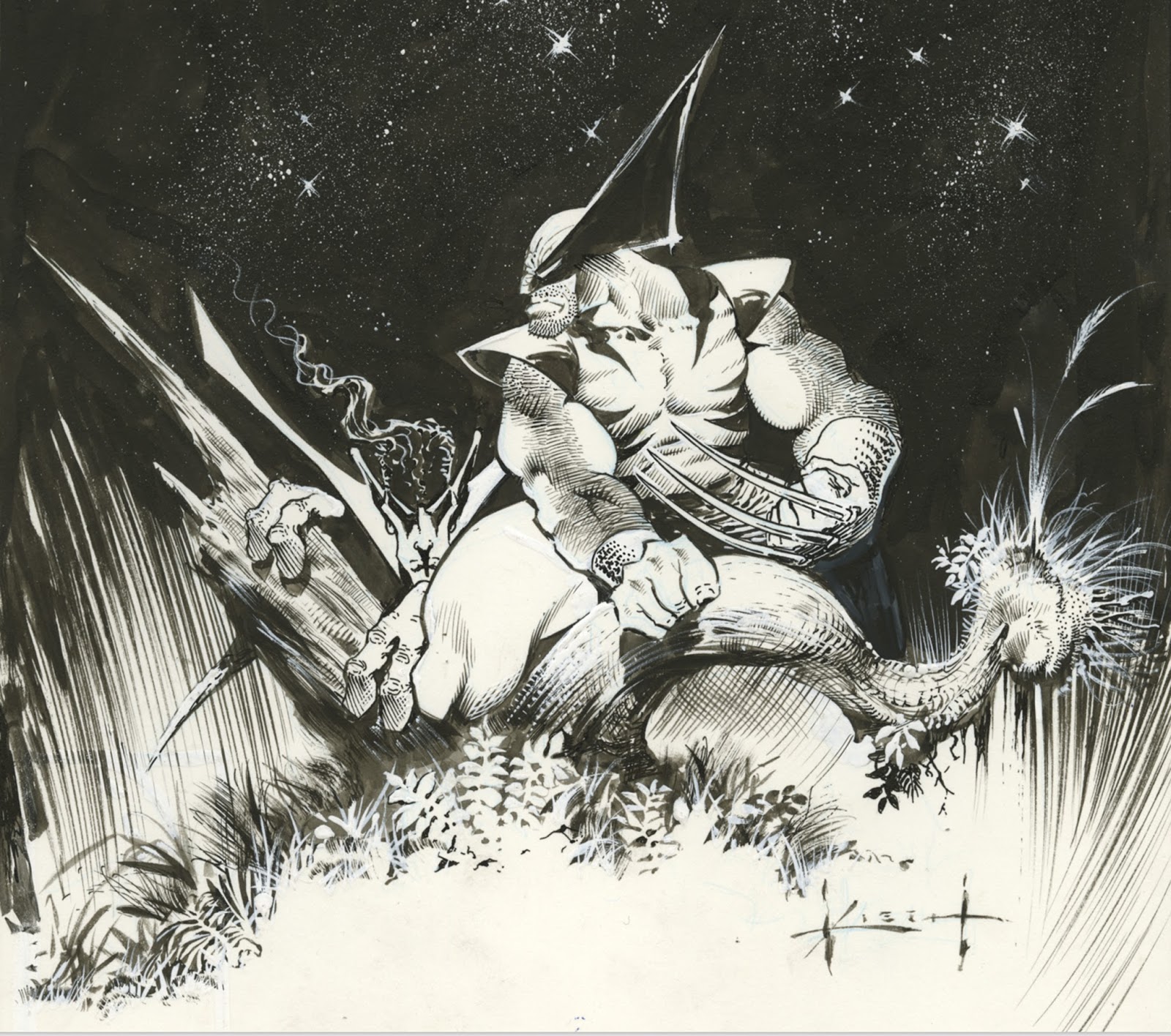

Sam Kieth died on March 15 (he was 63), and his passing hit me like a train. It’s impossible to point to the exact moment I discovered his work, as it feels embedded in my earliest memories of reading comics in the early 90s. He was the perfect artist to introduce a whole generation to the eccentric yet purposeful comic medium. His work was like nothing else on the shelf: strange, almost uncomfortable quirks that captured the energy of artists like Frank Frazetta and R. Crumb more than the clean, controlled superhero books I was used to. Somehow, he made that sensibility fit inside Marvel’s universe without sanding off its edges.
I likely first encountered him in Marvel Comics Presents as it crept toward issue #100. I didn’t have a comic shop as a child. Like many kids growing up in rural towns, it was just a gas station rack a few miles from home that kept me connected to the comic world, and what I read was often dictated by chance. Certain popular issues were often picked up before I could get to the spinner rack on the random day comics were delivered. But even in that setting, Kieth’s work stood apart. In his Wolverine issues of MCP, it was like no other title on the shelf. When I was lucky enough to grab issue #100, it was Doctor Doom who took center stage to face off against Nightmare; Wolverine and the Fantastic Four became bit players. The issue is an incredible testament to Kieth’s visual storytelling, and this work became something of a personal artifact for me.
I wore that comic down to the point where I was taping and restapling the cover back on, trying to hold onto something that felt unlike anything else I owned.


Keith would later be grouped in with the Image wave, but he never quite fit the mold. His art wasn’t just spectacle layered over thin storytelling. There was intention in how he staged a page, how characters occupied space, and how emotion bent the visuals.
It’s part of why his early work on Sandman remains so striking. Long before the series became a cultural landmark, Kieth helped define its visual language. This was a series that was meant to be moody, surreal, and just disorienting enough to signal that this wasn’t a typical comic. For me, it’s still the most visually compelling the series has ever looked.

The Maxx is the work that’s stayed with me the longest. It seemed to be everywhere at the time (the MTV animated version being his furthest cultural reach). I am sure its appearance in Wizard Magazine more than once pushed general superhero readers like me to pick it up, but the comic was impossible to ignore because of how singular it was. Even now, people can recall the imagery: the suit, the Outback, the strange elasticity of its world. What’s easier to forget, unless you lived with it, is how much weight the story carried. It dealt with trauma and identity in ways that didn’t announce themselves as important but lingered long after you closed the issue. It was only later in my life that I saw that the story was more than a visual feast.
Reading Sam’s blog years ago, he talked about destroying some of his own artwork because he didn’t think it was good enough. It was deeply depressing to read, especially knowing how fully he had developed his style and how much range he had as an artist. After reading his post, I found myself going back to his Aliens: Earth War work on my shelf, just to remind myself of how inventive and striking it really was. I wish I had reached out to tell him how much his work meant to me.
Sam Kieth might have downplayed his own significance, but for those of us who found him early, his impact was undeniable. Pick up his books and cherish the messy, emotional, and visually unpredictable art, as he grasped the medium differently than his compatriots. I’m grateful I found his work when I did, even if I didn’t fully understand it at the time.

RIP, legend.



You must be logged in to post a comment.