

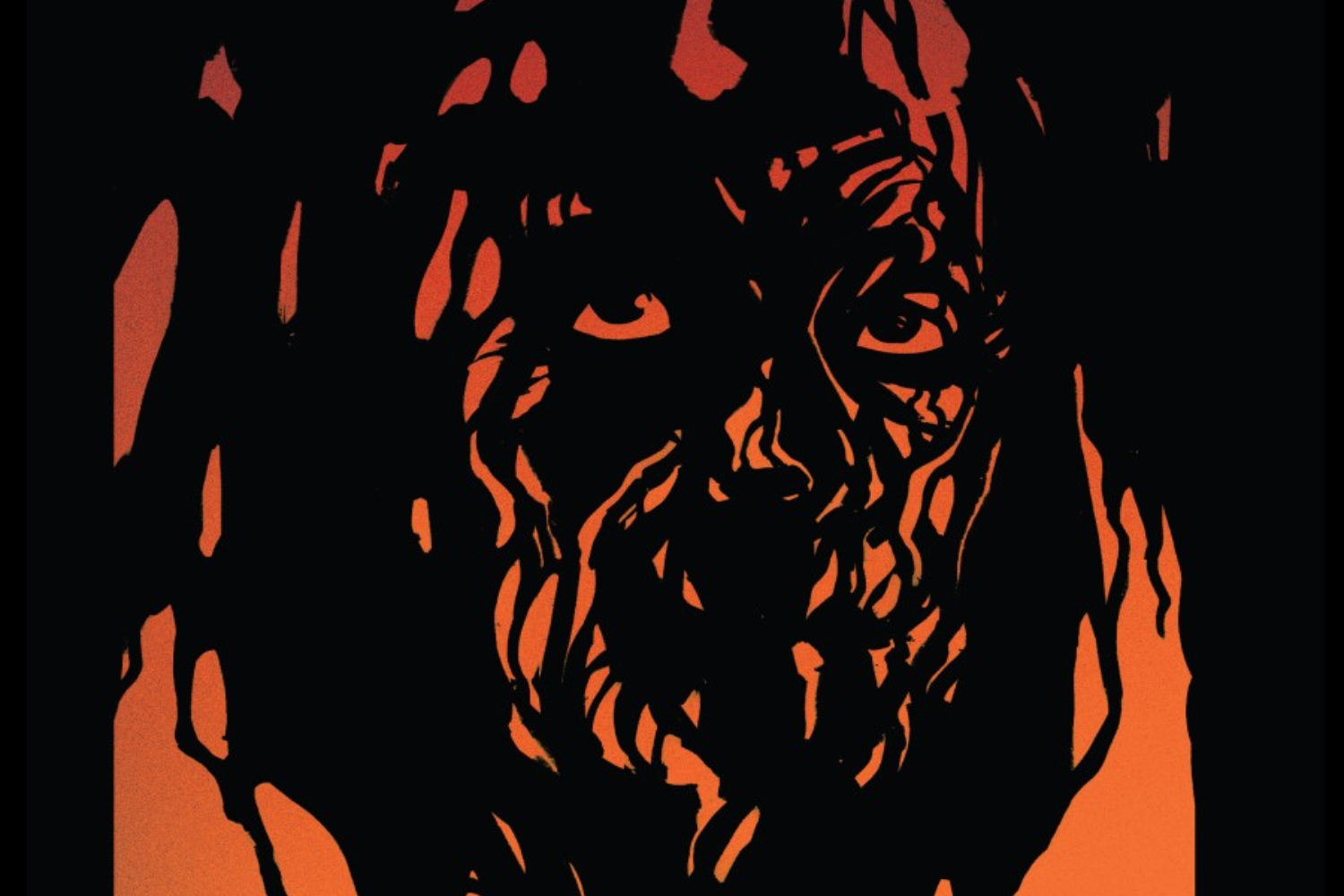

There’s something deeply unsettling at the heart of Of the Earth, the upcoming Image Comics miniseries from Chris Condon, Andrew Ehrich, and Charlie Adlard. On the surface, it’s pitched as a neo-noir eco-horror story in the vein of Blood Simple and The Thing. Beneath that, however, and it’s something more intimate and unnerving, a story about environmental neglect, personal loss, and the creeping realization that the world might be pushing back.
Set to launch May 20 (with a final order cutoff of Monday, April 27), the series follows Tabitha “Tabby” Black as she returns home to Texas, only to find that home has changed in ways she can’t fully understand. There’s oil where it shouldn’t be, a grandmother who isn’t quite herself, and something else lurking beneath the surface.

Courtesy of Image Comics.
A horror Story Rooted in The Real
For Condon, the story begins with a simple but emotionally loaded moment. In fact, the roadside coyote scene that opens the first issue was the first thing he wrote, long before the full shape of the series came into focus.
“It’s such an emotional moment… I always find it very sad when I’m driving around and there’s an animal that has been hit by traffic,” Condon said, adding that it led him to think about “what happens when they come up against a world that wants to just move on by.”
That moment became the thematic backbone of the series. As Condon put it, the story is ultimately about “humanity taking advantage of the Earth,” and the uneasy idea that “maybe the Earth doesn’t give a shit about humans.” The horror is not just that creature born from oil, but the systems and attitudes that made its existence possible.

Courtesy of Image Comics.
Building Fear by Holding Back
When Adlard first came onto the project, it was that opening sequence that pulled him in right away. Despite being closely associated with horror through his work on The Walking Dead, Adlard tends to avoid the genre unless something stands out. Here, it was the sense of restraint as a throughline.
“I prefer my gore inverted… or the monster off screen,” Adlard said, adding that “your mind can conjure up images that are a lot worse than anything you can present.”
Fear of the known is a big part of Of the Earth and how the creators handle the wildcatter. You’re not getting the full picture right away. Rather, it creeps in, more suggestion than spectacle, and from there the tension builds before you ever fully understand what you’re looking at.
Both creators kept coming back to Jaws as a touchpoint, and Adlard pointed out there’s a reason it works so well. Condon added that the film runs nearly an hour before you see the shark, letting the suspense do the heavy lifting.Condon leaned into that approach from the outset, recalling that Adlard told him early on he preferred monsters kept in the shadows.
“I like… allowing that to breathe,” Condon said, adding that this kind of slow-burn reveal is something that “we don’t really do too much anymore.”
The result is a story that trusts readers to sit with uncertainty, letting dread build naturally rather than rushing toward answers.

Courtesy of Image Comics.
A Noir Engine With Layers Galore
The book’s structure reinforces that slow-burning tension. It opens with a prose chapter styled as an excerpt from a fictional text, setting a tone that blurs the line between myth and reality. Condon admitted the placement evolved during development, but moving it to the front helped create an immediate sense of unease, like stepping into a story already in motion.
At the same time, Of the Earth carries a strong noir backbone. On the run with very few people to turn to, Tabby must think fast and never look back. It’s a classic setup that immediately raises questions. Condon described it as “an intriguing way to start a story,” noting that characters operating outside the law tend to pull readers in because you want to understand their past and what drove them there. That propulsion, combined with the book’s creeping dread, gives it a rhythm that recalls films like One Battle After Another, where danger and uncertainty build step by step, even as the story seems to drift.
A key part of shaping that story came through Condon’s collaboration with Ehrich, a partnership that pushed the book in new directions. Condon explained that he initially built out a detailed outline, which Ehrich then revised with him before they moved into scripting. From there, they split up issues and even combined forces on later chapters, with one installment becoming a true blend of both voices. He described the process as “a really unique position,” noting that Ehrich “brought a lot to the project that was really unique” and even shifted how he thought about certain elements of the story.

Courtesy of Image Comics.
Atmosphere First, Always
Visually, Adlard takes full advantage of the book’s pacing. The series gives him room to focus on atmosphere, letting scenes breathe and build up tension through composition rather than constant action.
“I love atmosphere… that’s my comfort zone,” Adlard said, even suggesting that he would have welcomed more space to push those quieter moments even further.
Underneath the horror and mystery, though, there’s also a deeply personal layer. It’s a bit cryptic to avoid spoilers, but Condon draws from real-life experiences when exploring the transformation of older loved ones.
“Somebody you love becomes somebody other… they become a stranger,” Condon said, pointing to illness and aging as real-world horrors that inform the story. That emotional core then grounds the more fantastical elements, making Tabby’s return home feel as tragic as it is unsettling.

Courtesy of Image Comics.
Something Waiting Below The Surface
Even the creature itself reflects the book’s sense of pervasive ambiguity. Though entirely fictional, the wildcatter is presented through multiple perspectives, with different theories about what it is and how it works. Condon noted that it’s about exploring “not just one theory… but many,” and how that’s what makes the concept so darn compelling.
All of this comes together in a series that feels designed to linger. It is a story about what we ignore, what we take for ourselves, and what might be waiting at the end of those very decisions. With Adlard returning to Image Comics and Condon continuing to push into new territory alongside Ehrich, Of the Earth is not just another horror comic — it’s a slow-burning reckoning.
And if the team has its way, it is only the beginning. Or, as Condon put it, “We would love to do Of the Earth 2… we just need people to buy it.”
Of the Earth #1 debuts May 20.



You must be logged in to post a comment.