

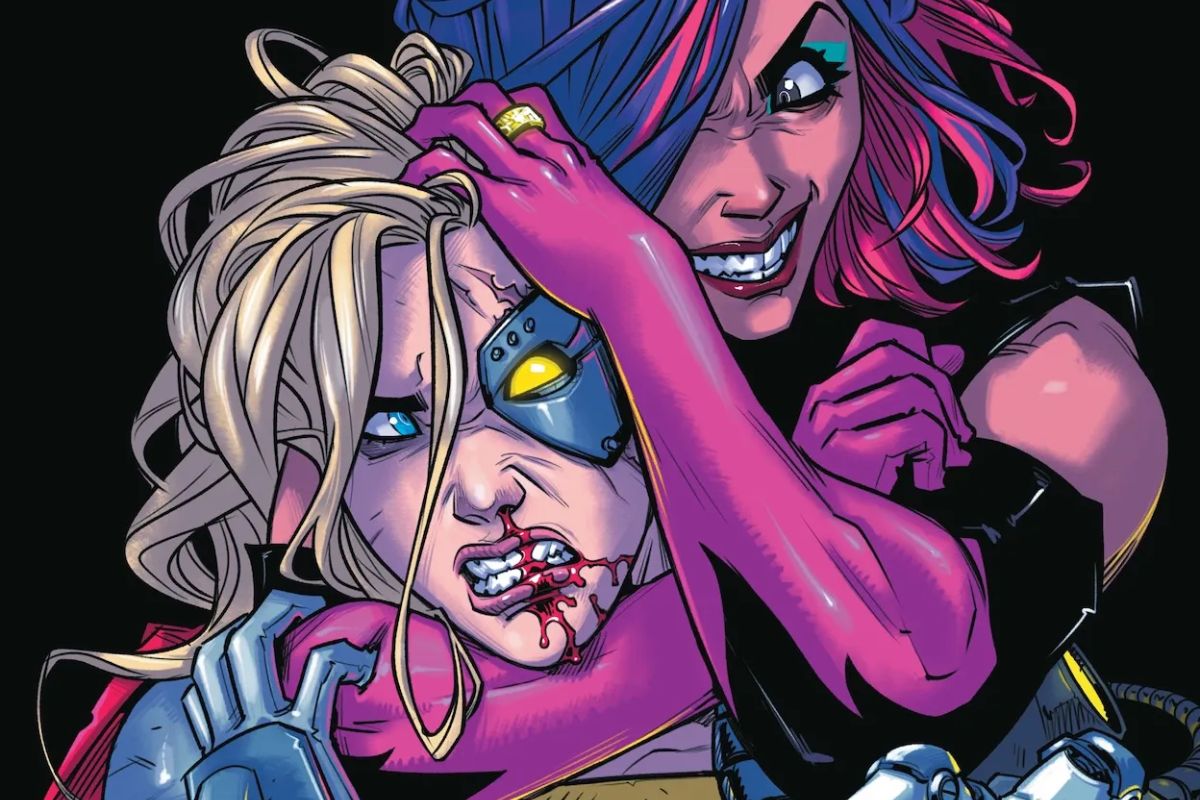

Following the events of DC K.O., Kara Zor-El (aka Supergirl) has been trying to sort out the crisis inside the Bottle City of Kandor. This has seen the Girl of Steel fatally confront Lesla-Lar’s cousin, the Black Flame, and get betrayed by Lesla herself. This not only saw Kara get revived as a cyborg, but this also brought her face-to-face with the Science Council’s clones of Boy Thunder, the future Magog.
To say the Kandor arc has been a rollercoaster of a storyline is an understatement. Despite the high-octane action and bright color palette, it is a remarkably dark story that sets itself apart from Sophie Campbell’s previous Supergirl arcs. Not only is Black Flame shown to be a terrifyingly ruthless villain, but Supergirl #13 does more to flesh out why Lesla’s cousin is hell-bent on destroying the only home that she has.

DC Comics
Though the story itself builds on Lesla’s previous arc of wanting to experience life outside of the Bottle City, it also shows the consequences of an elite class of scientists exercising substantial control over an entire society, and especially future generations of Kandorians. This is perfectly captured by Black Flame, who is driven by more than simple rebellion – she wants to actively destroy the Science Council for hurting their progress and manipulating their genetic makeup. This desire to destroy is also shown in the way she mercilessly kills the teenage clones of Boy Thunder.
Depicting this angry ruthlessness is where Campbell’s artwork truly shines. Aside from the fact Campbell excels at drawing highly expressive faces and body language, the level of violence depicted does a lot to convey Black Flame’s murderous intent. Her penchant for ripping out cybernetic enhancements and watching the clones bleed to death unfazed shows that she has no empathy for other young Kandorians. This is also perfectly captured by colorist Tamra Bonvillain who uses bright red and purple throughout these sequences to show Black Flame’s raw anger.

DC Comics
Another high point of Supergirl #13 is what Campbell does with Kara. Throughout her run, Campbell has been working to set the Girl of Steel apart from Superman and the rest of the Super Family without divorcing her from her classic history. Campbell continues that trajectory in Supergirl #13 by depicting Kara still upholding her own values as a hero, but also being impacted by the violence that’s unfolding in Kandor. In this case, it’s playing into her unhealed trauma surrounding Krypton’s destruction and the loss of her family.
Aside from seeing her cousin go missing after the events of DC K.O., Campbell shows it’s still hard for Kara to be in a place like Kandor without being triggered by memories of her home, Argo City. This is a good use of foreshadowing for the big cliffhanger in the finale that also creates a strong emotional hook for issue #14. Another major strength of this issue is how Campbell once again works her magic to capture Kara’s complex emotional state with her artwork. In this case, Kara fluctuates between feeling determined, angry and sad in a way that feels organic. Bonvillain also captures this complex emotional state by switching between using bright warm colors and muted cool colors.

DC Comics
Superboy (Conner Kent) and Lena Luthor also appear in this issue, but aren’t given much to do other than find themselves in a fight with Black Flame. Whilst some fans might be disappointed by the lack of a more substantial role for Conner in this story arc, at the same time, there’s no real way to organically integrate him. This is largely due to the fact there’s no real reason for him to be here, other than to fulfill an editorial mandate in the interest of the “Reign of Superboys” initiative. More than anything, it’s a bigger issue that Lena doesn’t have a more substantial role in this storyline given her prominence in Campbell’s Supergirl run.
All in all, Campbell once more delivers a solid issue. It succeeds in fleshing out the sheer brutality of Black Flame’s anger and how that translates into a violent revolt. It also succeeds in showcasing what makes Kara a different hero from Superman whilst not ignoring her history and trauma from losing Krypton. The only thing that could improve for the next couple of issues is for Lena Luthor to be more prominently featured, but that’s about it. Beyond that, the Kandor arc continues to be near flawless.




You must be logged in to post a comment.