

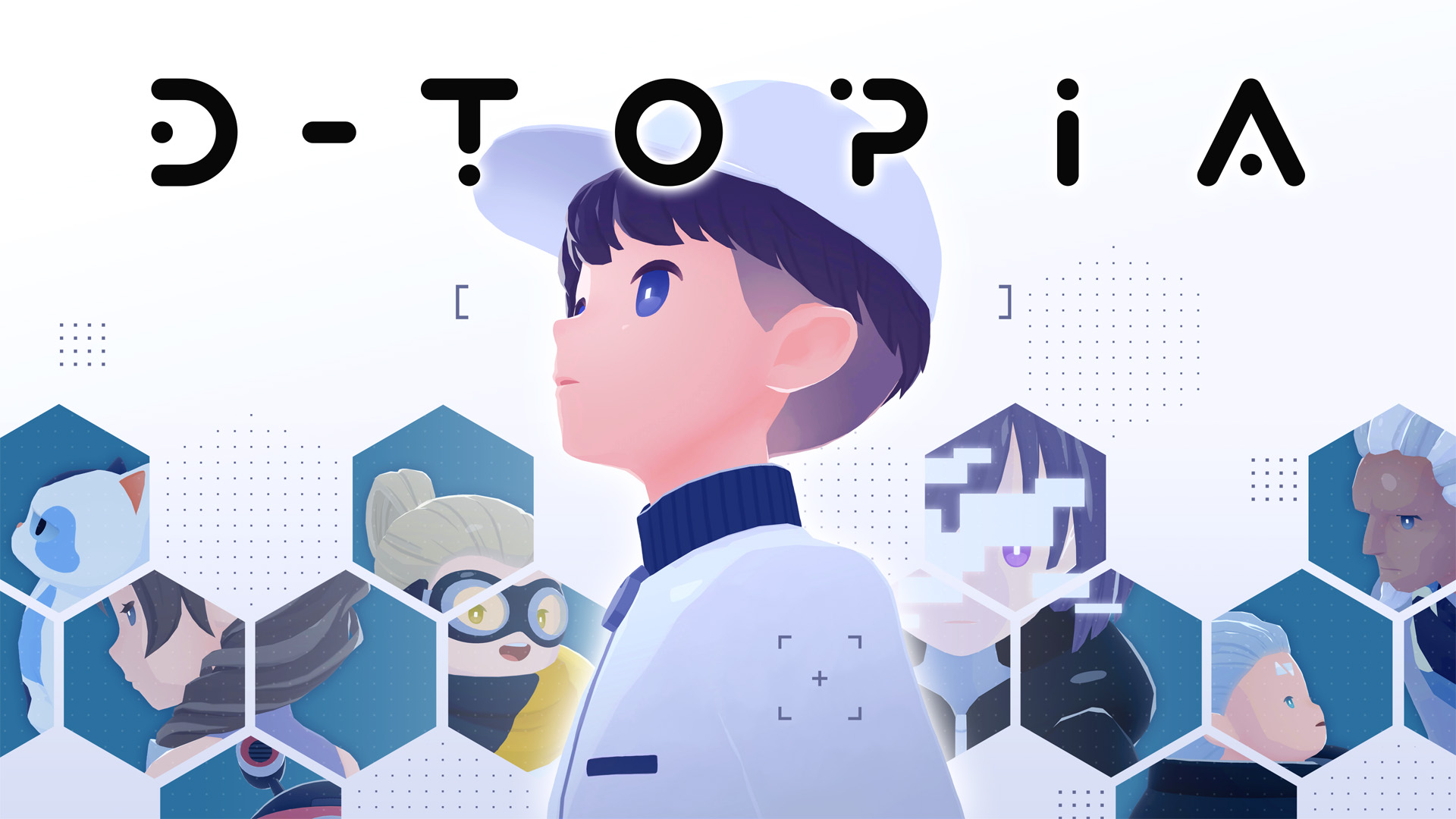

D-topia is the newest game from Marumittu Games, a Japanese indie developer that specializes in cute aesthetics and unique gameplay loops. D-topia is no different, with an overwhelmingly pleasant art style and cozy, relationship-building, and logic puzzles.
In this world, you are a Shiro, a facilitator. A facilitator is a maintenance worker within D-Topia and helps with the Utopia Project. The Utopia Project, you ask? Well, the Utopia Project is an initiative to maximize human happiness and comfort through a perfect human society being managed by artificial intelligence. That feeling in the pit of your stomach is correct after reading the story setup. The developers at Marumittu Games manage to ask quite a few ethical and philosophical questions within the framework of the Utopia Project. Still, once the credits rolled after five hours of gameplay, it would have been nice to see them go farther.
I had an almost visceral reaction to the first hour of the game. The soft, non-threatening dialogue and narration, and the sterile art style created a feeling of dread like the first 15 minutes of a horror movie when the main character strolls into a ‘nice, quaint’ small town. The closest media comparison in terms of themes is the 2004 anime Paranoia Agent, where the villain isn’t the obvious one but rather the pressures of normalcy and societal expectations. I don’t think it is a coincidence that the art direction mirrors modern Pokémon mainline games that have been criticized for being extremely safe, bordering on generic.
All that to say D-topia is still a wonderfully artistic game. The non-threatening Japanese streetwear aesthetic is on full display, and each character is so unique that you can almost figure out their personality before you even talk to them.

During my playthrough, there is this internal grapple of ‘is this feature or animation missing because it’s a small indie team’ or ‘did they exclude this purposefully to reinforce the themes’?
Each day is a chapter in D-topia, and each day breakfast, lunch, and dinner magically appear on your dining room table. You don’t get to pick, you don’t collect ingredients, you don’t even see an animation of your character eating the dang thing. You can buy accessories for your apartment, but you can’t pick where they go. They always end up somewhere really smart and pleasant, but determined by a higher power. Limitations can sometimes be even more beneficial to storytelling because they require an outside-the-box approach, and D-topia always had me questioning its design choices (in a good way).
Gameplay for D-topia has a common profile as many recent indie games: walking simulator and logic puzzles. Not that there is anything wrong with that, but you aren’t going to spend time in this world for a new mechanic. Each one of the logic games was super fun. They all had an element of simple math, one focused on a minesweeper style of number tiles, another had a ‘can’t jump the snake’ of running through a line.
Narratively, though, the logic puzzle games served no purpose, but it was still amazing. Your daily job is to go to the factory and do logic puzzles. They didn’t even wrap a factory skin around it or pretend to serve the narrative. I have never felt closer to an innie in Severance than when I woke up to a new day in D-topia, put on my silly little worker’s outfit, and did mobile-game-style logic puzzles for profit.

The other main objective is to uncover the stories of the various side characters of D-topia. They are a strong bunch full of existential crises and layers of personality. The game had a slow start until the introduction of Pivlof, an older artist reanimated into a world he does not recognize, as A.I. has taken his legacy to turn it into something more (or else, depending on your perspective). His story arc had such sadness and poignancy that it was an amazing experience to unwrap and help him find joy. Mari, the energetic, friendly medical clone, had the most thought-provoking question of all the side stories.
My only wish was that it went farther. That is what I wanted from the entire game, honestly. Even the secondary world you enter to squash bugs or see the ‘behind-the-scenes’ contained a hypnotic, unsettling glow, but I would have loved to see it be even more terrifying or unsettling.

Pacing is purposefully slow. Running is faster than walking, but not by much. There is also no quick travel, so walking is the primary modality for the entire game. With a game that expects you to ponder the choices and world around you, I didn’t mind this one bit. The intentional stillness reminded me of how Hayao Miyazaki uses “Ma” (emptiness) and silence after intense scenes to allow the audience to ingest their experience. I review games as a hobby, and I am more than happy to delve into a game further and explore the themes presented and ponder, but less patient gamers may grow frustrated at the slowness between dialogue and puzzles.
D-topia contains multiple endings and decision points for the multitude of side character storylines. There are multiple collectibles, hidden mice throughout the world, and accessories to decorate your apartment, which could give the game an extra few hours of playtime after the main campaign is finished.
However, D-topia is the kind of game that will nuzzle itself into your brain for a week after playing. The puzzles are fun and engaging, and there are memorable characters aplenty. I just wish it dared to put its toes closer to the edge of the cliff and hammer home the themes.




You must be logged in to post a comment.