

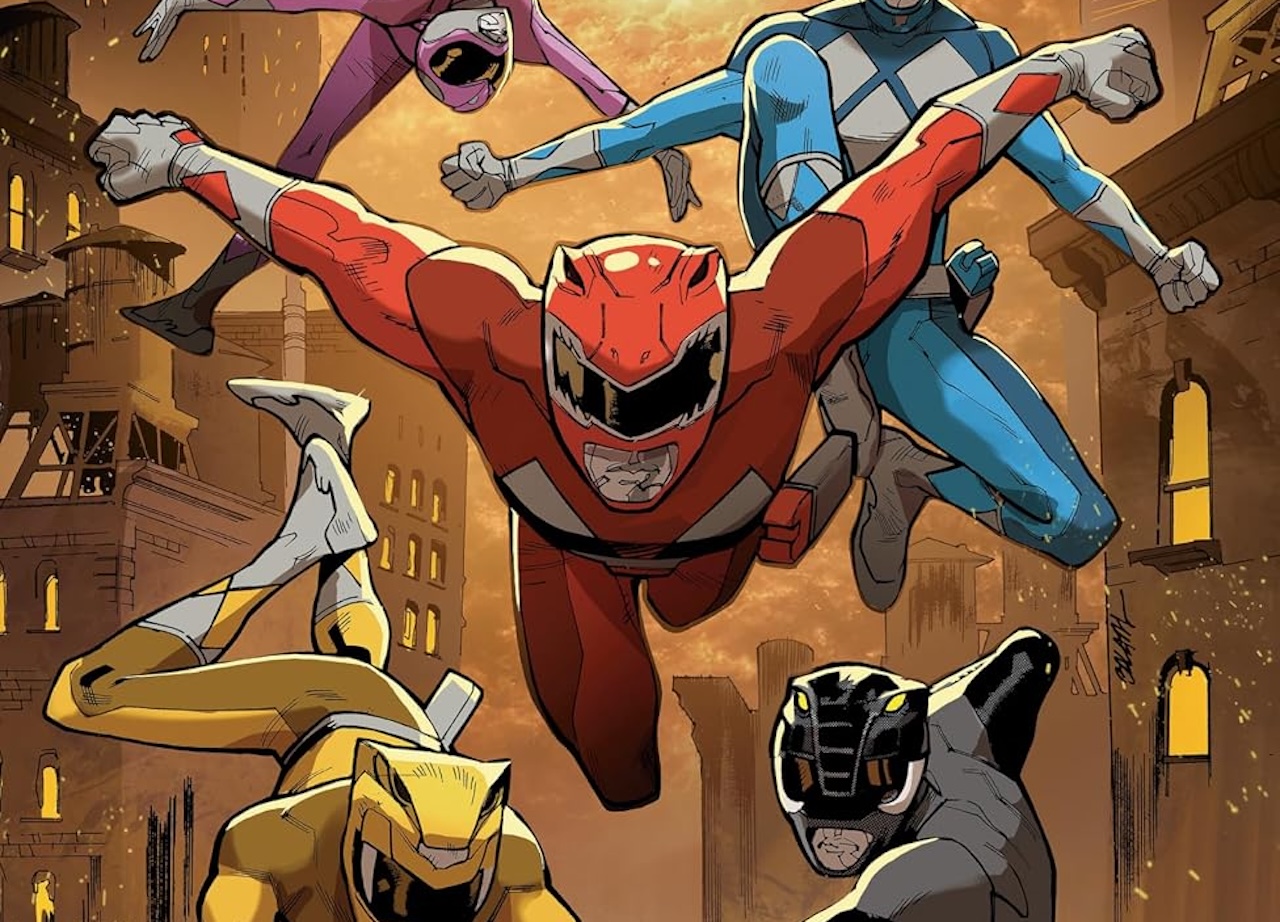

The debut issue of Marguerite Bennett and Andrew Lee Griffith’s Mighty Morphin Power Rangers hammered home that this new series wasn’t going to be like your regular Rangers romp. Part of that was due to the Rangers now having adult lives and therefore being more than a little rusty at morphing and fighting. The rest is due to their new foe, Rita Rabiosa. Rabiosa claims to seek revenge for the Rangers taking her child away from her, and as revenge, she plans to take everything from them. Can the Rangers pull together to save Angel Grove and their friendship at the same time?
Much of the meat of Mighty Morphin Power Rangers #2 is devoted to the Rangers grappling with how their lives have changed since they were teenagers, and how they can’t operate the same way they used to. Jason is still grappling with the fact that Tommy didn’t join them while Billy is the only one who’s kept up on Ranger duties. In one of the more poignant moments, Kimberly sums up the true issue the Rangers are facing: “We’ve haven’t been very good Rangers…because we’re afraid we’ve forgotten how to be friends.” It’s a fear that many people face as they grow older, and Bennett perfectly captures it. She also shows how the Rangers’ careers help them against Rabiosa, with Zack’s lawyer experience and Billy’s tech expertise making for a particularly great combination.
Griffith manages to balance action and emotion in Mighty Morphin Power Rangers #2, delivering massive pages of the Megazord fighting Rabiosa’s techno-organic tendrils. It’s pretty damned awesome to see the Megazord in full mode and split into separate Zords, with Griffith showcasing the wreckage from a giant robot-and-monster fight. He also manages to display plenty of emotion through the Rangers’ body language: when Rabiosa makes a threat that cuts too close to home, Kimberly, Billy and Zack lunge forward with the kind of anger that only comes when someone threatens your loved ones.

BOOM! Studios
This action is enhanced by Joshua Jensen’s color work, which remains as eye-catching as ever. Not only are the Rangers easy to identify thanks to their signature colors, but their Zords are, too. Rabiosa, on the other hand, is defined by darker hues, especially the purple that runs through her technology. Ed Dukeshire also works with Jensen to give the Rangers’ words their signature color whenever they’re in their Zords, and Rabiosa’s speech a sinister, alien form that highlights just how inhuman she is. He also manages to incorporate phrases from the TV show in unique ways, which I genuinely love.
The best part of Mighty Morphin Power Rangers #2 centers on Trini, as she worries about her daughter Minh’s safety and tries to reason with Rabiosa. Again, I genuinely love how Trini is being fleshed out as a character in both this title and Power Rangers Unlimited, and in entirely different ways. We rarely see superhero parents in comics, so to see Trini juggle Rangerhood, motherhood, and a career in politics will be something new.
Mighty Morphin Power Rangers #2 showcases the peaks and valleys of adulthood while continuing to define a new status quo for the Rangers. This is arguably one of the more interesting things that’s been done with the franchise, and I hope it lasts for a while.




You must be logged in to post a comment.