

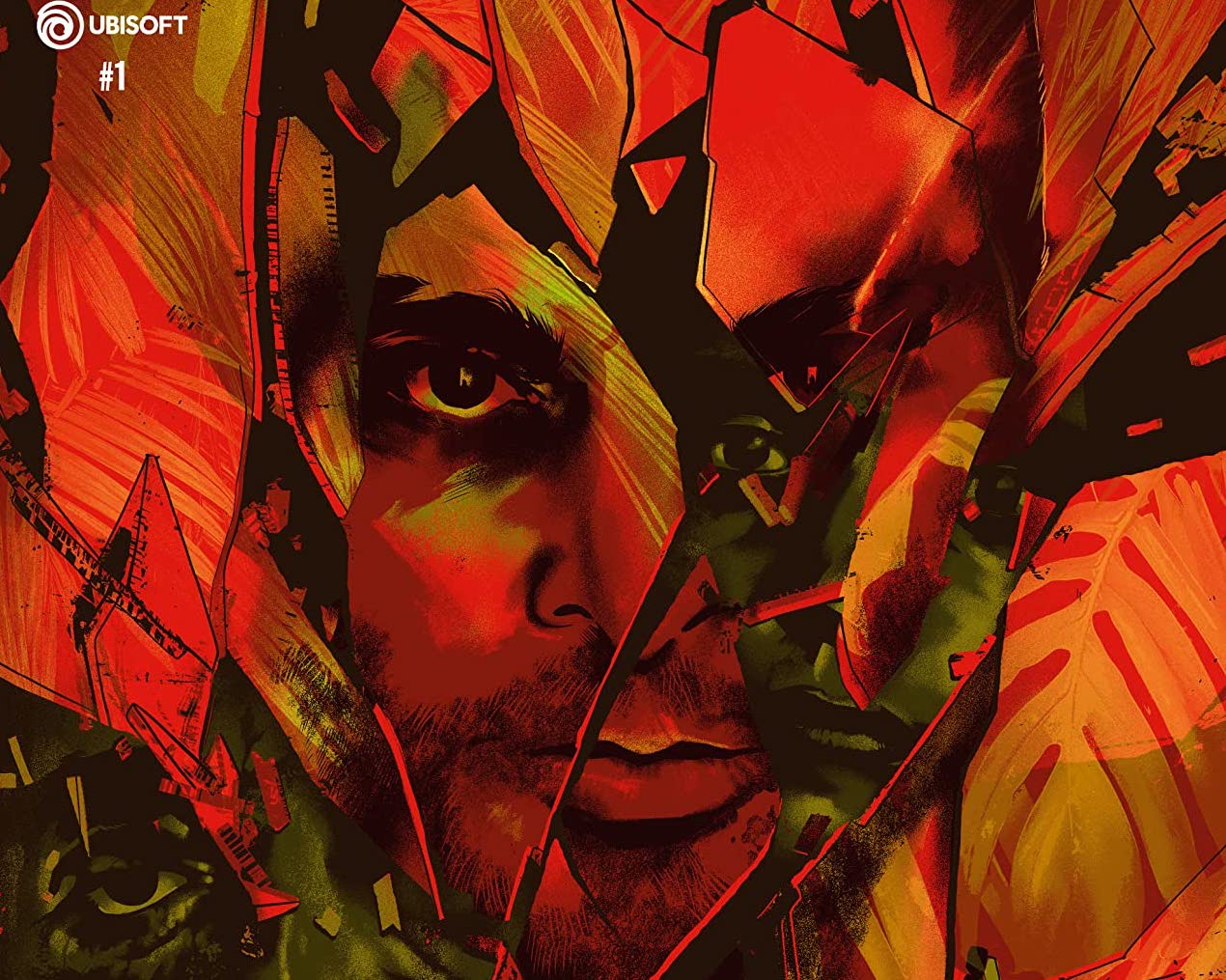

It’s a hard task to hype me up for Far Cry 6 any more than I already have been — I think Far Cry 5 did that job all alone, in the hundreds of hours I ran around a fictional Montana landscape that looked perfectly like my native Wyoming, fighting off cultists I recognized as parallels to some fundamentalists I may or may not have known growing up.
What got me was that the video game series has begun to take its more high-minded aspects of social commentary, literary flair, world-building, and indelible villain character development just as seriously as its shooty-shooty, bang-bang, isn’t-this-Redneck-centered-dick-joke funny aspects. It seems to have done so since Far Cry 3, at least—as early a game in the series as I’ve experienced, and as far back as Far Cry: Rite of Passage cares to go in its examination of series history.
Centered around Diego Castillo and his father, presumed main villain Anton Castillo, president-cum-dictator of the upcoming game’s fictional Latin American island nation (the Castro to his fictional Cuba, essentially).

Dark Horse Comics
It’s Diego’s thirteenth birthday, and what better time for a father-son trip through the jungle, across a rickety suspension bridge, to a derelict shack full of automatic weapons? It will give papa Castillo plenty of time to illustrate his particularly harsh “the world is hard so you have to be harder” philosophy by very vaguely outlining the life and brutal death of Far Cry 3 villain Vaas Montenegro.

Dark Horse Comics
It’s a fairly effective narrative structure, at least for those who have spent time with that game being angry and frightened of that character, and promises to be the narrative for the following two issues of the story—one each for Far Cry 4 and 5’s villains. That Anton’s narrative never really says anything specific of Vaas — what little of his character moments are presented free of the outer structure — doesn’t do a whole lot for unfamiliar readers.
That’s the comic’s primary hitch, really — it relies heavily on the reader’s knowledge of the games for any familiar payoff, as Anton’s brief summary of biography does not exactly translate as great storytelling — Diego is, quite justifiably, confused as to how to relate the story to his situation, and readers are likely to find themselves sharing his bafflement.

Dark Horse Comics
Neither does Anton pronounce a particularly interesting philosophy; the endless monologue from the comic is never quite as compelling as the shorter, punchier version delivered in the game’s announcement trailer, there delivered by the incredible Giancarlo Esposito. The book never quite pulls a reader deep enough into its world or story that its rigging isn’t visible — one can always peek backstage and see the director, mouthing along the words, hoping that people believe this to be a sound narrative rather than a four-dollar advertisement.
If anything will make Rite of Passage a compelling miniseries in its own right, it will be the unification of the Far Cry universe—unlikely, given how 5 ends—and none of that happens here. That is to say, it doesn’t hype me up any more or less than I have been up until now, and doesn’t speak to my collector’s heart.




You must be logged in to post a comment Login