


For its final episode, Prehistoric Planet 2 deviates a bit from the biome subtitles, opting instead to focus on the whole continent of North America.
“North America” opens on the southern coast of the Western Interior Seaway, with a herd of Alamosaurus sanjuanensis. Like the majority of the sauropods in Prehistoric Planet and Prehistoric Planet 2, Alamosaurus is a titanosaur. While sauropods were still succeeding in the southern landmasses, they seem to have gone extinct in North America, as much as 40 million years prior. The absence serves as a stark contrast to the late Jurassic of North America, which was dominated by numerous sauropods, including the famous Apatosaurus, Brachiosaurus, and Diplodocus, as well as lesser known sauropods like Haplocanthosaurus, Camarasaurus, and Suuwassea.
The corpse of the elder Alamosaurus draws the attention of troodontids, and later both T. rex and the azhdarchid Quetzalcoatlus northropi. We’ve known about Quetzalcoatlus since 1975, and the animal’s been featured in media like Dinotopia and the Jurassic Park franchise, but it never had a full description published until 2021. The paper by Brian Andres and the late Wann Langston Jr. not only helped better our understanding of Q. northropi, but also established a second species, Quetzalcoatlus lawsoni.

After the showdown between dinosaur and pterosaur, “North America” returns to the ocean, and to ammonites, where Sphenodiscus hunts its prey. That’s not all, as the ammonite is then hunted by the mosasaur, Globidens. One of the unique features of Globidens was its broad, rounded teeth, that appear less useful for penetrating bites, and more suited for crushing. This indicated that Globidens likely had a different diet compared to more generalist predators like Mosasaurus, and the crushing teeth would have been good for breaking through the tough shells of animals like ammonites. This hypothesis gained further support when paleontologists found the crushed shells of mollusks in its fossilized stomach contents.
“North America” then takes a bold step by bringing viewers to the coastal shores, where flocks of “Styginetta” are harassed by Pectinodon. If animals like T. rex and Quetzalcoatlus are decently known to science, “Styginetta” and Pectinodon represent the opposite end of that spectrum. “Styginetta” is a not-yet-described (hence the quotation marks) avialan from the late Cretaceous. Because its details have not been published, “Styginetta” remains largely unknown to the general public, and its reconstruction as a member of the family Presbyornithidae (a group of birds that survived into the Cenozoic but are extinct today) represents the exciting frontier of our taxonomic knowledge.

Similarly, Pectinodon bakkeri, described by Dr. Kenneth Carpenter in 1982, is known only from several teeth. While it might seem odd to describe and name an animal from just fossilized teeth, these can reveal a remarkable amount of information, not just for diet, but the shape of teeth can reveal evolutionary relationships between larger groups of animals. In the case of Pectinodon, they reveal the animal to be a member of the troodontid family, cousins to dromaeosaurs like Velociraptor, and the knowledge of that classification helps provide the reconstruction here.
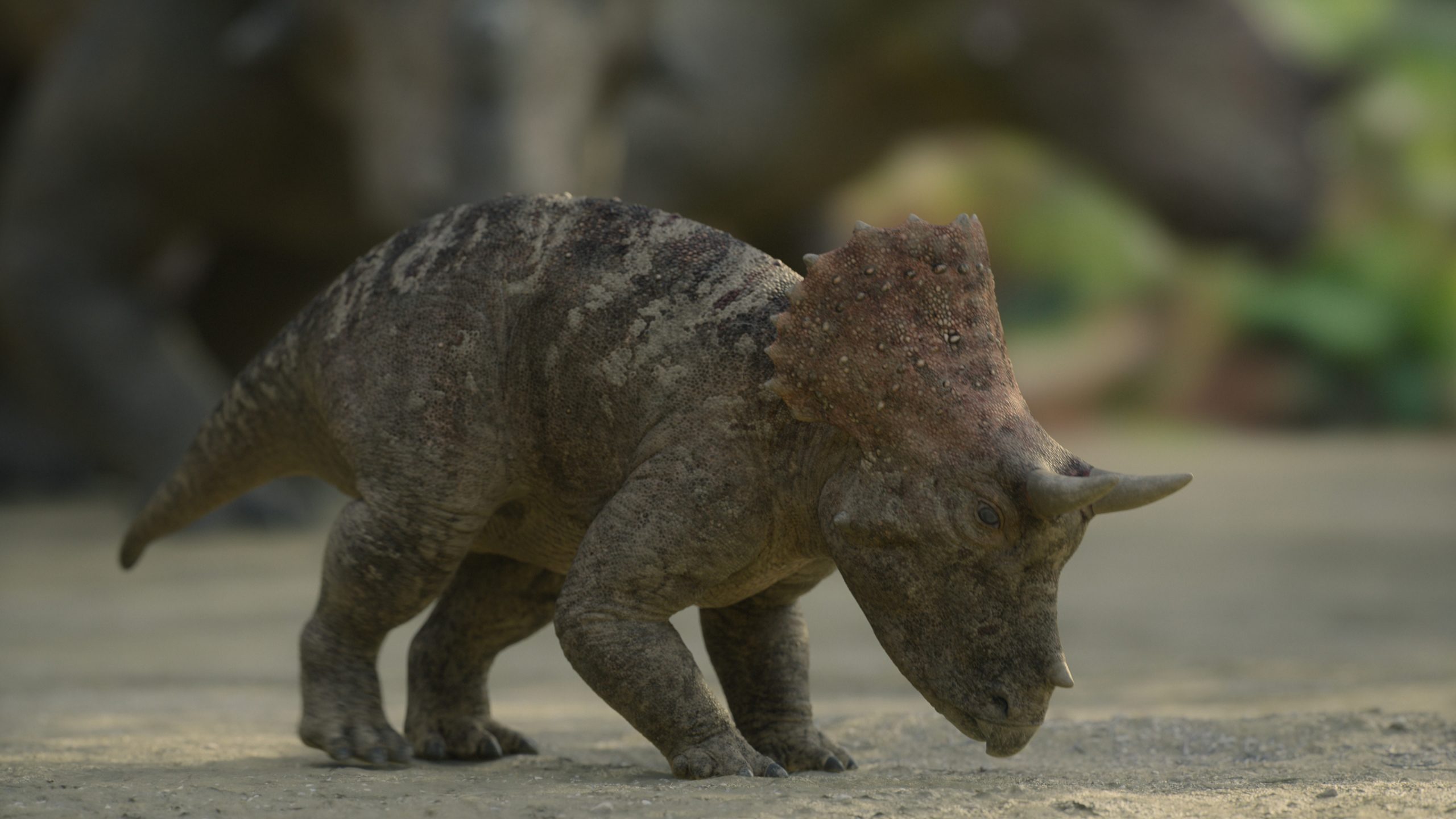
From the frontiers of our knowledge, “North America” takes viewers to the other iconic dinosaur of the late Cretaceous, as two Triceratops fight over mates. According to the “Prehistoric Planet: Uncovered” segment at the end of the episode, studies of pathologies in the skulls of Triceratops by Andrew Farke et al support combat between Triceratops individuals. Farke has even used replica skull models to demonstrate how this combat may have worked, based on the morphology and the injuries observed.
The final vignette of “North America” returns viewers to the polar region of the continent seen in the “Ice Worlds” episode of the original Prehistoric Planet. Here, a Nanuqsaurus hunts a flock of Ornithomimus across the frozen landscape. While some recent research suggests that Tyrannosaurus rex itself may not have been the fastest animal, studies of tyrannosaurid locomotion in general indicate the group were very efficient in their movement, which would have made them good pursuit predators, able to search for food over larger areas and potentially run down faster prey that exhausted itself.

Prehistoric Planet 2 ends, like its predecessor, not on the extinction of the dinosaurs. Instead, by focusing on a Nanuqsaurus parent feeding its young, the show ends by emphasizing that dinosaurs at the end of the Cretaceous were animals like any other, with daily struggles and triumphs.
AIPT Science is co-presented by AIPT and the New York City Skeptics.



You must be logged in to post a comment Login