

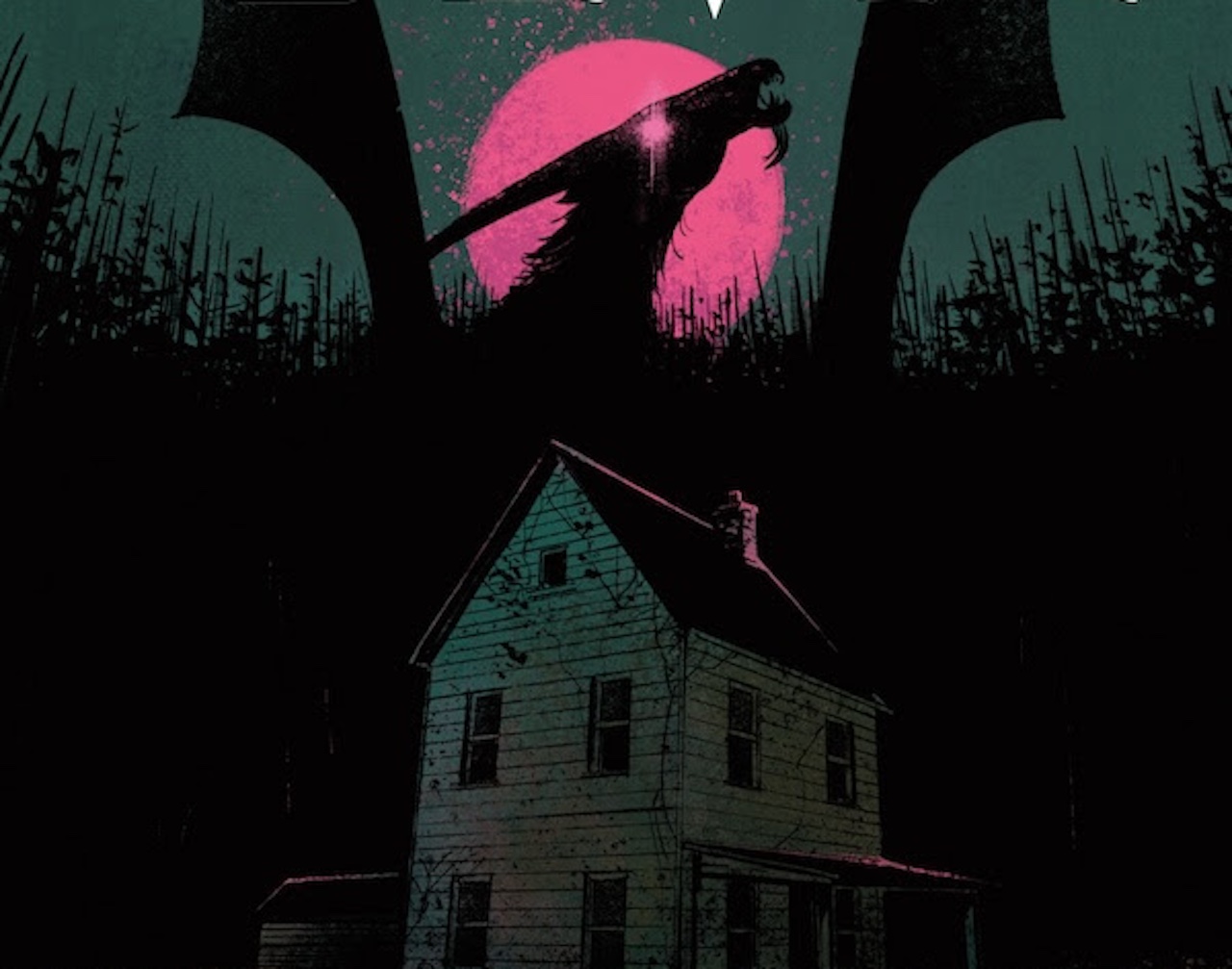

Let This One Be A Devil — from the exceptional team of James Tynion IV, Steve Foxe, Piotr Kowalski, Brad Simpson, and Tom Napolitano — is off to a bewitching start. The book sits in a fascinating intersection of high strangeness, rural myth, and historical fiction. Tynion and Foxe have clearly done their research, digging into the origins of the Jersey Devil legend and some of the eyewitness stories of purported encounters with the creature. They then build things out from there to weave a tale that feels both like a true crime account and a creepy campfire tale.
This issue introduces us to the Naughton family in the winter of 1909, who suddenly find their farm under attack from an unidentifiable predator. The eldest Naughton son, Henry, has returned from abroad to provide for his family, but he’s unprepared for the monster that he finds killing his chickens in the middle of the night. This is the gory and unsettling event that kicks off the plot, but the true driving force of the story thus far seems to be that Henry is a total outsider, even amongst his family. Having left the family to study (and seemingly missing the death of his father), Henry is seen as too “soft” to have any impact on the harder world around him. He bristles at the idea of getting a factory job like his father before him, he’s looked down upon by his own sibling and the other youngsters in town, and he’s immediately disregarded by everyone when he tries to explain that the thing killing the livestock is not a fox.
It’s a compelling setup for the story. In many of these urban legends and folk horror tales, the protagonist is much more headstrong or heroic. Henry, on the other hand, is aware that he’s entirely out of his depth, but he’s not about to let the world defeat him. What’s fascinating, though, is that this doesn’t exactly translate into a drive to take the tougher job or embrace his family’s more traditional values. He knows he has to do something, but he’s stuck in a state of arrested development due to a reluctance to go backward, even if it means helping his beleaguered mother make ends meet. Henry is at once admirable and pitiable; you can’t help but feel sorry for him, but also frustrated by the fact that he’s seemingly not understanding why his family feels abandoned by him. This need to prove himself, coupled with the frustration of his attempts at escaping conformity, is what motivates Henry to seek answers about the demonic creature in the woods — the Leeds Devil.

Dark Horse
Which leads us to the second half of the issue, which takes place in 1735 and offers an origin story of sorts for the titular Jersey Devil. Folks who know their cryptid history will recognize multiple elements of the classic tale, as this seems to meld various rumors and accounts into one unified mythology. It’s a hectic and visceral sequence, kicking off with the creature’s father being horrified by the amount of bleeding during the birth of his child. This part of the issue somehow feels even more heightened than the sequence involving the giant monster killing chickens. It’s full of dark proclamations and cries for salvation in the middle of a traumatizing event. I’m definitely curious to see how the two timelines presented in the first issue will eventually intertwine.
This first issue is much more interested in the human interactions and the emotional weight afflicting this fracturing family, but it also doesn’t waste any time in giving us some nightmare imagery to keep things trucking along. Kowalski’s illustrations, Simpson’s colors, and Napolitano’s letters give everything a lived-in feel, while also making everything feel appropriately classical. It feels like you’re going back in time in more ways than one, with the scenes in the Naughton house looking as though they’re all lit by candle and the 1735 sequence having even more of a dirty sepia look to them. The moments when everything bursts into full vibrant color stand out even more, with Naughton’s first encounter with the Devil being a particular highlight. It’s like all of the weirdness in the world has been simmering under the surface, only for it to come bubbling out in one violent, bloody burst. The various onomatopeia almost feel etched into the wood of the cabin, like the frightened screams of Mrs. Naughton (and Mrs. Leeds before her) left an indent in reality.
The issue also has a back-up story, “Shattered and Shook” by Rachel Deering, Jesse Lonergan, and Aditya Bidikar. It tells the story of a family that becomes convinced that their youngest member is either haunted or possessed by a malevolent spirit, if not the Devil himself. The brief black-and-white tale takes a quick look at the various manifestations of the haunting, as well as the increasingly desperate measures this family took to try and rid themselves of the demon. The page layouts here are spectacular, taking on the appearance of a series of cracked mirrors, with each separated pane pointing us in the direction of something interesting. The dialogue is very matter-of-fact, giving us a quick rundown of what happened in this case, but that just further sells the “true casefile” vibe. It’s a short and effective, with an ending that left me with a pit in my stomach.
High strangeness, historical fiction, and compelling family drama collide in one of the most exciting debut issues of the year thus far. Cryptid enthusiasts will no doubt be pleased with the ways in which this story combines decades of research and the storytelling talents of this creative team into a gothic tale of rural terror.




You must be logged in to post a comment.