


It’s never been easy to be green – or, at least, it’s always a crapshoot to be She-Hulk.
Sure, we’ve hit what feels to be a golden age for the character: both a solid television season and a deeply caring solo book by Rainbow Rowell have kept the character more widely in the cultural consciousness than she has been in her 45 year existence.
But a look at her solo title bonafides reveals a career frequently troubled with cancelations, creator turnovers, and a flagging sense of what makes the character special.
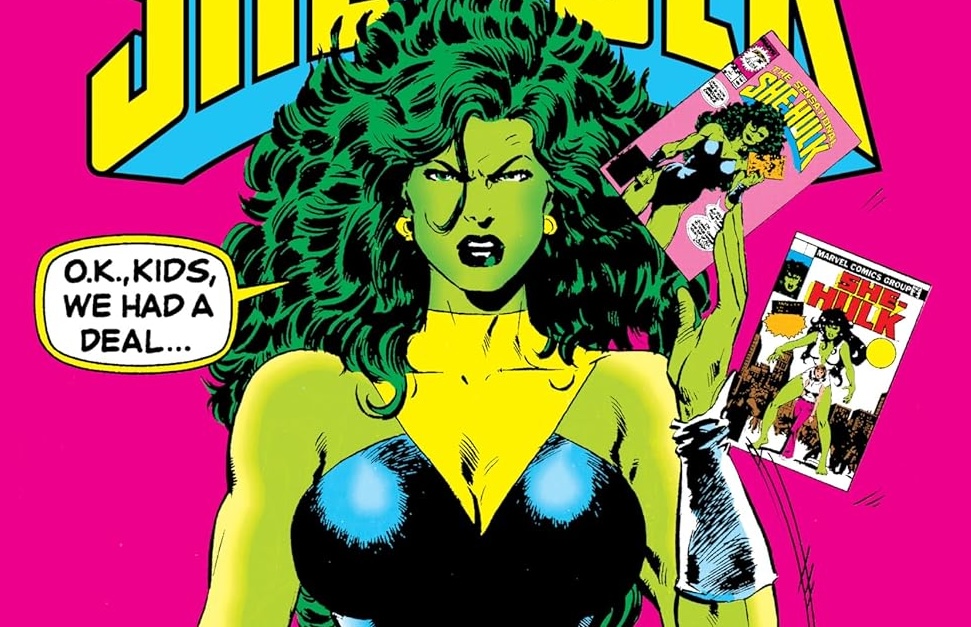
Look no further than She-Hulk Epic Collection: To Die and Live in L.A., which stands as a perfect example of a character’s decline. Collecting the final nine issues of 1989’s The Sensational She-Hulk and a handful of head-scratchingly mismatched appearances from other books between 1994 and 2002, the volume sees a book rapidly running out of steam.
Sensational was famously launched by comics superstar John Byrne, whose flag was flying high after a decade of creating Alpha Flight, rebooting Superman, and becoming one of the most popular Fantastic Four creators of the 1980s. His take on Jennifer Walters hinged heavily on fourth wall-breaking comedy. When he left the book (the first time), that sense of surreal humor was furthered by a post-lawsuit Steve Gerber, who injected Howard the Duck and sent the characters to a baloney universe.

Marvel Comics
Following a return by Byrne (conspicuously uncollected in Epic format), the book was passed off to a revolving set of creators who didn’t quite have the metafictional or comedic chops to handle the character. As with so many Deadpool stories to come, the promise of meta commentary proved too big a canvas, too corrupting of a concept, resulting in lackluster Daffy Duck retreads featuring looming drawing implements. Gimmick parody characters like Man-Elephant and Tommy, an intern-turned-sidekick named The Gopher, struggled to provide the laughs the creators clearly intended; comedy writing is a hyper-specific, rarefied talent, after all.

Marvel Comics
Sensational ends with a ludicrous Aliens parody, for which She-Hulk makes a direct-to-camera apology. Editor Renée Witterstaetter makes an appearance to explain the book’s cancellation to readers. A sort of over-saccharine farewell is made by creators who had nothing to do with what made the book special in the first place. It would be 11 years before Jen would land another solo book (Dan Slott’s monumental – if problematically sexualized – She-Hulk, in 2004).
Despite a presence in other books in the later half of the 1990s (Fantastic Four, The Avengers), the Epic Collection closes out with baffling guest spots in books that barely feature the character and in no way progress her development. These include a sub-par Doc Samson miniseries more focused on Leonard’s failures as a therapist than anything Jen does, and several issues of Incredible Hulk that see her barely holding down a C-plot.

Marvel Comics
The final issue of the book happens to be the best, jumping us forward into an entirely different era of comics. Thing & She-Hulk: The Long Night features its protagonists playing off their extant relationship, going up against Dragon Man and vampires and having an all around zany, good time. It feels completely out-of-place in the volume, both in terms of tone and quality.

Marvel Comics
To Die and Live in L.A. might have well-intentioned work by a number of dedicated creators, but none of it feels like it. Nearly every issue has glaring quality issues (sloppy art, terrible misunderstandings of character, bad jokes), and few of them seem to care about their subject or their series’ longevity. It’s a book that feels like a half-hearted shrug, a sort of quiet-quitting of a once-popular and groundbreaking series.




You must be logged in to post a comment Login