

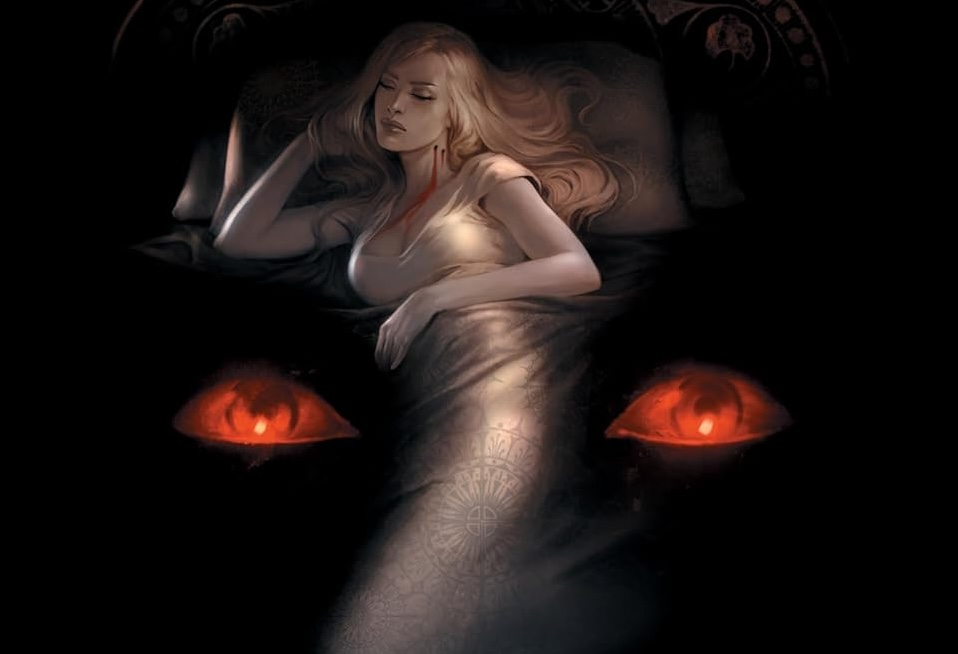

Dracula is not a character who needs any introduction, as permeated into the global cultural ethos as he is. The subject of literally countless films, television shows, stage productions, radio programs, and (so Wikipedia tells me) adult movies, the character is inescapable not only in English-speaking countries (where the character originated), but internationally. Despite not being literature’s first vampire (Polidori’s The Vampyre arrived in 1819, some 78 years earlier), Bram Stoker’s Dracula established all the rules for that particular ghoul for the last two hundred years. It is the cornerstone of vampire fiction, going on to influence even the most obscure, delightfully artistic works of the genre.

Marvel Comics
By the 1970s, comic book adaptations of classic literature were by no means a novel concept; Classics Illustrated had been doing business for 30 years, having published its first adaptation, The Three Musketeers, in 1941. Though that series (somewhat surprisingly) tackled other classic horror before the introduction of the Comics Code Authority in 1954 (Edgar Allan Poe in #21, and Frankenstein in #26), Dracula was conspicuously absent. Other publishers, such as Avon, produced very loose adaptations of the story, while others produced adaptations (or continuations) of the Universal feature films starring Bela Lugosi or turned the character into a superhero.

Marvel Comics
It seemed to Roy Thomas that a faithful comics adaptation had been a long time coming. After the loosening of the Comics Code, Marvel wasted no time in bringing the character to comics in 1972’s Tomb of Dracula, then to the adult-marketed black and white magazine, Dracula Lives! In 1973. Thomas, then Editor-in-Chief, found his outlet for what he hoped to be the definitive comic version of Bram Stoker’s novel.
In his 2004 introduction to the trade paperback of Stoker’s Dracula, Thomas loosely details the birthing of the project, from conscripting fellow Dracula enthusiast Dick Giordano to picking master letterer Joe Rosen, who he knew could legibly letter as small as possible to fit as much of Stoker’s original prose on the page as possible.

Marvel Comics
But this version of Dracula was doomed to the fickle whims of the comics and magazine biz, and their adaptation was cut short with the cancellation of Dracula Lives! (with one final chapter appearing in the quickly canceled The Legion of Monsters). Thomas, Giordano, and Rosen had gotten halfway through Stoker’s story, leaving off (frustratingly) at the end of chapter 12: poor Lucy Westerna’s “death”. The vamping hadn’t quite hit its horrific heights.
It wasn’t until 30 years later, in 2010, that the team had a chance to finish it. Marvel, under more daring leadership (and now with seemingly endless Disney dollars), offered up a four-issue miniseries; two issues to collect the work that had been done and two issues to finish it out.
The time between 1975 and 2010 can be felt between issues #2 and #3. By his admission, Giordano’s “priorities as an artist had changed a bit”, and so the tone of the artwork shifts considerably; the original ’70s material had been rendered for black and white, the linework deepened and made more striking with washes of gray inks (which are, in these reprintings, sadly overshadowed by the colors). The artist makes a muted attempt at replicating the effect in the new material, but his linework has grown hastier: he was “more concerned with storytelling than [he] was with illustrative qualities”.

Marvel Comics
The fidelity of the narrative’s adaptation doesn’t falter, however – the 2010 issues adhere as faithfully to the novel as ever, keeping as firmly with the struggles of the Harkers, Van Helsing, Dr Seward, and Holmwood as possible while damning the novel’s less direct passages.
Dracula is by far one of Western literature’s greatest horror novels – it’s a delight to read, even now – and Stoker’s Dracula does its damnedest to translate that incredible quality. Taking directly from Stoker’s epistolary prose was a godsend of insight on Thomas’ part, as the classic nature of the poetic feels as vital to the story as the gothic horror. The book reads like a comic, and yet it somehow also reads as a novel.

Marvel Comics
Though the story of the comics’ troubled publication feels nearly as important to this collection as its contents, Thomas and Giordano’s adaptation still feels like the vital, definitive comics version of the book. Despite the medium’s tendency for being disposable – and the ease with which brilliant work can be buried under the flood of content – Stoker’s Dracula is something so special that it should not be missed. It’s a happy miracle that it exists at all.




You must be logged in to post a comment Login