

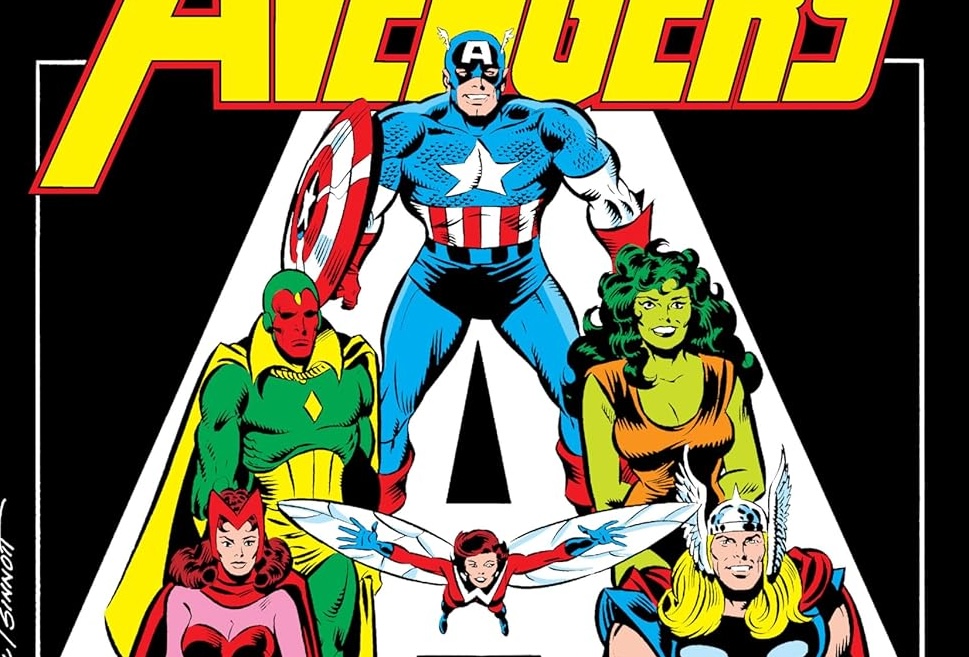

Compared to the Marvel books that were really selling in the early 1980s – books like The New Mutants and The Uncanny X-Men, Daredevil, and The Fantastic Four – The Avengers sometimes felt like a grumpy, finger-waving dad.
Those other books were unilaterally being handled by creators who were becoming famous in their own right (and rightfully so). Chris Claremont (and a host of astounding artists from Paul Smith to Bill Sienkiewicz) had upended the notion of a team book with his work on Uncanny, creating a sexy melodrama. Daredevil would be getting into ninja territory under the hand of Frank Miller and Klaus Janson (and demon territory under Ann Nocenti and John Romita, Jr), and John Byrne’s The Fantastic Four had diverted that book’s stodgy, conservative tendencies with bold visuals and tight, more exploratory narratives.

Even Lava Men are old news.
Marvel Comics
These were books that revitalized the brands, putting Marvel back on the cutting edge, and driving DC to rethink their approach.
It isn’t that Avengers was lacking in skill; the issues collected in Avengers Epic Collection – Seasons of the Witch see Roger Stern at the typewriter and Al Milgrom at the drawing board; both these creators are comics legends in their own rights. Part of the ‘third wave’ of superhero creators, they were on the frontlines as creators who grew up loving the characters they were now creating. Their love for the subject matter is clear.
But Avengers didn’t ever become as boundary-breaking as its peers. While the X-Men were subverting the idea of sociopolitical tone in superhero books in God Loves, Man Kills and going cosmic with Binary, the Avengers were fighting. . . Egghead.
There is a rigidity to Avengers during this era, particularly when compared with the hectic melodrama going on in those other books. Stern writes about court-marshals, bureaucratic structures, and bylaws, in a way that feels restrictive and hard; he even has a panel dedicated to Reagan increasing the S.H.I.E.L.D. budget. So much thought goes into scheduling, and there is a pronounced dramatic weight placed upon who is an Avenger and who is an Avenger-in-Training.

Marvel
A shame, because the team line-up is one of the most bizarre and interesting: chaired by the Wasp, we’ve got Captains America and Marvel (Monica Rambeau), She-Hulk and Starfox, Scarlet Witch and Vision and (occasionally) Thor. The then-new oddballs almost outnumber the classic members, which should draw so much drama and exploration.
Instead, these are stories that see the team track down an escaped Wizard, fight Plant Man, and clear up a vague misunderstanding between the scientists at the Pegasus Project and some Lava Men. Lingering personal drama (such as it is) amounts to She-Hulk apartment shopping and Vision in a short-lived robo-coma.

Rein it in, Janet.
Marvel Comics
It’s easy to see that the most exciting action we see in Seasons of the Witch occurs due to crossovers with more active books: Vision’s coma occurs because the Fantastic Four villain, Annihilus, breaks out of the Negative Zone. Wanda gets called to track down the Darkhold and fight vampires in Doctor Strange. Monica Rambeau is introduced in this volume’s first issue, in an Amazing Spider-Man annual. The final four issues of the volume are handed over to a bouncy Hawkeye miniseries, taking us away from the team altogether.
However solidly told, Avengers Epic Collection: Seasons of the Witch feels begrudgingly staid, a rigid march of talented storytelling at its least active. Compared to the absolute revolution around it, The Avengers of the early 1980s feels outdated, obsessed with structure in a comics universe that thrives in chaos.




You must be logged in to post a comment.