

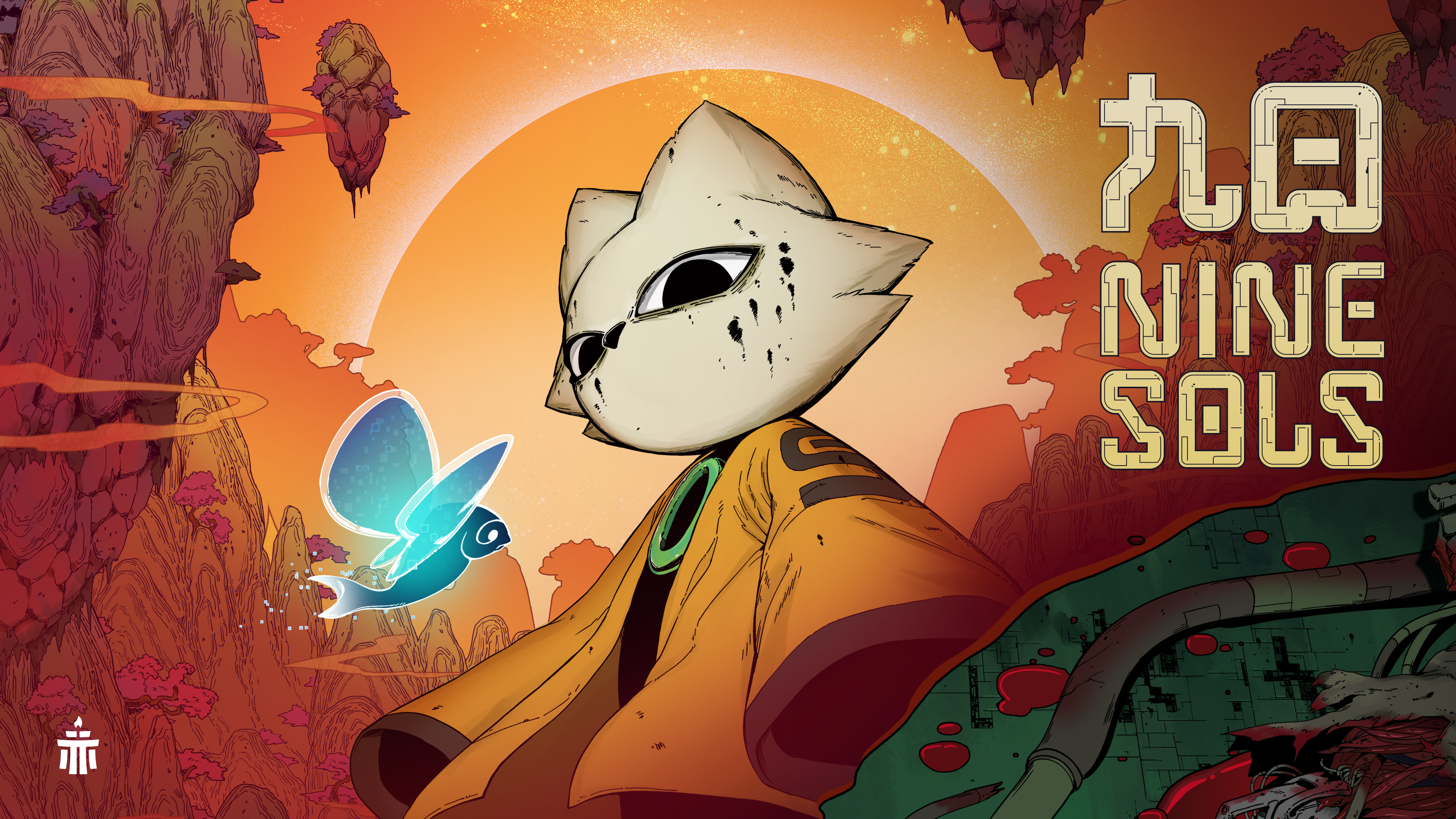

Parrying has become one of my favorite game mechanics in recent years. I’m sure it was present before Sekiro: Shadows Dies Twice, but FromSoftware’s release was what put the mechanic on the map for me. Instead of blocking to reduce damage or tightening your sphincter when just pulling off a dodge-roll, parrying gives you another means of defense that’s much more active. Timing your parries in sync with an enemy’s attack to deflect their blow grants tremendous satisfaction, and this is the primary mechanic of Red Candle Games’ Nine Sols.
Sekiro was a heavy influence on the game, and it shows; player character Yi’s best defense against enemies’ attacks is parrying, and with successful parries come advantages. Yi can completely avoid taking damage via perfect parries, and all parries will grant Yi charges for his qi blast, which is the most devastating move in his arsenal. The parry ability expands as the game goes along as Yi will gain the ability to parry even the most destructive of attacks from enemies. On the offensive, Yi has a basic three-slash combo, a charged attack, and arrows, which are more destructive than you may think, at his disposable. Stringing together precise parries and devastating attacks makes Yi a force to be reckoned with.

Yi against one of the game’s several bosses.
Nine Sols embraces its soulslike influence in other ways as well — some fun, others frustrating. I am once again asking developers to let players keep their experience after death; I love soulslikes, but corpse runs are undoubtedly their most annoying feature. Difficulty is ramped in Nine Sols, like any soulslike, as even the most basic enemies can prove fatal if your focus drifts. The game does thankfully offer difficulty sliders so you can fine tune the challenge to your preferences; you can increase Yi’s attack and damage reduction, aiding you in progressing through challenging or annoying sections.
While it excels in many areas, where Nine Sols really stumbles for me is its boss battles. They just don’t have the type of exhilaration the soulslike genre demands. I found most of them to be more annoying than fun, especially in the early game. Some boss have the most basic of movesets and large health pools, turning them into less a skill check and more a grindfest. I had to lower the difficulty – which grants access to the attack and damage reduction sliders – against one boss because it became tedious whittling its health down, even though I learned its attack patterns well enough; impatience was often my downfall.

Yi has several skills to develop throughout the game.
But soulslike isn’t the only genre Nine Sols inhabits. It fully functions as a fun metroidvania, complete with large interconnected maps, several movement abilities, and endless backtracking. Metroidvanias aren’t my favorite games often because of all that back tracking, or sometimes unforgiving platforming, but I found Nine Sols to be a very fun and accessible entry in the genre. It guides you along its endless paths without holding your hand, and just when the backtracking started to become too exasperating, fast travel was introduced between the hub world section and nodes (the game’s equivalent of a bonfire or site of grace), lessening the annoyance. I do wish its map was a little more helpful and included Prince of Persia: The Lost Crown-style map markers/screenshots. As it stands, you’ll have to remember every unexplored path on your own without aid (note-taking comes in handy here).
The locations are all tied together through a story of revenge on the 9 Sols, powerful beings ruling over the realm. It’s full of interesting lore and character moments that’ll have you hooked throughout. I particularly enjoyed the manga-like cut scenes. Bookending boss battles are sequences where illustrated black & white panels will appear on screen one at a time, like you’re reading through the pages of a manga. They’re very fun, and mix well with the 2D, hand-drawn aesthetic of the game.

The opening cut scene sets the tone of the game very well.
For the most part, the levels are well-designed and exactly what you’d expect from a metroidvania. You’ll jump, use your grappling hook, and dash around spiky walls as you platform through the game’s levels. There are plenty of shortcuts to discover as well, with secret rooms, bountiful chests, and challenging optional mini-bosses to be found. Aesthetically, Nine Sols presents as an eastern-inspired fantasy, but you quickly learn it leans fully into sci-fi; the game takes place within an interconnected “apeman” facility (where humans are harvested and sacrificed), a factory, and an illusionary village, among other levels.
I didn’t have a favorite level, but I certainly had a least favorite: the prison level. Roughly halfway or so through the game Yi will get captured, tortured, and sent to a prison where he must escape while his health and abilities are drastically reduced. That’s difficult enough, but the prison level introduces stealth elements and automatic fail conditions, creating a frustrating, unfun experience that seriously made me consider dropping the game right then and there. Thankfully, at long last, I advanced the level to get Yi back to full strength and the game back on track.

It ain’t a metroidvania if you ain’t constantly in danger.
Aside from the prison level, Nine Sols is addicting as all hell, and constantly made me say, “I’ll just explore over there a little bit more and then finish for the night,” before playing for an hour or two more than I intended. It’s also a hefty experience at around 25-30 hours of content, depending on how quickly you learn the mechanics and how hastily you can dispatch bosses.
All in all, Nine Sols is a really great adventure and is so close to being excellent; if it had better boss fights and less metroidvania annoyances (less backtracking, a map with better markers), it’d be a “no notes” type of game. Even still, it’s one of my favorite indies of the year and well worth checking out for fans of soulslikes, metroidvanias, or both.



You must be logged in to post a comment.