

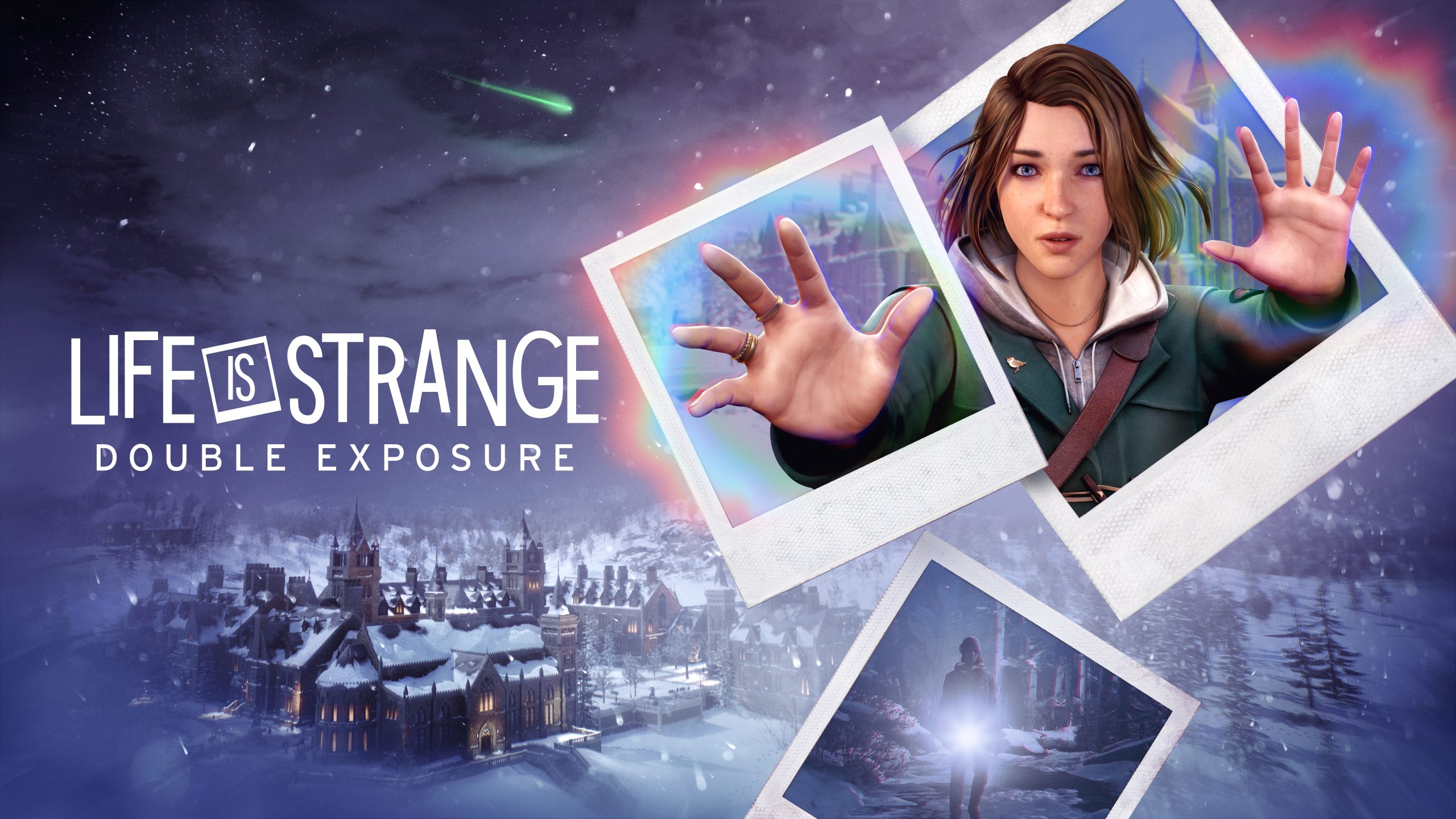

Something went awry between the first Life is Strange and Life is Strange: Double Exposure. I don’t mean that the first game’s sequels faltered or somehow derailed the world of Max Caulfield and her varied time powers; I mean something in our world, in us.
In the nine years since that first game, culture has become much less precocious and more self-critical. We’ve learned to identify toxic behaviors, and we’re quick to label narcissists. Alongside this pivot to the cynically self-aware, we’ve grown resistant to traditional social media (the common line of thinking is that only narcissists and Boomers are on Facebook anymore). We’ve come to expect introspection to lead to strength.

Such shifts in cultural thinking have not occurred in the world of Life is Strange, and perhaps no detail exemplifies this like its setting. Our plucky and beloved protagonist, Max Caulfield, has landed herself a gig teaching at a supposedly prestigious arts college; in the real world, arts colleges are closing at an alarming rate, either steamrolled into larger institutions or simply made bankrupt by increasingly dismal attendance rates. Max’s students might be more likely to go into more traditional fields, or (as with a lot of Gen Z-ers) skip college altogether.
Max herself seems not to have changed with the times; in the years between Life is Strange and Life is Strange: Double Exposure, her sensibilities and mousy charms seem untouched by the experiences of her 20s; one can’t help but think this is due to the uncertain nature of the first game’s ending. The two outcomes of the original Life is Strange would have vastly altered Max’s developmental and emotional trajectory, and the game can’t account for those changes because it cannot know what choices the player made – Max’s life is left largely ignored, and her personality remains largely arrested.

This changeless quality of our heroine goes on to affect our relationships with the game’s characters, who we are told we should care for with varying degrees of success. Sure, we love Diamond and Moses – and we love love our cute, bar-tending love interest Amanda – but the game’s central narrative revolves around Max’s interdimensional friendship with Safi. Safi is revealed to be so chock-full of the toxic traits our culture has become so adept at identifying – she comes off as a full-on sociopath – making it easy to feel that Max is a bit of a chump, easily misled and constantly prone to blaming herself for the terrible actions of others.

It’s a hard pill for longtime fans to swallow; we truly love Max. As a teenager, all her social foibles and mealy-mouthed uncertainty felt lived-in and relatable. Now in her late 20s, they feel undeniably sad. Perhaps we’d feel better about these relationships – both with the main cast and side characters – if we weren’t constantly interrupted by Facebook notifications. We best know her peers through social media – a detail truer to life ten years ago than today.
Those notifications are constant – after nearly every cut-scene conversation or scene transition, the right-hand side of the screen becomes a barrage of the exact sort of pop-ups most of us have disabled on our phones. For a game that works on point-and-click exploration, the start-stop momentum of constantly checking your phone (and Max’s tonally inappropriate reaction to trite posts) pulls the player out of the narrative momentum of the story.

The game mostly works, though, as any of these games mostly work. The player is sucked into that narrative and those relationships, however tenuous they might be, and we still love Max. We care about her emotional well-being and we want her to get the girl in the end. This, sadly, also means that we wished she could ditch Safi and spend time exclusively with their mutual friend, Moses, who is a much better hang.

The game’s supernatural twists likewise feel palatable until the Double Exposure’s fifth and final chapter, which tends toward the needlessly oblique. Its central mystery – who shot Safi in one world but left her alive in another? – is enough to smooth out the fact that multiverse stories are no longer novel and inherently charged with excitement.
We want to love Life is Strange: Double Exposure. We want to delight in Max Caulfield’s development after nearly a decade away; we want to delight in complicated relationships that aren’t inherently one-sided. Tragically, the credits roll on a world in which Max continues to take abuse and blame herself, and even the suggestion of sad kid team-ups leaves us feeling hollow and unfulfilled.




You must be logged in to post a comment.