

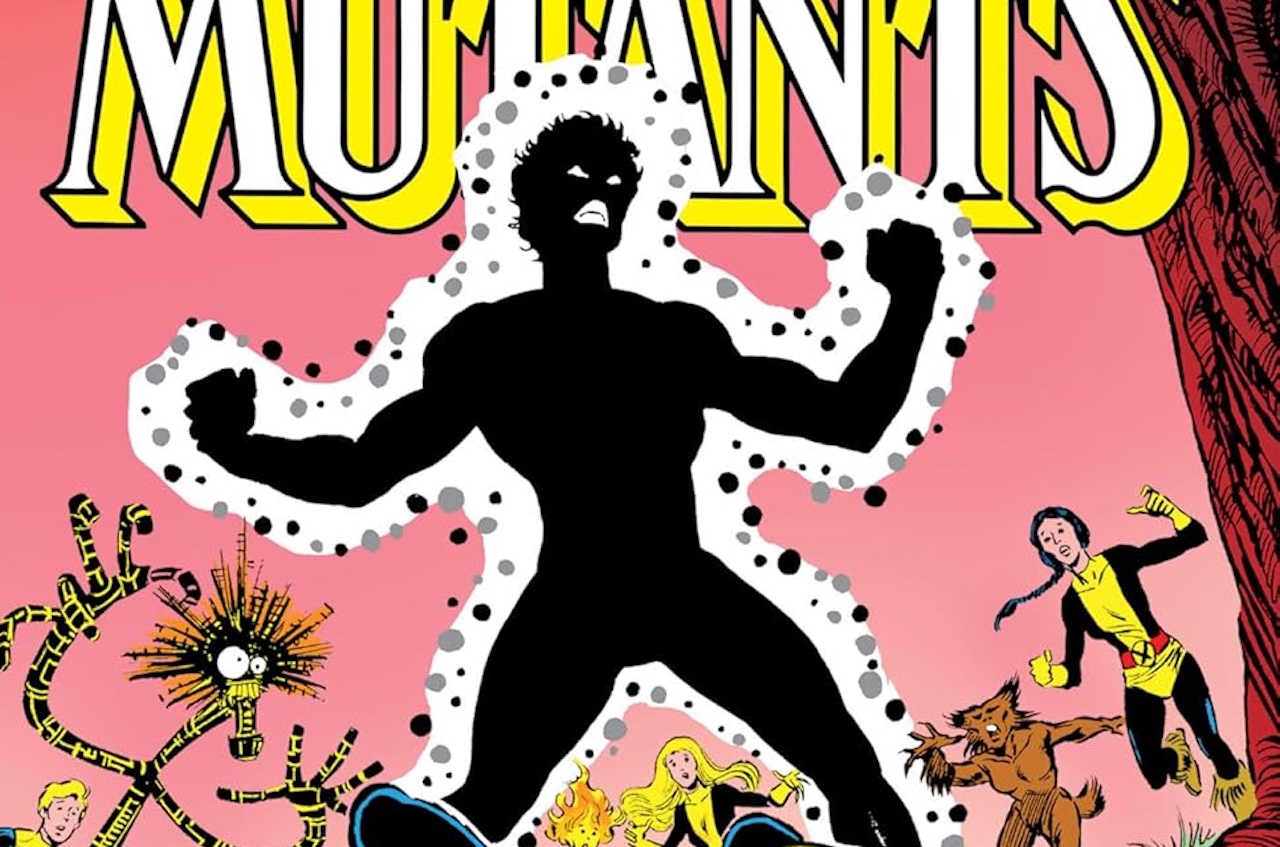

Few runs of comics feel nearly flawless like Chris Claremont’s run on New Mutants. Where his tenure on Uncanny X-Men began with a set of characters he didn’t create (but quickly made his own), the Mutants were a team completely tailored to the stories he was going to tell with them: a semi-diverse set of teenagers with interesting new mutations in a Marvel Universe that had yet to be burdened with a surplus of mutants.

Marvel
Along with impossibly great artists like Bob McLeod and Bill Sienkiewicz, Claremont created some of the most formally adventurous comics being released by Marvel at the time. Even after Claremont’s time ended on the series, the group continued to have some of the most off-the-wall adventures in comics under the capable hands of Louise Simonson. It’s a book that treasured fun over grim, shying away from the grittier impulses of other hit sellers like Daredevil. This isn’t to say that the book lacked pathos – Illyana was a demon queen, Warlock was being hunted, and Sunspot skirted a potential for future cruelty. It was a perfect soap opera.
New Mutants Epic Collection: Fallen Angels collects the final portion of Claremont’s run on the series (with the bonus of Fallen Angels, a Jo Duffy-penned side adventure). Almost as if to spotlight how committed to lightheartedness, these issues feature the team jumping timelines away from The Mutant Massacre, which was bleakly unfolding over in Uncanny; while Marvel’s main mutants dealt with a massacre, the Mutants were subverting tyranny in two different timelines and jaunting off to space for a battle with team member Warlock’s massive, techno-organic dad.

Marvel
With slick, stylistic artwork from Jackson Guice and Kevin Nowlan, this era of the book continued the trend of compelling, beautiful artwork; under Guice, everyone looks like a fashion model in a catalog selling spandex suits; Nowlan adds a bit of stylized sharpness to space flight.

Marvel
In New Mutants Annual #3, Claremont teams with his frequent collaborator Alan Davis, throwing out all serious plot threads in order to tell a lovingly drawn and impossibly goofy story of Warlock and the Impossible Man competing against one another in what ultimately amounts to a shape-shifter action figure battle, taking turns as famous Marvel heroes and villains in a global journey; the Mutants follow after, trying anything they can to end the collateral damage.

Marvel
Fallen Angels ups all that zany, sending Sunspot and Warlock on a cosmic journey alongside cybernetic lobsters. It was an early example of what these characters might get up to under another writer, and Jo Duffy hand selects then-neglected characters with a flair for the dramatic, bringing Multiple Man and Siryn into a story with Devil Dinosaur and Moon Boy; those characters wouldn’t get their star turns in X-Factor and X-Force for another few years, and Fallen Angels primed them for that chance.
Looking back on these issues now, it’s easy to feel regret at how these characters fell out of favor. X-Force stripped away a lot of the human heart from Cannonball, where he toiled for nearly a decade. While he and Sunspot have occasional stints in big books like Hickman’s Avengers, the same can’t be said of characters like Mirage and Karma, who are usually relegated to brief New Mutants revival books. Illyana, perhaps the team’s most compelling character, spent over a decade dead, killed by the Legacy Virus.
It’s collections like New Mutants Epic Collection: Fallen Angels that give these characters their best chance at finding new readers, new fans; it seems impossible that anyone unfamiliar with the characters could spend these 20-odd issues with them and not come away with a deep affection for them. After all, Claremont engineered them to be loveable.




You must be logged in to post a comment.