

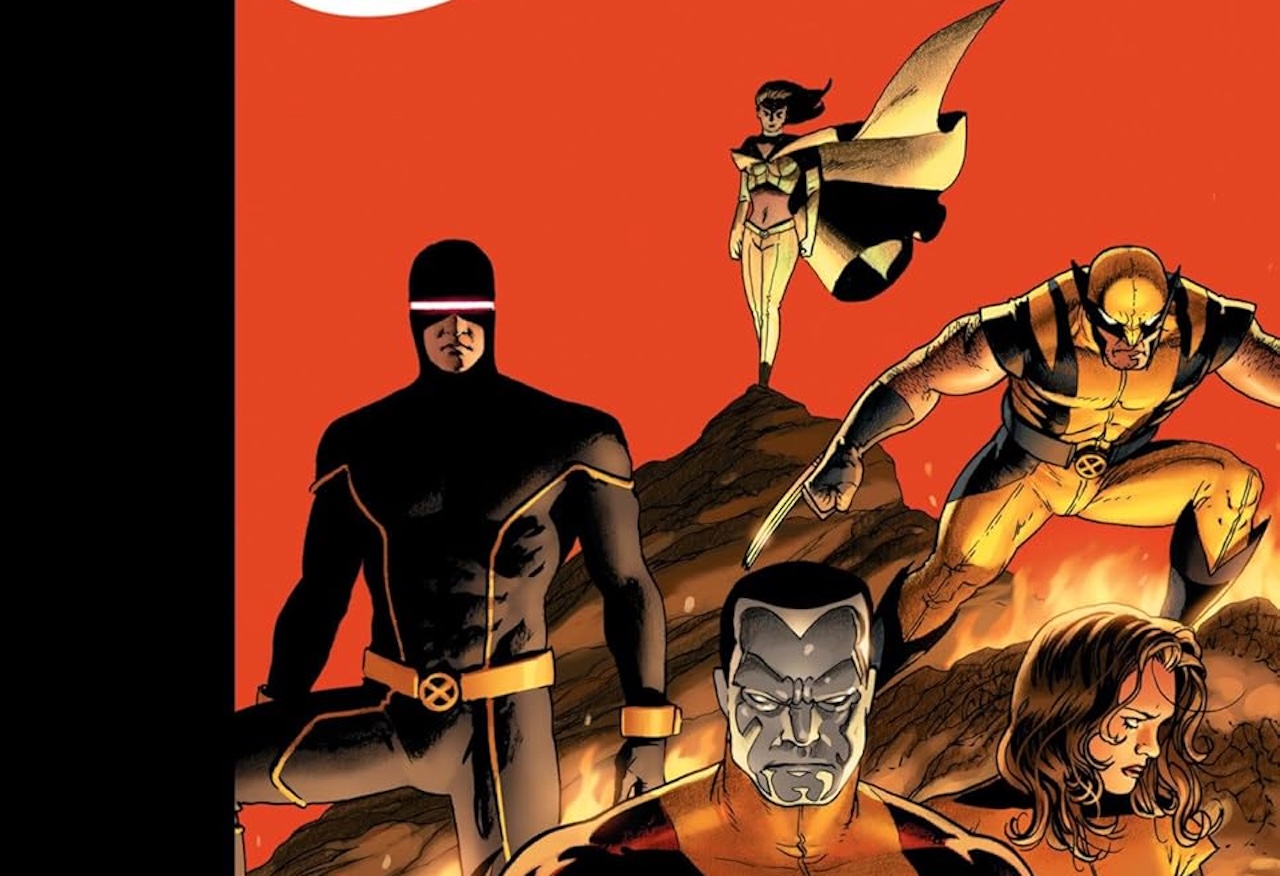

By the early-2000s the X-Men franchise had spun itself a nearly impenetrable web of nonsense. The post-Claremont era had spiraled out of control with series after series piling atop one another, shunting major characters into alternate universes, forcing problematic character relationships, and quietly forgetting major players. After a troubled decade, the best, boldest move was to completely reinvent Marvel’s Merry Mutants from the ground up in New X-Men, dealing devastating blows to the status quo in an effort to revitalize characters that had long been rendered impotent.
That was a genius move, but it wasn’t a beloved one. It would seem that big, bold moves are not always embraced by fans, however needed they may be. However celebrated it may be now, New X-Men alienated a lot of people – particularly people who had grown up on the very ’90s confusion that it sought to remedy.

Marvel
The only clear answer was to get back to basics. Build a team full of well-recognized and beloved characters and keep their adventures streamlined and free of all the continuity clutter that continued to plague the franchise.
But there was nothing basic about Astonishing X-Men. Packed with poignant emotional beats and recontextualizations of major relationships, each issue of the series played out with a precision that most comics at the time lacked: zero narrative clutter, clean and quirky dialogue, and impeccable artwork set the book apart not only from its franchise peers, but from its wider universe. While the New Avengers had their Civil War and Spider-Man underwent questionable changes, the X-Men had an outlet for a singular, uninterrupted story. It was a book that relied only on itself and its decades of history – and fans unfamiliar with that history were just as welcome as the long-timers.

Marvel
The book’s first arcs – collected in the first volume of Astonishing X-Men Modern Era Epic Collection – focused on reuniting the characters and dealing with the interior soap opera that made the team so famous. It reduces the relationships to familiarity and telling quips, and it hatches a major conflict out of a core concept of the team (new villain Danger is the Danger Room itself).
But in the final two arcs, collected in Astonishing X-Men Modern Era Epic Collection: Unstoppable, the book widens that scope so as to play with other core tropes of the franchise. Namely, it takes our heroes to space.
Space has long been baked into the X-Men’s DNA – the Starjammers, the Brood, and the Shi’ar are strangely formative for a book about humanity’s mutation. It only made sense for Astonishing, in its attempts to strip the franchise back to basics, to contribute to that larger legacy by way of homage.
The seeds for the team’s cosmic adventure, laid all the way back in the first issue of the series, come to tragic fruition; a book that began with Colossus’ reincarnation ends in Kitty Pryde’s self-sacrifice. The book maintains its deep understanding of its characters, its sense of humor and, most importantly, its commitment to emotional truth. Kitty’s sacrifice is powerful enough to bring tears to the reader’s eyes.

Marvel
Late artist John Cassaday’s beautiful, no-nonsense artwork serves this emotional truth impossibly well, allowing for silent panels and facial expressions where other books might have had to rely on text. It’s a spotlight of incredible talent, and it stands as a testament that Cassaday’s work here remain’s iconic in a franchise absolutely littered with incredible, iconic artists.

Marvel
Despite its writer, who is now understood to be problematic, Astonishing X-Men remains a masterpiece of its era, and of X-Men history. Relationships still important to this day – particularly Kitty and Emma’s – were planted and nurtured here. It remains free not only of the clutter of the preceding decade but of the turbulent decade that followed.




You must be logged in to post a comment.