

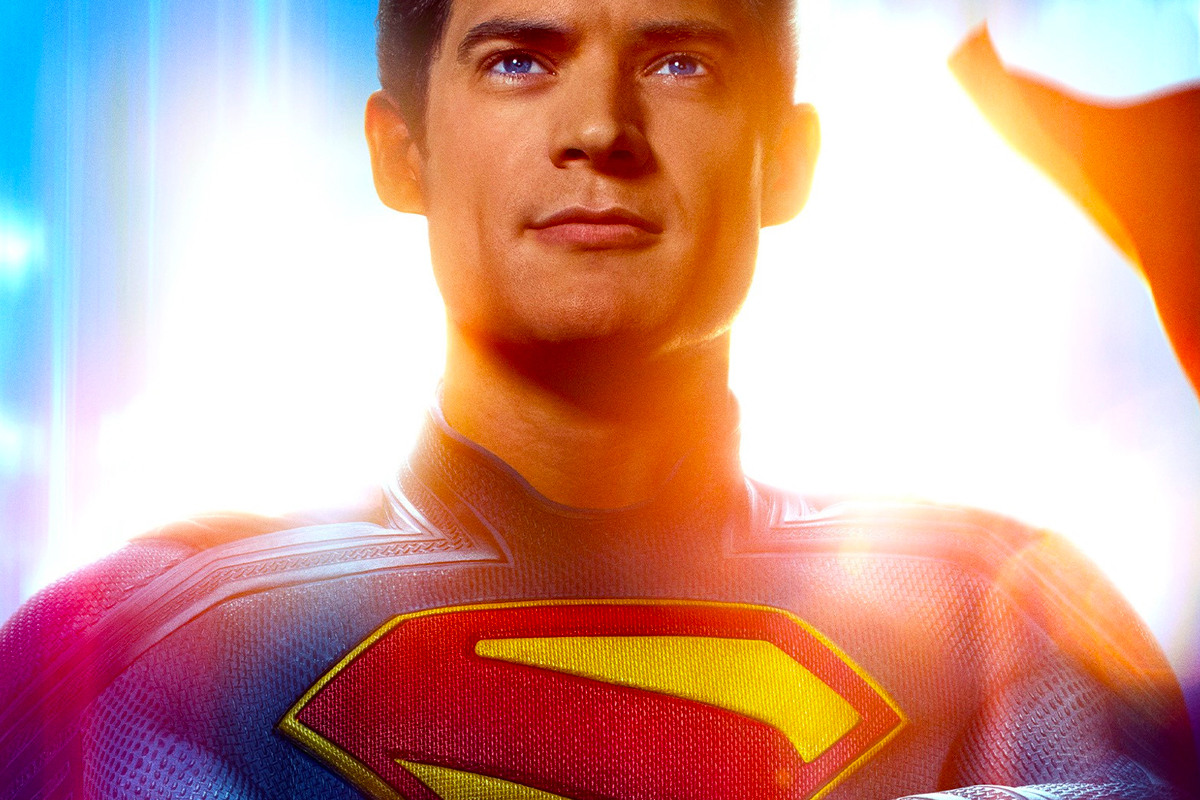

“Krypto… Take me home… Home… Krypto… Home…”
Superman is no stranger to the big screen, and James Gunn is coming into 2025’s Superman fully aware of the legacy he’s inheriting — and hoping to surpass. Since the Golden Age of Hollywood, the Man of Steel has been a staple of cinematic features, whether it was the Fleischer cartoons of the 1940s, or the Superman serials starring Kirk Alyn as Clark Kent and Noel Neill as Lois Lane. Superman especially enjoyed a prominent presence on television during the 1950s, when he was played by George Reeves. But it wasn’t until 1978’s Superman: The Movie that the character truly took flight in pop culture consciousness.
With Christopher Reeve as Clark Kent, Margot Kidder as Lois Lane, and Gene Hackman as Lex Luthor, Richard Donner’s Superman set the gold standard for superhero movies at the time. It balanced big spectacle with genuine heart, selling the fantasy that a man could fly while grounding it in emotional truth. Few directors since have matched that blend — and even fewer have dared to expand on it.
In 2025, James Gunn is possibly the first director in decades to set the bar even higher, which already has me feeling excited. But before going into why I’m super-pumped for Gunn’s take on the Man of Steel, I must address what’s been bothering me about past Superman movies.
But before we get into what makes Gunn’s approach so exciting, we need to address the challenges Superman has faced on the big screen over the years.
Superman’s Troubled History on the Big Screen, Explained

DC Studios
Despite Superman: The Movie and Superman II being celebrated hits, the sequels that came after Donner weren’t as successful – and it’s not hard to see why. Part of the problem was the sequels being placed in the hands of executives and filmmakers who didn’t understand the source material the way Donner did. This then led to questionable creative decisions, such as the firing of Donner, and taking the Man of Steel in wild new directions that didn’t resonate with audience members. The biggest offender on this front was Superman IV: The Quest for Peace.
Even with the decline in quality that the Superman movies suffered after the loss of Donner, filmmakers still tried to recapture the magic of his movies decades later. One such director was Bryan Singer, who revisited the world Donner had already established with the goal of continuing to build it. Unfortunately, despite the brilliant casting of Brandon Routh as Clark Kent, Singer’s 2006 movie, Superman Returns, failed to truly capture the heart of Donner’s movies. What he recaptured instead was the aesthetics of those films. After replicating Donner’s movies didn’t prove to be a winning formula, Singer’s successor, Zack Snyder, attempted a radical new approach to the Man of Steel: challenge what fans knew and loved about the iconic hero.
On paper, Snyder’s vision sounded like a much-needed change. He even had some solid ideas, like exploring how the real world would respond to a powerful protector like Superman existing. Additionally, Snyder also wanted to explore the psychological toll that kind of responsibility would have on the hero. While Snyder had an excellent concept to work with, the director went wrong with 2013’s Man of Steel by leaning too hard on deconstruction. By not embracing why Superman is an iconic hero (and ultimately rejecting the idea that superheroes can be altruistic), this doomed Snyder’s vision right out of the gate. By the time Batman v Superman: Dawn of Justice came out in 2016, Snyder had lost the audience’s trust in his vision.
Given these past struggles for Superman on the big screen, director James Gunn has the unenviable task of revitalizing DC’s flagship hero to an already cynical audience. Though the movie isn’t out yet, Superman’s promotion is already showing that Gunn is firing on cylinders – he’s embracing the warmth of the Donner movies while still exploring the cynical world view of Snyder. But the most important thing that Gunn is doing with Superman that hasn’t been done before in live-action is embracing the entire DC Universe mythos, no matter how bombastic it is. This is where Gunn is making the biggest difference for me, and it is everything I want in a Superman movie.
James Gunn’s Superman Embraces The DC Universe Mythos

DC Studios
One of the most exciting things about Gunn’s vision is that it doesn’t shy away from the hero’s Silver Age roots — the wilder, more colorful side of Superman that’s rarely made it to the big screen. Shows like Smallville, Supergirl, and Superman & Lois flirted with these ideas but often grounded them to fit their TV budgets and tones.
From the trailers and sneak peek alone, Gunn is immediately rejecting the idea of grounding Superman’s Silver Age concepts, which is refreshing to see.
From the five-minute preview Gunn released in April, David Corenswet’s Superman is seen falling violently from the sky into a snow-covered landscape. He is badly injured and struggling to breathe. The more exciting thing that happens in this clip, however, is Superman calling Krypto for assistance. While Krypto has been adapted into live-action for Superman & Lois’ series finale, he was also an ordinary dog who functioned as the emotional support animal to Tyler Hoechlin’s Clark Kent. In Gunn’s movie, Krypto is an actual superdog with a red cape. He also possesses the same powers as his Kryptonian owner, such as super-strength and super-speed.
Words cannot express what an absolute joy it is to finally get a more comics-accurate portrayal of Clark’s famous superpet. The other amazing thing about the scene is that Gunn doesn’t neglect that Krypto is a dog and behaves like a real dog. This is mostly seen with Krypto jumping on top of the battered Man of Steel, wanting to play, before he realizes the state that he is in. It’s also really sweet to see that Clark depends as much on his superpet for support as he does on the most important people in his life. This has never been seen in a live-action Superman movie. But that’s not the only Silver Age concept Gunn fully embraces for his film.
In the same preview, Clark is seen thanking the robots residing in his Fortress of Solitude for tending to his injuries. Although the robots very humorously state that there is no need to thank them as they won’t appreciate it, it still spotlights a core aspect of Superman’s character: he’s always grateful for what he has in life, whether it’s relationships with people, animals, or artificial intelligence. He even gets sad when Lex Luthor destroys his robots, indicating that this Man of Steel is emotionally vulnerable. This, too, is refreshing.
A decade ago, such an idea would have been dismissed as silly and ridiculous. But Gunn manages to take a silly Silver Age concept and make it work in a way that feels sincere to the world Clark lives in. It also doesn’t distract from the drama of the moment, effectively striking a nice balance between humor and the movie’s more serious situations.
A Bigger, Bolder DC Universe on Film
Another standout aspect Gunn does with the promotional material that elevates my excitement for Superman is establishing the existence of other superheroes, such as Hawkgirl, Green Lantern, Mr. Terrific, and possibly Metamorpho.
Each of these characters possesses unique abilities of their own. Some of these abilities are alien in origin, like Green Lantern’s ring (and possibly Hawkgirl herself), and others are the product of human genius, like Mr. Terrific’s T-Spheres. Apart from the other heroes, Gunn also shows that there will be other super-powered villains like Ultraman, metahumans, and kaiju, effectively promising an emersive experience.
While very little is known about the story and how all of these characters fit into it, knowing that Superman will be existing in a more colorful and bombastic world is already a step up from past adaptions of the DC Universe. This includes the Arrowverse, which originally started out with a more grounded approach before incorporating comics’ more outlandish tropes. But even then, the Arrowverse didn’t tap into these tropes too much due to smaller budgets and the stronger focus on drama.
James Gunn’s Superman Doesn’t Reject Exploring Real-World Questions

DC Studios
As mentioned earlier, Gunn’s predecessor Zack Snyder attempted to explore how the world would react to Superman’s existence. In this case, Snyder presented humanity as being skeptical that a powerful person like Superman could be entirely altruistic. He also examined Superman’s response to that world view and how that impacted his self-image. Snyder’s movies also asked very valid questions, like how Superman determines who he saves and who he doesn’t. There was definitely story potential in mining those questions. Snyder lost me in leaning too hard on them to the point of cynicism.
From the footage available, Gunn also revisits these questions as Snyder. The difference, however, is that Gunn explores them in a way that makes Superman truly think about his impact on the world. This ingredient was missing from Snyder’s movies since he presented Henry Cavill’s Man of Steel as not caring about public opinion. This isn’t the case with David Corenswet’s Superman.
From the interview with Lois Lane (as presented in the official trailer), Corenswet’s Superman does care about how he’s publicly perceived. More specifically, he wants the world to understand he’s not a danger to anyone and believes in doing good. Given his motivations, he doesn’t believe he’s doing anything wrong. Gunn also shows the other side of this argument in his first trailer with Rick Flag Sr. and Lex Luthor. As Lois points out, Superman stopping a war in a foreign country was seen as illegal entry and possibly an invasion. This has dangerous repercussions of its own, which are immediately intriguing.
These are the kinds of questions I want to walk into the theater asking:
-
How does Superman grow once he sees the unintended consequences of his actions?
-
Can he win the trust of those who fear him?
-
What drives Lex Luthor’s hatred beyond ego?
-
How will Lois help Clark stay grounded in his humanity?
This kind of moral complexity — paired with mythic storytelling — is what makes great Superman stories last.
As an audience member, I find myself asking, “How is Superman going to change his world view, now that he’s been made aware of the consequences of his actions? How will Lois continue to challenge his world views and induce his character growth throughout the film? How is Superman going to convince the world that it is in safe hands with him, even in the face of kaiju stomping through Metropolis? Will a more cynical government operative like Rick Flag Sr. ever trust Superman? Why is Lex Luthor so envious of Superman beyond the obvious narcissism?”
Going into the cinema with these questions in mind is exactly what I want to get out of my experience with Superman in July. I don’t just want to go in expecting to have a good time – I also want to have my understanding of Superman challenged in a powerful way that doesn’t undermine why he’s DC’s most important hero. This also means I want to experience a Superman movie that isn’t embarrassed by the character’s early comics history. From what Gunn has delivered thus far, he’s fully embracing the hero’s Silver Age tropes, while also incorporating concepts from his more modern interpretations.
For his modern take, Gunn is not just pulling from DC’s Bronze Age and post-Crisis on Infinite Earths continuity – he’s also pulling from the best aspects of DC’s New 52 era, and Elseworlds stories like Kingdom Come. In many ways, Gunn’s Superman feels like it’s going to be a celebration of the hero’s entire history, both on the page and on the screen. It also appears to be telling a heartfelt story that’s enjoyable for the entire family. This is something Gunn already accomplished with his Guardians of the Galaxy movie trilogy for Marvel Studios.
As a lifelong DC fan, this is exactly the kind of Superman movie I’ve been waiting for.
Superman will debut in cinemas on July 11, 2025.



You must be logged in to post a comment.