

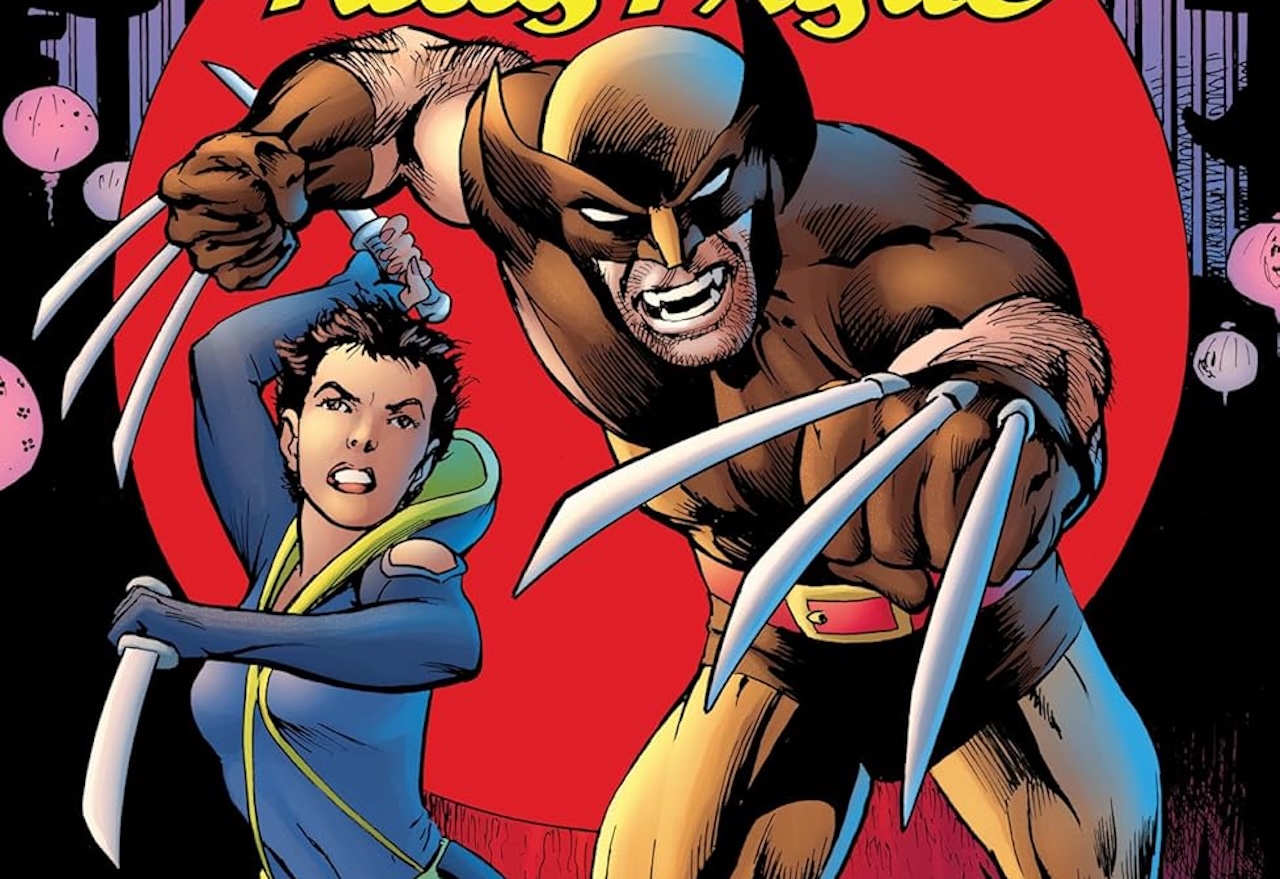

There’s been a recent rash of Marvel miniseries envisioned as ‘flashback’ stories of sorts, told by legendary creators and set during the heyday of their beloved runs on characters as diverse as Hulk, Adam Warlock, and the New Fantastic Four.
By nature, these flashback stories cannot make any waves. Stuck as they are in the preexisting fabric of comics’ past, they are using amber-frozen characters as action figures who cannot change, evolve, or otherwise behave out of character with the types of characters they were decades ago. Often, this leaves these miniseries in a tough place, less a pulse-pounding reunion of character and creator and more a half-hearted novelty.

Marvel
Wolverine and Kitty Pryde, the recent flashback mini that reunites the titular characters with their most important writer, manages something a little different. Sure, this is a story set some 41 years ago, but this is a writer who spent nearly two decades with the characters involved – and one who has, very occasionally, been allowed to return to that sandbox, dust off his toys, and attempt to bring some of the frenetic life he bestowed upon them back.
Chris Claremont has never been one to play it easy in the expected framework of editorial mandate. No other writer has been as impactful and defining on these characters, and even though they’re stuck in this pocket of pre-published time, unable to evolve, Claremont finds a way to play with the fabric of his original narrative. He does so by utilizing a somewhat encyclopedic knowledge of his own timeline, playing not only with the 1980s period, but with a one-off story he told 39 years later in 2013’s X-Men: Gold one-shot.
By the simple act of his prolific work, Claremont finds a place where his wide swath of work intersected, and he used that as a lever to introduce narrative wiggle room. Sure, Wolverine and Kitty Pryde cannot alter the characters (and, in doing so, the established timeline of Marvel’s ongoing narrative), but it can introduce fresh ideas to a long-concluded chapter of Claremont’s career.

Marvel
As a result, the book becomes something more than its flashback peers. Still rigid and out-of-time, but playful and bombastic. While the five issues don’t move the X-Men narrative, they are not moveless: Claremont’s frantic sense of playfulness is fully on display, a tendency that served the franchise in immeasurable ways. It’s an outdated story – comics simply are not written this way anymore – but it is one that serves as a reminder of an insane and important era of the medium.
Where other flashback books are anachronistic, Wolverine and Kitty Pryde is faithful. Where others feel lifeless, Wolverine and Kitty Pryde feels energetic. Where other books feel pointless, Wolverine and Kitty Pryde feels of its place. A reader could do worse than slipping this miniseries into a chronological reading of Claremont’s original X-Men tenure, just after 1984’s Kitty Pryde and Wolverine.




You must be logged in to post a comment.