

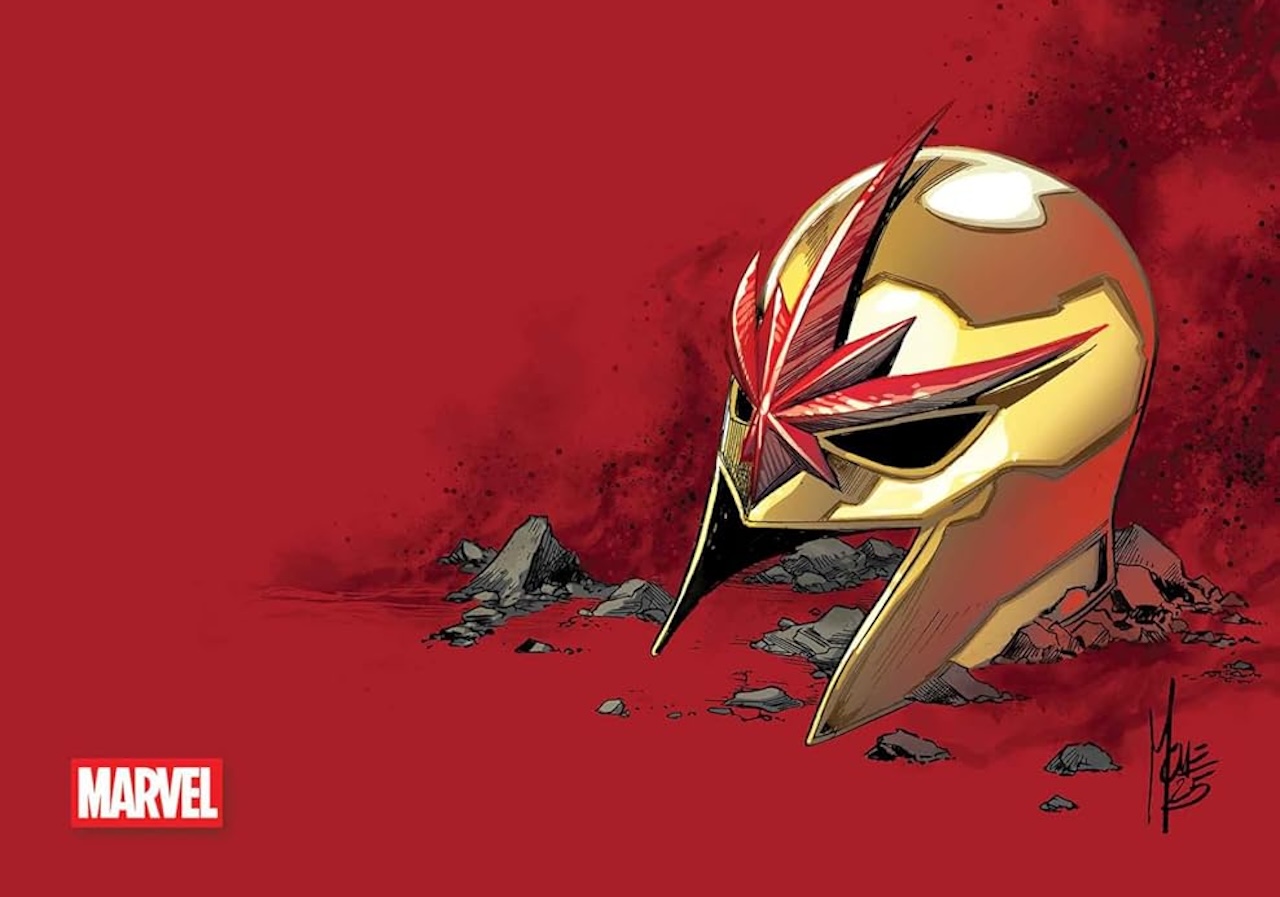

Maneuvering massive forces against one another, juggling a dozen major characters, and realigning the direction of the Marvel Cosmic narrative, Imperial sets out to do a lot. In the span of four issues – along with five one-shots – the event attempts to reset the political alignments of intergalactic forces; it splits the Kree/Skrull alliance apart, reestablishes the Inhumans as intergalactic powers, pushes Hulkling and Wiccan from the stage, and dethrones the Shi’ar leadership. All this, and more.
With such limited space and such massive scope, it’s not surprising that the event feels cluttered and incomplete. Framing devices break down, surprise reveals fall flat, and disheartening blows are dealt without emotionally resonant reactions. Epic battles and overwhelming political intrigue get muddled together, becoming less powerful as they are confusing.

Marvel
The core concern is a lack of space.
It’s a true shame when a story as ambitious as Imperial doesn’t get the support it deserves, whether that support comes from readers or from publishing schedules. Imperial deserved both – it deserved more space to tell itself, and it deserved a dedicated fan base interested in the hyper-complicated politics of Marvel’s cosmic realms.
But for all its failures, Imperial leaves a completely reconfigured political space, setting the stage for promising future space exploits, both from character and from societal levels. Several characters – Star-Lord, the dethroned Shi’ar princess Xandra (with her mother and father, Lilandra and Charles Xavier), and Nova, in particular – are now in place for fresh new chapters in their narratives. More pointedly, a union of intergalactic powers has been formed – with key, problematic forces refusing their place at the table.

Marvel
Whether those narrative threads get used in the aftermath is up to future creators (we’re already seeing some follow-up of the Imperial Guardians one-shot in Dan Abnett and Marcelo Ferreira’s new series of the same name). For fans of Marvel’s cosmic tapestry, this is a rich and exciting new era. It’s also an era fueled by speculation and suspended optimism: will these threads be picked up or will they linger (as things in the Cosmic realm often linger)?
Regardless of its narrative struggles and successes, the entire epic is overwhelmingly beautiful to look at: nine separate artists over the course of six titles ensure that space is brilliant and wonderful. It’s a thrill to see things like Cafu’s take on the space-horse race of Kymellians in Imperial War: Black Panther, a book with such visual richness that you feel as if you could step into that world. A playful She-Hulk pushes panel boundaries in Imperial War: She-Hulk, as drawn by Emilio Laiso. The main title, by Iban Coello and Federico Vicentini, is dense and lush with detail, and every panel positively glows with colors by Federico Blee.
Taken together, Imperial is brilliant but broken, a thrilling and lovely epic that trips over itself. A lot of its success will be determined by an uncertain publishing future; its legacy is yet to be proven. It will have its die-hard fans who look back on it in wonder, but it will have just as many readers confused as to why it was necessary.




You must be logged in to post a comment.