

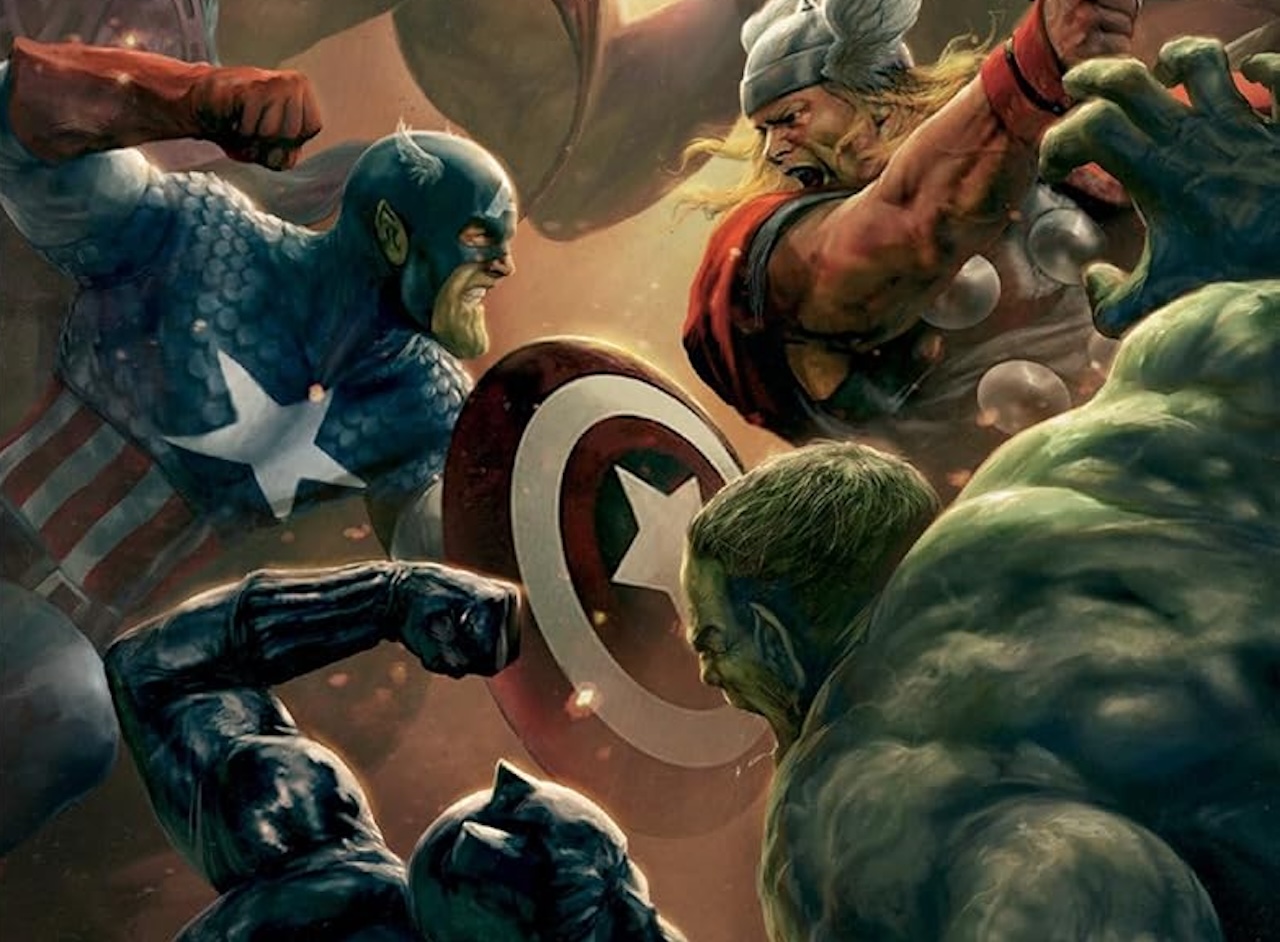

The early-2000s event train was off and running. Starting with Avengers: Disassembled, running through House of M and Civil War, and on through Fear Itself and beyond, the events weren’t like they were in earlier days, or even how they are now: they informed one another. Where today there are links between events like Blood Hunt and One World Under Doom – the events of one led to the next – those links are instantly forgettable: you don’t need to have read the first to understand the second.

Marvel
In the early 2000s, events meant actual changes to the status quo of the Marvel Universe. Relationships changed, the world order changed. Not only did you have to read each event with an academic eye for such changes, you needed to follow the major books – particularly the Avengers books – so that you could keep tabs on the major movers and shakers in the larger ongoing epic. Sure, you could dip your toes in here and there and understand well enough. . . but you wouldn’t understand understand. You wouldn’t have the context to know why it mattered that the Skrulls lead to Norman Osborne coming to power and ruining the lives of our heroes.
All of this also means that sometimes major ongoing series had the habit of losing the plot as they got overly involved in the larger events. The isolated plotlines of our characters had the habit of getting dropped as they found themselves embroiled in larger intrigues. Readers uninterested in following the larger event suddenly found themselves with nearly a year’s worth of books that all but ignore their beloved heroes’ ongoing journey. There is perhaps no better illustration of this than the Secret Invasion issues of New Avengers, released between February and December of 2008.
The New Avengers series could be seen as a sort of narrative backbone to a lot of the big dramas of the Marvel Universe – for the first time in decades, Avengers was a tent pole book, hoisting high its characters and carrying the ongoing thread for characters as diverse as Spider-Woman and Luke Cage to Doctor Strange and Echo.

Marvel
But in that ten month gap of the Secret Invasion, New Avengers labored not to follow our heroes through their trials against the Skrulls but to fill in back story of the invasion itself. Issues retconned the histories of characters we now knew to be Skrull agents, illuminating the moments that our true characters were replaced by sleepers, and how those Skrulls navigated major moments that had occurred over the previous thirty-odd issues of the series.

Marvel
These issues are vital, incredibly plotted and insightfully inspired issues – they, alongside similar issues in the sister book, Mighty Avengers, feel necessary to fully understand the scope of Secret Invasion. They are so good that some of the sting of losing our ongoing narrative is taken out of the subversion of that narrative; that they are interspersed with issues about our team, mid-invasion, makes them an easier pill to swallow.
The first ten or eleven issues collected in New Avengers Modern Era Epic Collection: Secret Invasion serve as example of the dangers of the event superstructure inherent to modern Marvel Comics, but they also serve as the epitome of how to make the most of derailment. The story might have to take blind turns, but making those turns into compelling and vital alleys enriches the larger whole, even as it disrupts the casual reader’s enjoyment of the series.



You must be logged in to post a comment.