

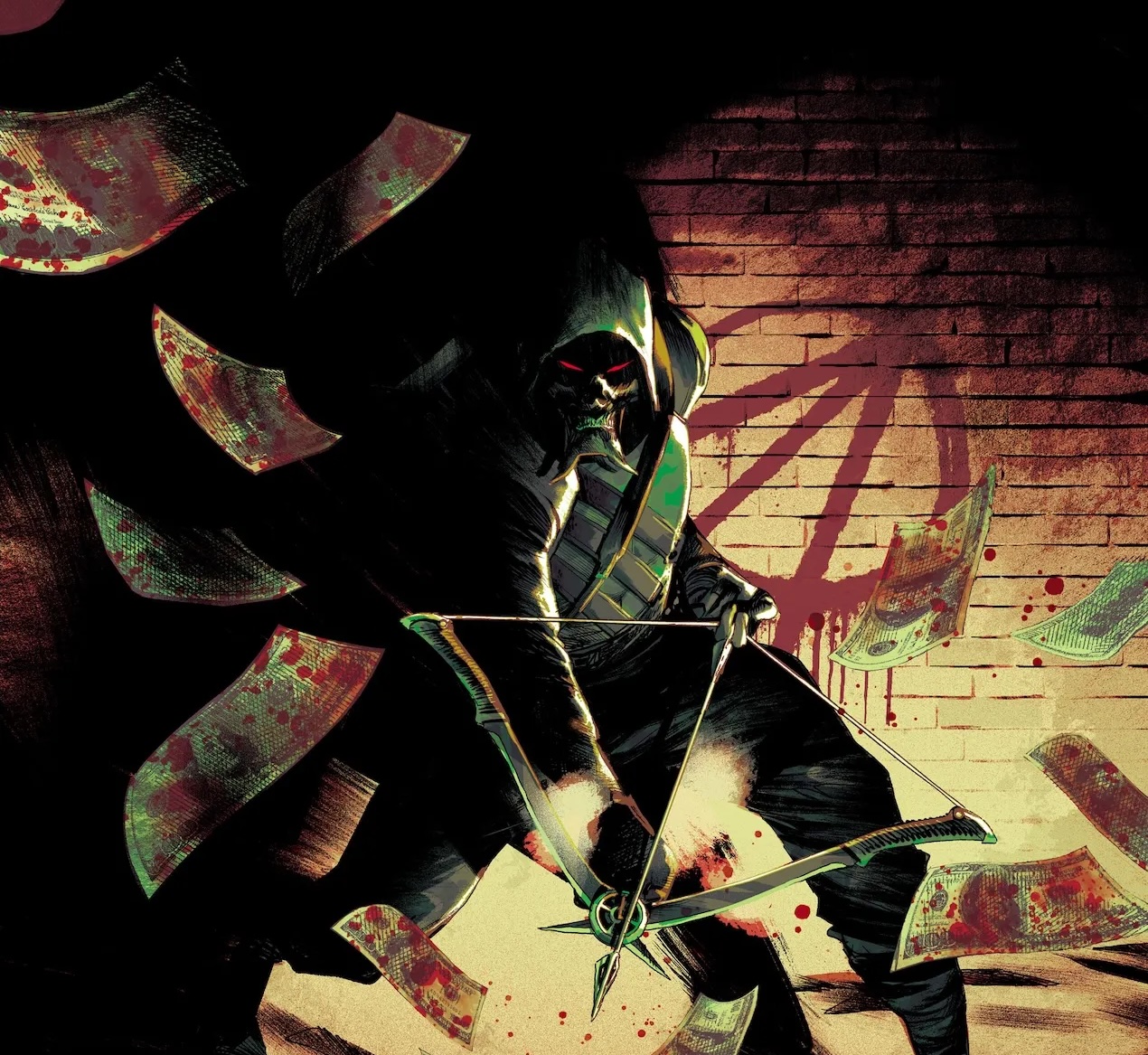

There’s no doubt DC’s Absolute line has been a smash hit, and with so much success, you have to give them props for not flooding the market with one new Absolute book after another. After a healthy amount of time since the last launch, Absolute Green Arrow expands the universe with Pornsak Pichetshote and Rafael Albuquerque in a big way. Having already sold out with a second printing on the way, it’s clear this is one of the most anticipated first issues in recent memory.
As Pichetshote’s first superhero series and Albuquerque’s seasoned horror work, the two gel perfectly here. Pichetshote’s strengths shine through with layered character work and sharp societal connections. Meanwhile, Albuquerque has a way of drawing you into character moments, scaring you on page turns, and making action feel intense and easy to follow. There’s a flair here that feels cinematic while still taking full advantage of what comics can do. When arrows start flying, you’ll practically duck while reading this.
The story opens with tech entrepreneur Jubal Slade sucking back wine, bragging about Oliver Queen’s death. Killed in Absolute Evil, the super rich are cackling over his demise. Very soon, however, Jubal’s guard is struck with a green arrow through the head, and Jubal goes running, only to find a room filled with dead bodyguards. Add in the arrows poisoning whoever they strike, shown in a gnarly close-up, and the Green Arrow lookalike with a metal mask is worse than any slasher you’ve seen in the movies. The fact that he’s cast in red smoke only adds to the horror vibes.
From there, the story shifts to internet reactions, with pitch-perfect slang and off-the-cuff takes we’ve all seen before. This grounds the story in a reality not unlike our own while also setting up Jubal’s popularity in a society obsessed with the ultra rich.

You dead, bud.
Credit: DC Comics
Adding to the comics experience are captions that inject interesting perspectives and even real-world social truths. In one, we learn about a Berkeley study suggesting proximity to money can make people more antisocial. It’s a fascinating touch that gives the book a Malcolm Gladwell feel, adding another layer to Pichetshote’s ideas about power, wealth, and influence.
Enter Dinah, a bodyguard we meet on a job with a pop star. It doesn’t go well, revealing how she has a bit of a temper and is more than willing to punch someone out before thinking things through. A cellphone acting as a panel connects these characters to our world again, with Dinah taking an online therapy session. The issue sets her up quickly and effectively, making it easy to root for her.
As the story progresses, we learn more about Dinah and her relationship to Oliver while setting up a new job protecting a billionaire. There’s a compelling mystery she is pulled into against her will, giving the narrative a strong push and pull that keeps things interesting.
Running around thirty pages, this issue covers a lot of ground, but it never feels overwhelming. Instead, each scene adds another layer, building out the world and characters with confidence. Closing out the issue is an intense action sequence with arrows flying and slick fight choreography from the mysterious masked figure on the cover. Albuquerque makes every movement feel fluid and dangerous, leaning into superhero action even in close-quarters combat. The action gives way to a quieter moment that deepens the mystery and leaves you wanting more.
Albuquerque’s art strikes a perfect balance between gruesome violence and the humanity of its more grounded characters, while the billionaires and those in power come off as corrupt as possible.
Marcelo Maiolo’s colors elevate everything further, from the striking reds in the opening to the darker tones surrounding Dinah’s next job. The use of sickly greens adds an off-kilter feeling that enhances the mystery and Dinah’s uneasy position. Even the most ordinary interiors feel alive thanks to the color work.
Props should also go to letterer Jeff Powell, who adds an extra layer of humanity to captions in a key flashback with Dinah and Oliver. This book may not be an indie, but Powell brings a handmade quality through word balloon shapes and subtle details that give the pages added personality.
Absolute Green Arrow #1 is a near-flawless debut that redefines what a Green Arrow story can be. Pornsak Pichetshote and Rafael Albuquerque deliver a bold, fully realized vision that blends horror, action, and social commentary into something immediate and unforgettable. Every creative choice feels deliberate, from the grounded character work to the striking visual language. This is the kind of first issue that demands attention and sets a new standard for the Absolute line.




You must be logged in to post a comment.