


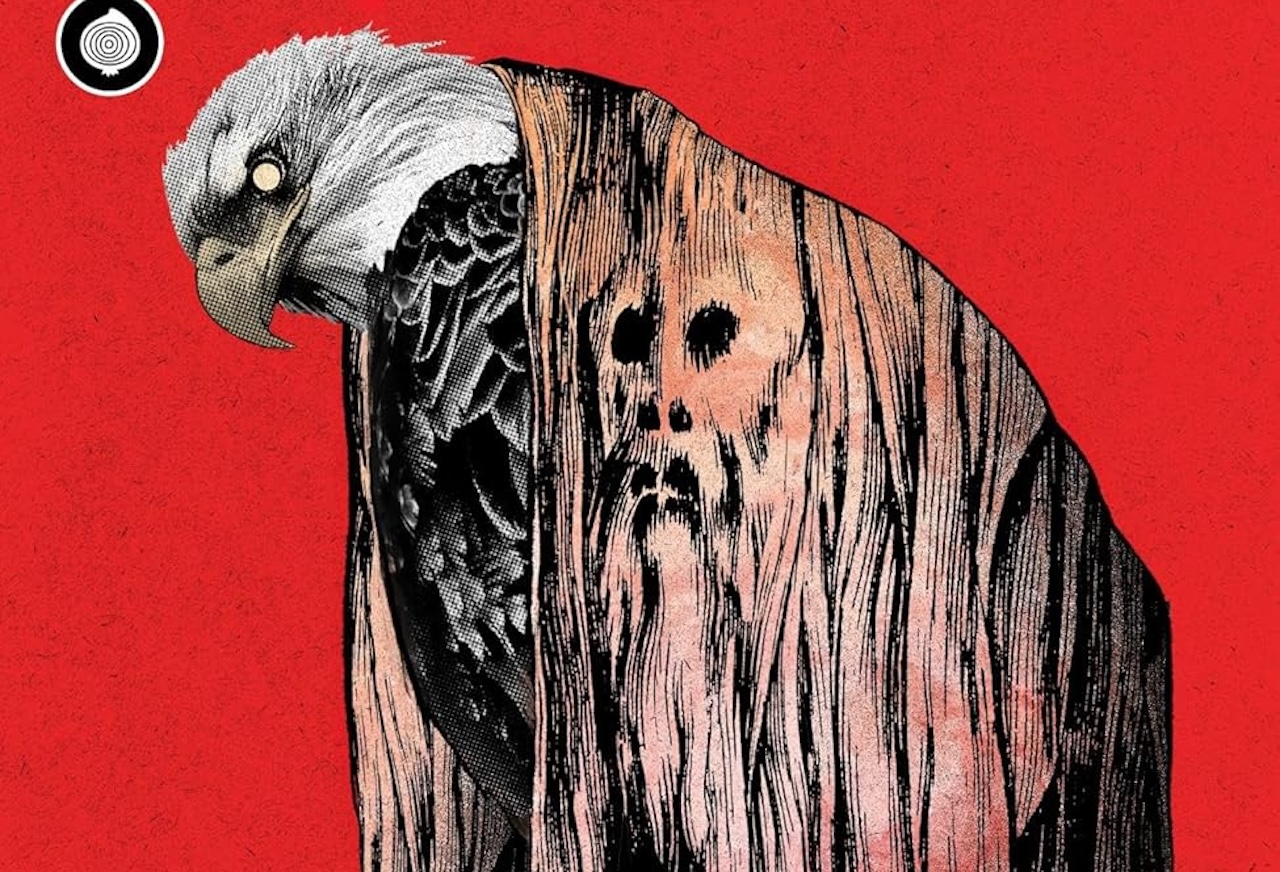

There’s a lot of weight that comes with naming your comic after a god. You have to consider how some people may or may not worship that god. You have to consider what lines some people might be willing to cross. And if your story throws out the idea that gods walk among us, there’s the beauty and terror wrapped up inside the idea of coming face to face with a divine being. Odin #2 shows that Marguerite Bennett, James Tynion IV, Letizia Cadonici, and Jordie Bellaire have considered these questions… and are willing to tackle them, no matter where the path might lead.

It also shows that this is a comic that’s willing to push the envelope, especially in terms of the madness it’s willing to visit upon the white supremacists who seek Odin in the snow. Already, the group’s lost one of its members — or more accurately, they devoured him in a drug-fueled haze of ecstasy and madness. Naturally, some folks are freaking out over the fact that they committed cannibalism, while others are still committed. For Adela Weber, the journalist embedded within the group, the risk of her identity being discovered pales in comparison to the danger posed by the “true believers” within the group.
It’s through Adela’s observations of her fellow survivors that Bennett and Tynion begin to tackle some of the bigger themes I spoke about. Chief among them is the price people pay for their beliefs, whether mental or physical. For Robert, one of the members who wants to belong, it’s his own identity. For Tanner, the loudest and most violent, it’s a way to show their leader Fred that he’s dedicated to the cause. I love that the script takes on a journalist’s eye, analyzing and nailing people’s personalities with well-crafted paragraphs. You can also tell that Bennett and Tynion did their research, whether it pertains to Norse mythology or the origins of the swastika.

Image
Said carnage is brought to life by Cadonici and Bellaire. Cadonici doesn’t shy away from some of the more horrible moments, especially when it comes to Robert. When it turns out he’s suffering from frostbite, she draws the result on his leg in gruesome detail. Later on, when Fred starts conducting a gruesome ritual, he starts carving symbols into someone’s flesh, and spurts of bright red blood start to erupt. That’s nothing compared to some of the starkly beautiful and often disturbing imagery: a flaming bird wraps itself around a man, the stars form a glowing pattern, a scene retelling an ancient myth is given the color and texture of freshly painted parchment.
I would be remiss if I didn’t mention the lettering work by Tom Napolitano. In the opening pages, Napolitano depicts the sheer panic that’s running through everyone’s heads, as their words grow bigger and messier. He also does a great job of illustrating Adela’s inner thoughts, which change from clinical to compassionate to panicky within the span of a single issue. Again, her words grow bigger or smaller based on her mood, with Napolitano paying close attention to the cadence of the script.
Odin #2 is a meditation on faith and the price people pay for it, backed up by disturbingly gripping imagery. It’s also proving to be one of the strongest cases for atheism that I’ve ever read.




You must be logged in to post a comment.