



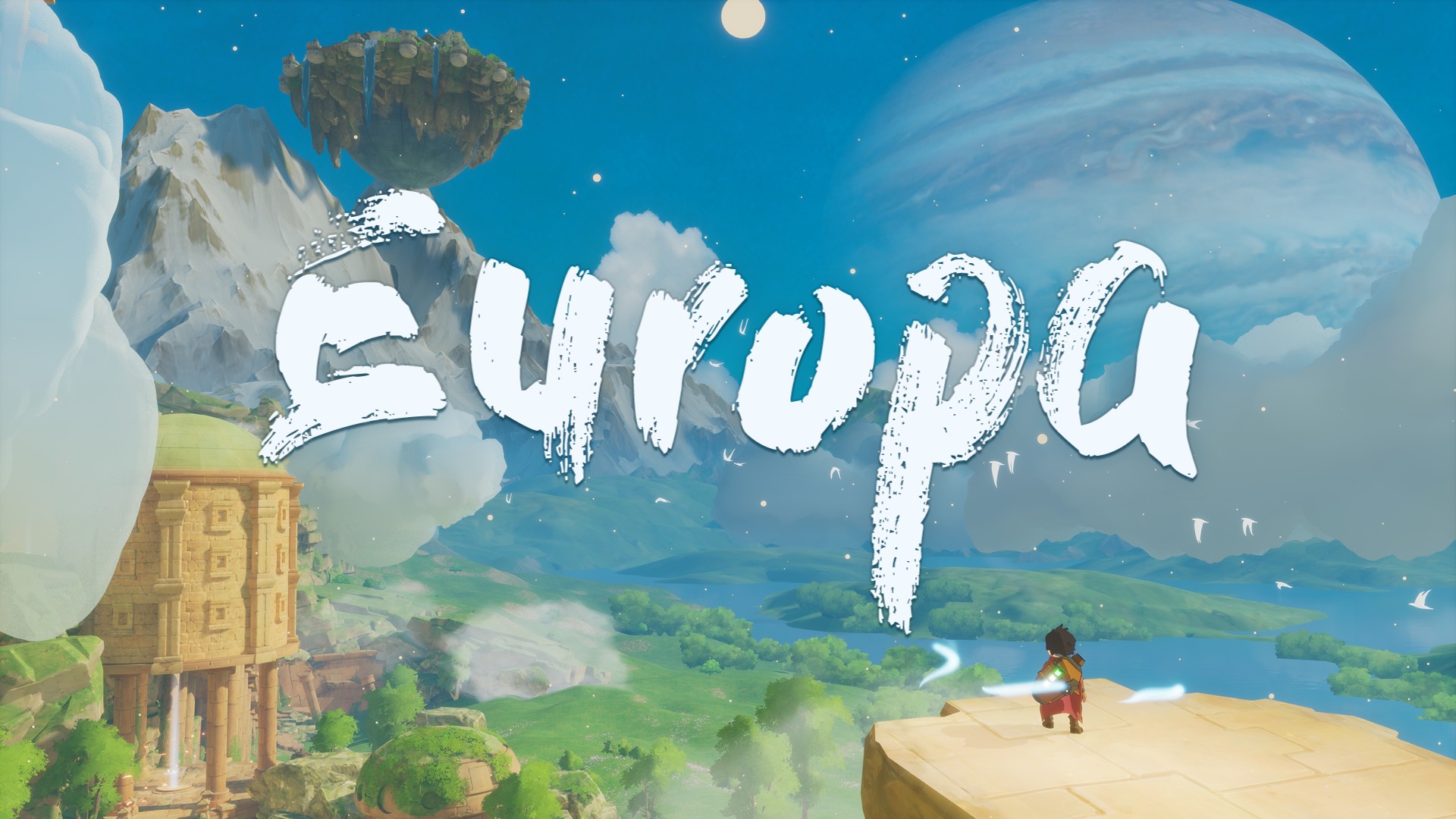

As the works of Studio Ghibli grow more and more popular, their ability to inspire grows as well. You’d be hard-pressed to browse Steam or Nintendo’s eShop and not stumble across a handful of indie games emulating the aesthetic and vibes of a Ghibli production. Launching today, Europa is the latest to do just that. It’s a relaxing, bite-sized journey through Jupiter’s most notable moon.

Europa has often fascinated astronomers and nerds (like myself) alike for the conceivable possibility – stretching those words to max here – of single-celled life in its ocean. Europa the game takes that idea and imagines the moon as abundant with life, both animal (deer, foxes, fish) and the mechanical Gardeners. They were on Europa before humans and mostly resemble robotic bugs and birds, though you’ll encounter some massive almost dragonfly-like Gardeners flying through Europa’s skies.

The bulk of the game sees Zee, a robotic six-year-old boy, floating across the moon and picking up journal pages written by an elderly human who is no longer around. The opening journal monologue urges Zee to venture to a floating island in the sky. The successive journal entries tell you of Europa’s history, both personal and big picture, from the excellently voice acted narrator.
He’ll tell you of humanity’s arrival on Europa, their interactions with the gardeners, and how Europa ended up in the state it is now. Like the work of Hayao Miyazaki, it covers themes of environmental destruction, imagining an Earth that necessitated humanity’s fleeing, and what constitutes life outside of our narrowed view of it. As Europa is short at about four hours, I won’t say much more as to not give away too much. I’ll just posit that I was eagerly looking forward to each journal entry as I couldn’t wait to learn more.

Europa‘s gameplay consists solely of travel mechanics. You’ll jump, glide, and use Zee’s Zephyr jet pack to travel through the game’s thirteen chapters. The Zephyr contains a limited amount of fuel and you’ll ping between spheres throughout the levels to pick up more. They also work as great guides shepherding you along. Some levels have additional traversal mechanics, like wind tunnels quickly blowing Zee across the moon.
Even though there are some Gardeners who see Zee as a threat and attempt to shoot him from the sky, Europa has no life bar or combat mechanics – a personal breath of fresh air after playing Dragon Ball: Sparking! Zero for the past week. Some levels require the completion of puzzles to advance, but the puzzles are none too difficult and easily solved.

Europa definitely looks like a Ghibli film in video game form; it’s like a distant cousin of Ni no Kuni. The art style isn’t shy about its inspiration, and Zee could easily be dropped into Miyazaki’s next film. The world itself harkens back to Laputa: Castle in the Sky with its environments, but especially with some of its gardeners. You’ll come across Gardeners overtaken by nature that look like Laputa’s Guardians mixed with the Iron Giant. What really appealed to me, though, was Europa’s music. You’ll be accompanied by a serene score that relies heavily on the piano and emulates Joe Hisaishi’s work well.
At only $14.99, Europa is a steal of a charming adventure. In just a few hours, it builds characters, a world, and a narrative brimming with emotion and wonder. Is there life on Mars? Perhaps not, but there is plenty in Europa.



You must be logged in to post a comment.