

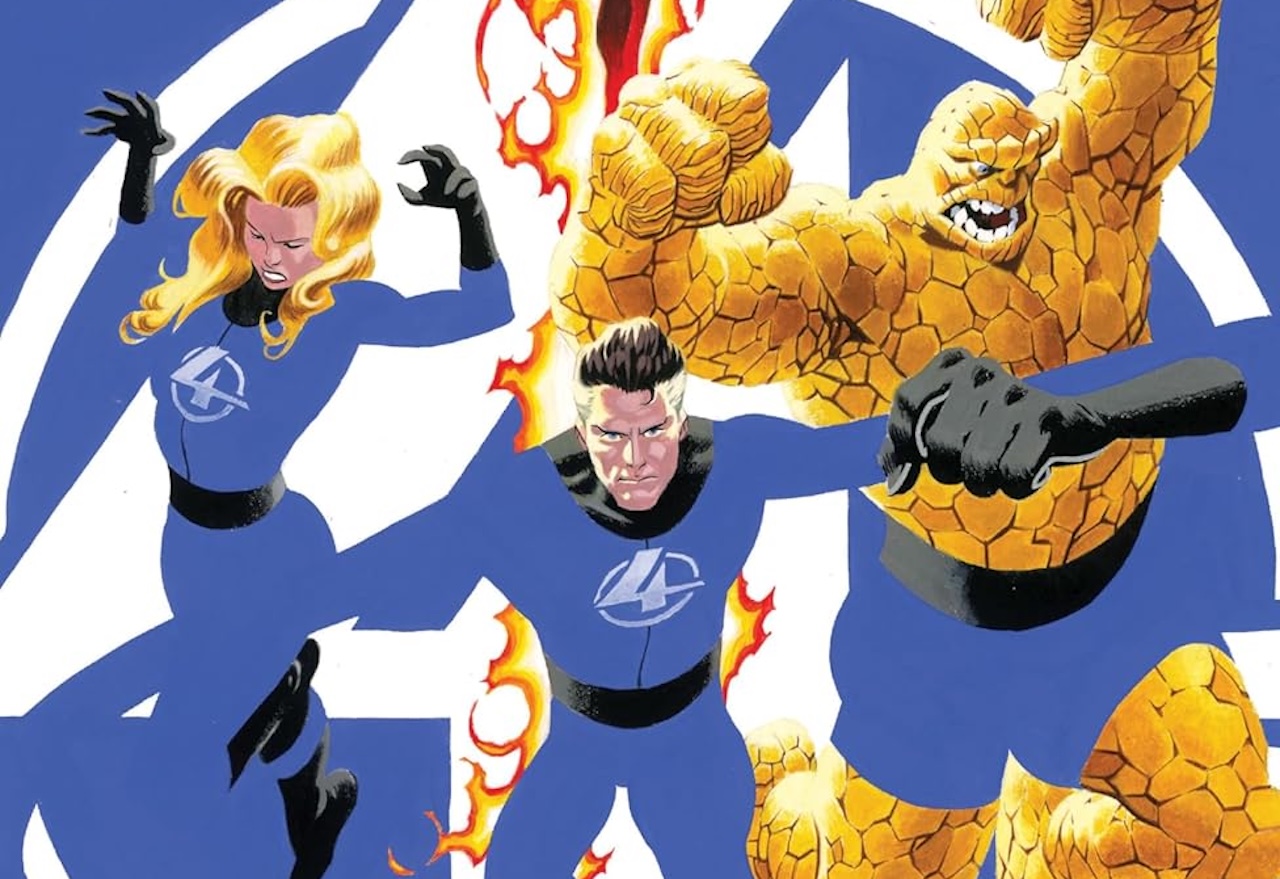

Utilizing 12 separate creative teams over four issues, Fantastic Four Fanfare is a celebration of the team and its long-established style of adventuring. Over 12 bite-sized short stories, the creators find a key facet of what makes the Fantastic Four interesting and work to refine it to its simplest, most dynamic parts.
These are fun, if deeply inconsequential stories. The book works as a sort of primer on the sorts of adventures the FF might go on, writ incredibly small. A small-scale alien invasion is thwarted; one of Doctor Doom’s robots is (accidentally) destroyed; the Mole Man features not once but twice.

Marvel
The book’s best stories are the ones featuring stories that would merit B- and C-plots in the main title at best – Johnny pranking Ben or appearing on a Love Island-style reality show, for instance. In John Tyler Christopher and Andrew McIntosh’s “Future Uncertain”, Reed Richards finds himself stumped by a lack of communication from his future self and spirals into an anxiety-induced period of preemptive strikes at potential threats, only to realize that he missed his weekly time-travel communique because of his daughter’s birthday party. These stories are somehow more impactful than the more measured, “classic” style stories (such as Alan Davis’s throwback-style tale, “Life’s a Gas”, which feels like an homage to the 1960s more than a modern adventure).

Marvel
The book allows for some dream team creator collaborations, like Chip Zdarksy and Mike Allred’s “Universal Appeal”, which combines the writer’s hyperactive sense of humor with the artist’s pop-culture sensibilities. It highlights how well the two might fare if they were teamed on a larger project, Fantastic Four-related or not.
Like most self-celebratory sorts of books, Fanfare doesn’t present much in the way of solid storytelling or envelope-pushing adventures: these are stories meant to sum up an idea, not further it. Only one of these stories (“Hide and Seeker”, by Mark Buckingham) makes explicit reference to canonical events, meaning that the larger collection lacks a certain amount of gravity: these adventures could happen at any time, but they aren’t exactly making waves as they do. Each adventure could be just another hapless Tuesday in the lives of Marvel’s First Family.
Fanfare ends up being the perfect sampler platter for new readers to grasp the scale and spirit of the team – perfect to have run alongside the theatrical run of The Fantastic Four: First Steps: a comic without a chronology, untethered from the ongoing drama of the main book. It’s the perfect gift to the Four-curious in your lives; it gets the reader involved without needing to be too involved.




You must be logged in to post a comment.