

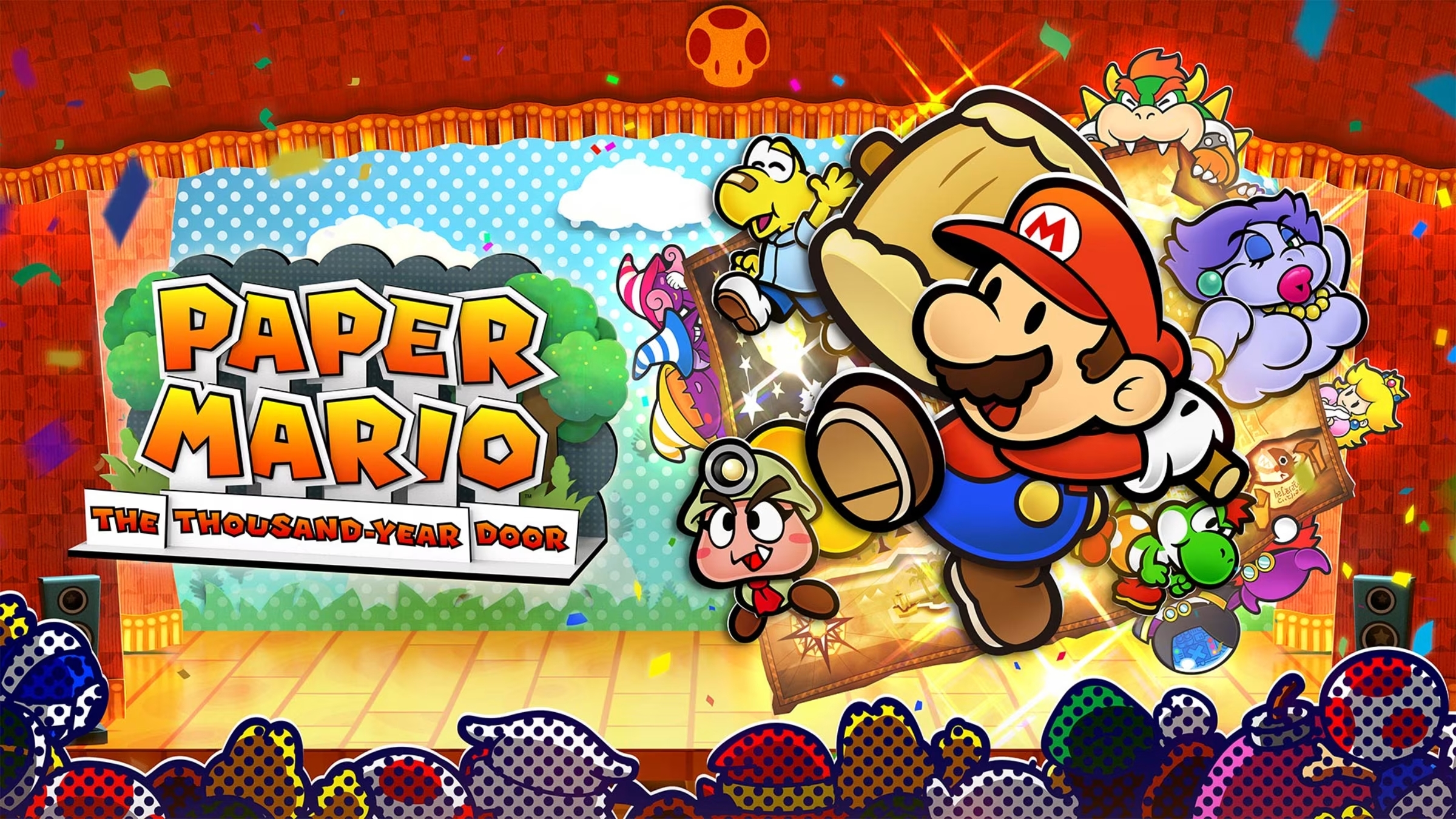

Dealing with a Mario game – as a fan or as a critic – means first engaging with your emotional history with Mario. Every Mario game after your first engages you somehow in your relationship with Mario; for many of us, there have been a lot of Marios.
This curious haze of nostalgia only compounds when the game in question is a remake or remaster, which have been plentiful on the Switch. Mario games from nearly every system have found their way onto Nintendo’s hybrid, and Paper Mario: The Thousand Year Door is only the most recent.

Thousand Year Door is both the second entry in the fan-favorite Paper Mario series and the second to reach the system – the first, 2001’s N64 entry, can be played with a Nintendo Switch Online account – but, as with most Mario games, one entry in the series is never a requisite to play any other.
What makes Paper Mario so special comes down to several delightful details. The first is the series’ incredible sense of whimsical design aesthetic: everything appears to be hand-crafted out of scraps of paper and cardboard, an Elmer’s glue wonderland peopled with paper doll goombas and koopas.
Secondly, the game is surprisingly funny. You might assume that you’ll be play the game with a pleasant smirk, charmed but otherwise unmoved, but there are dozens of laugh-out-loud moments.

Finally, the game delivers a uniquely kid-friendly version of classic JRPGs. But it is in this child’s play simplicity where the nostalgia breaks down. Other Mario games (and their remakes) land squarely in the ‘all-ages’ camp: straight-forward levels easily grasped by younger players hide ever-escalating levels of hair-pulling challenges.
Paper Mario doesn’t have that same challenge for older players, and the original players of Thousand Year Door are twenty years older. The classic turn-based battles – which feature mid-attack button prompts to both increase damage and keep a young player engaged – are tedious now; an exercise not in challenge or timing so much as bland repetition. The gameplay has an infuriating sluggishness, from non-adjustable text speeds to Mario’s plodding walking pace. Busy work fills the game from top to bottom.

All this means that the game might not be suited to those players engaging deeply with nostalgia; it is, rather, perfect for players who don’t yet have that decade’s-long relationship with Mario’s cross-genre exploits. This is meant to be a game that colors the playing of Mario’s down the line.
Better yet, the Switch remake of Paper Mario: The Thousand Year Door might best be enjoyed as a meeting between that older generation and the new. Those with long emotional histories should sit down alongside those with new Mario eyes, and explore the delights through eyes much more willing to be dazzled and delighted.




You must be logged in to post a comment Login