

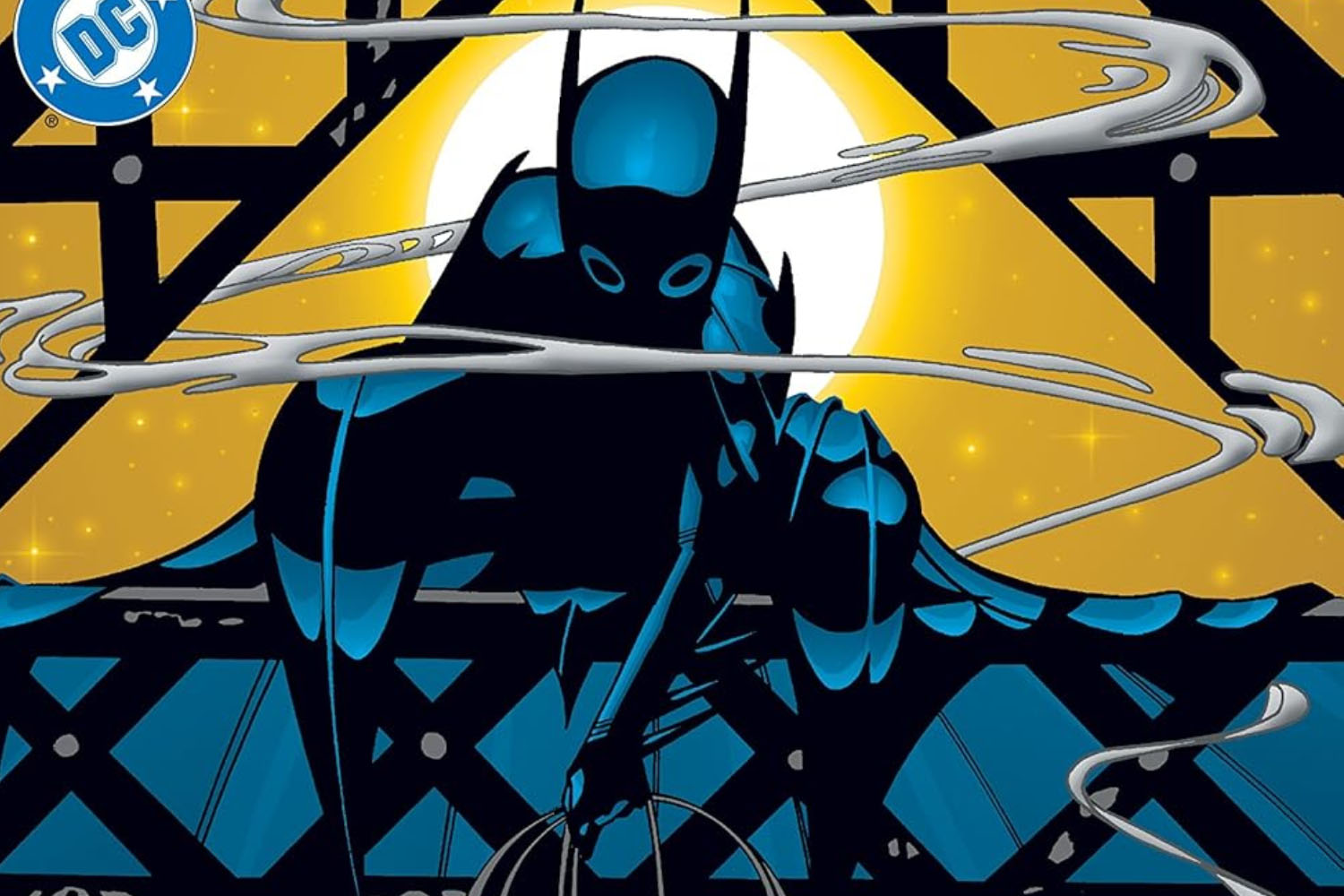

You probably already know Cassandra Cain. The second major holder of the Batgirl mantle, and a character who’s managed to not only endure, but thrive, despite the odds. I won’t start off with a long preamble about what and who she is and what her vast personal history is (you know how to work Wikipedia if you need a refresher). No, before I begin this long, long look at the character you’re all here to read about, I need to give some personal history first to frame our conversation.
It’s been a trend in recent years among fans to re-examine this character and interpret her via a neurodivergent lens — with Autism Spectrum Disorder being one of the most popular I’ve come across. I myself heard this suggested to me a long, long time ago by a blog post I can no longer seem to be able to dig up, but trust me when I say it was there. Believe you me, an impact was made.
I’ve honestly never been particularly open about my own neurodivergency, my autism. It was a diagnosis I was fortunate to get very young, and thus something I’ve had to consciously navigate most of my life. It’s a part of myself that I kept hidden for the longest time, a mark of shame during the time I grew up. These days, in my adult life, I see a lot of people wearing ASD like a badge of honor, being openly celebratory for what makes them, well, them.
This was unfortunately not the environment I had the benefit of growing up in. I entered my teenage years when “autistic” was just another slur slung around without regard. It made me feel ashamed to be born that way, to think differently, to see the world differently. I would always (and still sometimes catch myself doing, involuntarily) tense up and wince when I heard the word “autistic.” It had become the hip new insult, so I often saw it daily, and even if I had supportive friends and family, I still felt that shame, that isolation. I felt like I had to be one of “the normal ones.” You know, one of the “good” autistics, the ones that fit in. So, I never brought it up. I hid behind a mask of “normality.”
This was a difficult time for me, yes, but this was also the environment I got deeper into comic books, and the time I met some of my dearest friends. And there was one character who resonated with me more than the rest, the one I was known for as “the guy.” A character that took me years to realize I saw so much of myself in, and whom I could relate my struggles with my autism.
Cassandra Cain, the second Batgirl. The best Batgirl.

Courtesy of DC Comics.
There’s a lot that can be said about Cass’ importance to the industry; being a woman of colour taking up the legacy of a famously white character being a very notable notch on her belt. Still, I’m not the person to talk about that particular legacy of hers. What I can speak to, though, is her importance to me and me alone. The importance she held to a confused and anxious autistic teenage boy that felt isolated from the people around him. Growing up in a place and time where he was constantly told the way he thinks was not only abnormal and not worth understanding, but worthy of beratement and mockery. That he didn’t need to be heard. He just needed to get normal.
One of the core themes of Cassandra’s books is the difficulty she has being understood by others, and her struggles to comprehend what others take for granted as normal behavior. Frankly, nobody gets her. And how could they? She sees, interacts, and communicates in a way totally unlike what anybody she meets has ever had to parse before. She has her own highly specific way of communicating with the world around her, something that is often framed as extremely difficult and challenging for others to grasp. People find her genuinely weird at first glance, usually needing to see some kind of proof she’s “normal” before warming up to her. Even the few people who speak her “language” in some sense or another don’t do so fluently, like Batman himself. (Honestly, another character one could make a strong case for an ASD diagnosis, but that’s a discussion for another day.) It’s a constant struggle between Cass trying to bridge the gaps in their understanding with hers, and it colours much of her early run.

Courtesy of DC Comics.
This was extremely emblematic of my autistic experience growing up. Living in a world that often felt like it shut its ears to me, and no matter how much or how hard I wanted to scream my frustrations to the heavens, people would just not understand, not get me. My words just mere silence to a world choosing to be deaf. Cassandra was unlike any other character I had read at the time, and she went through similar struggles in her personal life that I did. She struggled trying to communicate with loved ones that, despite best intentions, didn’t always understand her, and sometimes didn’t even want to.
Loved ones who would, sometimes, very much prefer it if she learned to talk like a “normal” person instead. Even early on into her solo run, a telepath has to quite literally “re-wire” her brain to resemble what he thought was normal in order to read her thoughts in a way he could fathom. It’s an experience that ends up completely removing Cass’ greatest talents from her, her movement and body reading, her way of perceiving the world. Her brain is “normal” now, but at what cost? Of her unique skills and talents? Her personal outlook and way of seeing the world? Like many autistic people such as myself that have to live in a world that refuses to accommodate, respect, care about, or even listen to them, Cassandra was a lone, unique voice in a storm of so-called normality. An aberration that needed correction.

Courtesy of DC Comics.
There’s something mildly bittering about that particular instance in her early material, especially when a common descriptor I heard growing up that autistic people were simply “wired differently” than neurotypicals. “Masking” is a term sometimes used to explain how autistic people force themselves to fit in with expected norms, and Cassandra having her brain forcefully re-wired to suit a similar need now feels painfully relatable to me. Mind you, I don’t actually believe this was any sort of intentional slight or purposeful coding on the part of the people working on the book at the time. Cass was a character with no inner monologue, as per the nature of her abilities, and they wanted a quick, easy way to justify giving her an inner voice so readers could get into her head better, I get it. The handling of it though is, in retrospect, sloppy, rushed and unfortunately very emblematic of how society views neurodivergencey.

Courtesy of DC Comics.
This didn’t do much to remove Cass’ relatability to me, though, and from there on out stories just got more and more focused on the miscommunications and misunderstandings surrounding her. A prominent aspect of her original run is her mentor/mentee relationships with Bruce Wayne and Barbara Gordon, who act as her surrogate guardians for a majority of the series. Babs and Bruce are the main characters that we see Cass interact with in a majority of her early stories, and the people she patterns herself after the most. Her relationships with them are again, very parental, with Barbara specifically often taking the role of a helicopter mom trying to live vicariously through her “daughter,” and Bruce being the father who thinks he knows more than he does about what his “child” wants.
Barbara in particular, unfortunately, is not always given very good framing in these stories, and there are sometimes moments that can resonate rather painfully. There’s a very particular instance where she chastises and belittles Cass in her struggle to learn how to read. I can think of a few times in my life where I’ve experienced harsh or degrading comments from people who care about me out of frustration, struggling understand or communicate with me in a way we both understood. Even if you know they don’t mean it, it can still hurt, and when I was rereading this material for this article it was genuinely wince-inducing to see that, even if the story doesn’t seem to understand the depths of just how horrible those kinds of moments often feel.
In recent years, there’s been a trend in how creatives write Cassandra that has always felt misguided at best — and disheartening at worst. Cass’ speech is the most important part of her character in many ways; the way in which she communicates defines her. It is, whether intentionally so or otherwise, her trait that is the most obvious parallel one may be able to draw to a neurodivergent experience. She doesn’t talk like herself anymore. Sure, not every writer makes her a chatterbox necessarily, but being quiet wasn’t the point, it was how she spoke, not how often.
“Cass’ speech is the most important part of her character in many ways; the way in which she communicates, defines her.”
Lately, it’s not uncommon for her to speak in full sentences. She can now quip, she can make snarky remarks, sometimes even just chatter away, as if she was any other average character. A quiet joke or humorously pointed word once and awhile? Sure, but said in her own cadence, and not like a completely different person with a whole new personality. That’s not Cassandra Cain; I don’t know who that character is exactly, but it isn’t her. Cass’ reserved way of speaking, her unique, thoughtful and contemplative sentence structure that makes her who she is has up and vanished. It is no longer part of her character in the way it was before.
Sure, much of her story in the pre-New 52 days was all about her trying to polish her reading and speaking skills, but we got to follow that journey and struggle. It was her journey to try and bridge those gaps in her communication that was the truly important part. Not showing that, not continuing or exploring that journey further, and simply making her the “quiet girl” who occasionally quips or throws out full uninterrupted sentences is, in my eyes, the wrong message to send. Cass wasn’t just a mute who needed a push to “talk normal”; she had a specific neurological barrier that made life challenging for her, and made it harder for others to understand her thinking. That’s the aspect that I as an autistic person could relate to, as I’m sure it was for plenty of other neurodivergent folks out there who love her as much as I do. If she’s going to change in such a fundamental way, that journey needs to followed, developed, and respectful, not glossed over.

Courtesy of DC Comics.
I truly love Cassandra Cain. She’s been my favorite comic book character since I was a teenager. Not all autistic experiences are the same, and I’m sure some of you out there on the spectrum like me have had totally contrary experiences, but I’m equally sure some of you have struggled with it like I have. Cass was there for me, and she made me feel seen when I most needed that. I wouldn’t be able to talk so openly about my autism today without her, and I think that’s important. That matters. But perhaps I’m wrong, perhaps it isn’t such a big deal to most because she’s not “canonically” neurodivergent, right? Maybe. But her unique struggles, and the journey she went on with them, still meant something to people like me. To me, Cass was autistic in all the ways that mattered.
You take away the important symbol of the wheelchair, and Barbara Gordan stops feeling like Oracle, even if she’s behind a computer desk. You try and give Cassandra a voice that’s “easier” to write, that’s considered “normal”… all you do is take away the voice that’s true. The voice that’s honest, that was real, that was uniquely hers. The voice that spoke clearer to me than can ever be said. You take all that away, and all that’s left…
…is the deafening sound of silence.
(Special thanks to Kelley Puckett and Damion Scott for creating Batgirl. And to my friends and family for being forever patient and kind.)

Courtesy of DC Comics.



You must be logged in to post a comment Login