

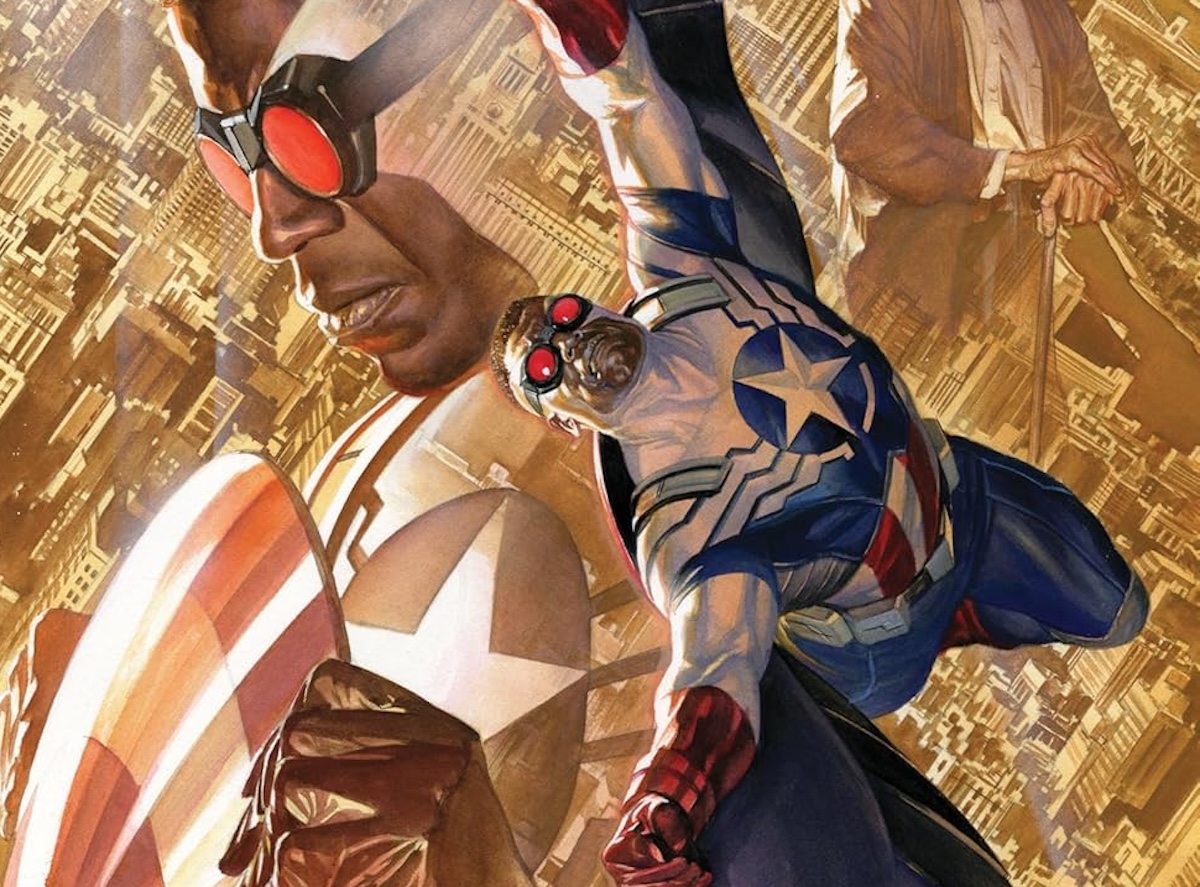

You might remember the questionably-voiced backlash when Sam Wilson took up the Captain America mantle. There was the matter of Bucky, who had already had a run in the stars and stripes, but it’s probably fair to say that a lot of anger existed because anger always exists when a Black man takes up a role traditionally held by a white man.

Marvel
It’s somewhat surprising, looking back on Sam’s first issues as Cap – collected this week in Captain America: The Saga of Sam Wilson – how widely they veer around the subject of race, identity, and any politics stronger than “Super Nazis are bad”. Later stories would see Sam address more severe concerns, and his sidekick, Joaquin Torres (the new Falcon) even got some narrative commentary concerning emigrants and the forces pitted against them.
These first stories seemed more eager to throw Sam into the intense, high-flying (no pun intended) stories Steve Rogers had been prone to receive, adventures against super scientists and villains with just enough implied fascism to warrant a freedom fighter. It might have been the right strategy: wow the malcontents with action before making them take the bitter pill of social justice.

Marvel
Though Sam’s first issue in the suit feels a bit inauspicious devoid of its preceding context, Sam’s first full story – which filled the six issues of 2014’s All-New Captain America – is a truly bombastic, man-against-a-master-plan blockbuster. It truly lays the groundwork for Sam’s upgrade in status from B-List sidekick to A-List Avenger, proving the character was always capable of big, big stories, he only needed to be out from under a certain shadow.
Not only do these issues mark an increase in action and scope, they lay into Sam himself, uncovering the central goodness that is central to the Captain American moniker; where Steve got his chops fighting bullies where no one else would, Sam inhereted his kindness from his cruelly murdered preacher father. He has always been depicted as a good, civic-minded man (he was, if you remember, a social worker), but writer Rick Remender goes deeper, show the painful roots of a man living with his dead father’s meaningful words.
This commitment to making Sam’s inner life as vital to the narrative as Baron Zemo or Taskmaster meant that there could be no doubts that he was right as Captain America, a character we place alongside Superman as “genuinely good”. His motivations are pure and he can throw a shield so that it comes back to him (and he can do that while flying).

Marvel
The chief highlight of the issues collected here, though, is artist Stuart Immonen, whose run on All-New perfectly showcases his fluid, clean lines and propensity for powerful action sequences. The book looks sleek, fitting for a character who is cutting through the sky on vibranium wings. Every villain looks deserving of the fear they’re meant to inspire. Even though the final confrontation comes down to a well-plotted sequence between a swarm of fleas and hundreds of birds, Immonen’s artwork makes a powerful spectacle of it.
The Saga of Sam Wilson perfectly encapsulates the work done to cement Sam as Captain America before getting down to the important work of social justice. It’s a “punch first, proselytize later” approach to a character whose very presence – like the original appearance of Steve Rogers – is inherently political and social justice minded. First we need the man, then the message.




You must be logged in to post a comment.