

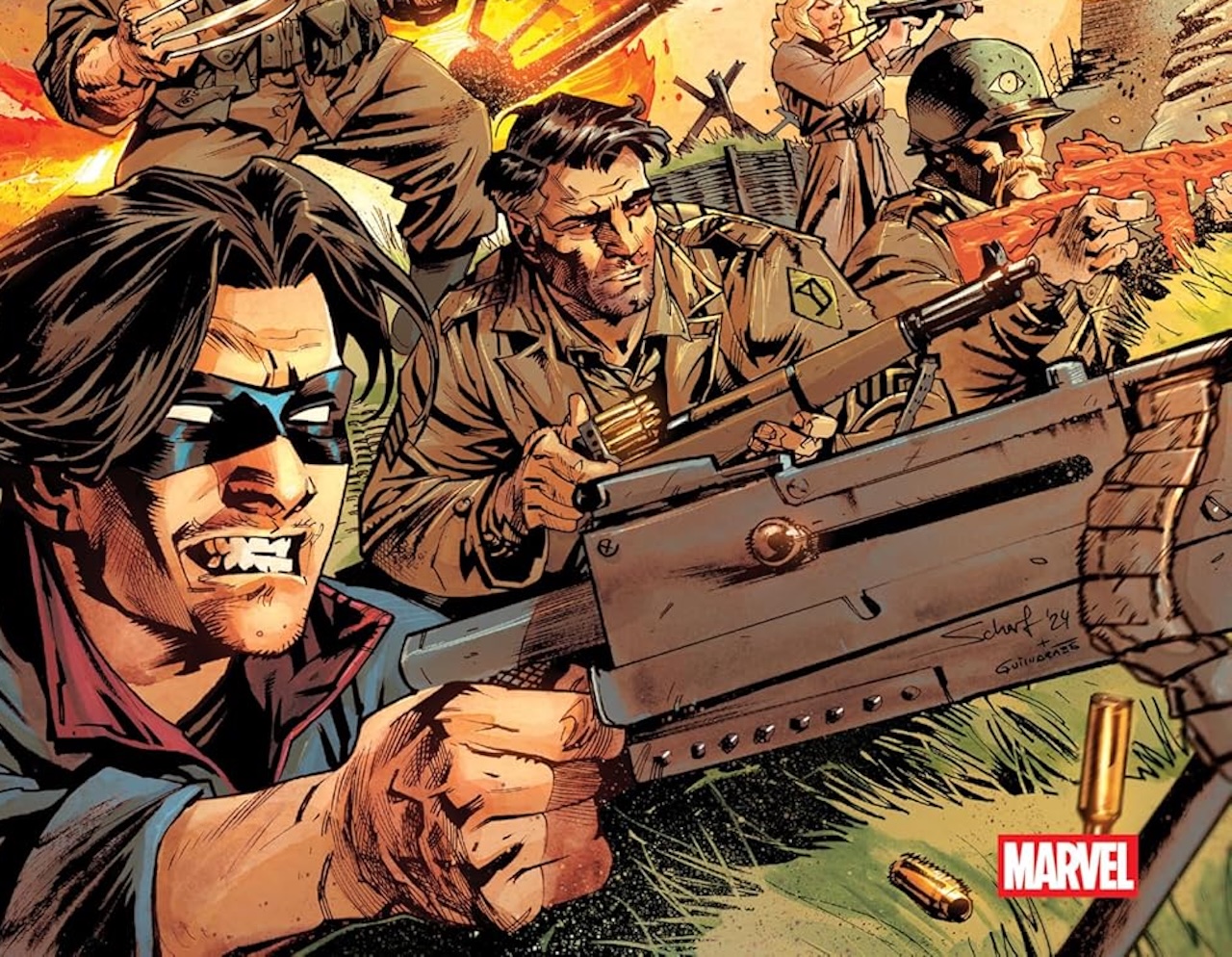

The introduction of a new Ghost Rider is an event to be celebrated, so when Phillip Kennedy Johnson and Nic Klein dropped a mysterious spirit of vengeance into their Incredible Hulk run a couple of years ago, fans were instantly intrigued. That spirit, Sal Romero, was tied to an old World War II-era motorcycle, and though he featured for a few issues, the story did little to explore his origins.
Hellhunters sets out to do just that. Set in the later days of the conflict, the book builds a slapdash team of supernatural Nazi-hunters that includes a sort of go-to list of canonically WWII vets like Nick Fury, Bucky, and Wolverine. But the book isn’t content to simply expand on the new Ghost Rider and play with old favorites; it also plays with the era’s sorcerer supreme, Sebastian Szardos.

Marvel
Szardos was introduced during Jason Aaron’s run on the Avengers, back in 2021, though he hadn’t been made explicitly canon for Earth-616. For people who skipped that era of Earth’s Mightiest Heroes, it was a book that made ample use of the multiverse. Szardos appeared alongside other reworked supernatural characters, including a soldier Man-Thing and another Ghost Rider; this could have occurred on any Earth that the Avengers touched down on during that saga.
Playing with these two new heroes, Hellhunters delights in injecting a little supernatural horror into the war, which diversifies the sorts of stories that can be told in a time generally reserved for Captain America and the Invaders. It also enriches (and complicates) our understanding of the Marvel Universe’s supernatural timeline. What is Szardos’ relationship with the Ancient One? How did he gain his magical artifacts (including the all-important Eye of Agamotto)?
While ostensibly a team book, the monster-hunting squad backing our magic heroes doesn’t get a ton of play; Wolverine seems to be here because he’s contractually obligated to appear in as many books as possible, and while it’s a delight to see Peggy Carter in action, she barely gets any time to shine. Of the preexisting characters, perhaps Bucky receives the best moments: the book paints his early teen years as bloodthirsty and gruesome, hinting at the more sinister aspects of the character.

Marvel
There are bigger, shinier new toys for Johnson and artist Adam Gorham to play with, including the sub-zero vampires who are the book’s central villainous concern. The book takes great pains to illustrate why these monsters are a threat big enough to justify the haphazard organization of a crack military unit: they are horrifying, overpowered, and significant. So significant that the book dips deep into Ghost Rider mythology and pulls out storied demon Zarathos, who has some demonic beef with the hell-born benefactor of the Nazi monsters.
Those are some big guns to play with, and the book balances most of its moving parts satisfyingly. The pace is almost dizzying when you consider all that is accomplished in five short issues, and that frantic – but massive – energy only leaves the reader wanting more.



You must be logged in to post a comment.