


Before he helped put Gotham City through hell, or went toe-to-toe with Spawn, Joseph Illidge started his career with Milestone Comics. And boy, did it ever have an effect.
“Katee Sackhoff did an interview on her show some months ago with her co-star, Jamie Bamber, from Battlestar Galactica,” Illidge told me during a recent Zoom chat. “And they talked about how Battlestar Galactica was such an amazing experience that it spoiled them for the rest of their careers about what it would be like working on shows. Milestone spoiled me for the rest of my career.”
Illidge originally got his start as an editor for Hardware (and even wrote stories for the series). He credits four of Milestone’s “leaders” (Dwayne McDuffie, Denys Cowan, Michael Davis, and Derek T. Dingle) for not only giving him his shot, but making some of the most important comics ever.
“There wasn’t one [company] like Milestone before, and there hasn’t been one like Milestone since,” Illidge said. “Hardware No. 1…I consider that one of the best number ones of a superhero comic ever in the North American space. It came out in 1993. We’re sitting here 33 years later and it still slaps the same way.”
Illidge added, “That was an opening salvo from my position. It’s similar to if you watch the first episode of Black Mirror. By the end of that, it’s like, ‘Are you in or are you out? Can you take Black Mirror or not?’”
And while he may or may not be able to live up to such legendary status, Illidge is hoping to capture that same kind of magic with New History of the DC Universe: The Dakota Incident #1.
And maybe this one just might ruin other comics for someone out there.

Courtesy of DC Comics.
“Confluence and Collision”
As part of the New History line (heralded by writer Mark Waid), The Dakota Incident is yet another instance of DC condensing and often redefining parts of its history (in this instance, Milestone). In the 40-page one-shot, we “uncover an untold moment in DC history, where a murder leads to an all-out war between the heroes of Dakota City and the U.S. government!” Not only is it up to heroes like Rocket and Static to save the day, but as “heroes fall in the past, the stage is set for their return in the present…”
And, on the surface, The Dakota Incident has some very clear goals in mind:
“It’s very interesting what we’re going to be doing with New History of the DC Universe: The Dakota Incident,” Illidge said. “You’re seeing the birth of one universe within a well-established universe and that confluence and collision.”
But The Dakota Incident isn’t just about what’s next for Milestone, DC, and all those super important heroes. It is very much Illidge (alongside his collaborators, whom we’ll get to oh-so shortly) leaning into Milestone’s singular cultural weight to continue to tell big, important stories with mass appeal. And by tapping into Milestone, The Dakota Incident also inevitably taps into other aspects of comics history and lore.
Now, let’s really jump in.
Ahead of The Curve
For Illidge, one of the most essential points about Milestone is that it’s not just “black comics.” Yes, the entire line was about uplifting black characters and creators, but Milestone’s initial mid-90s run did so much more still.
“You’re talking about a company that had a multi-cultural superhero universe, a multi-sexual superhero universe,” Illidge said. “Things that other publishers were patting themselves on the back for in the 21st century, Milestone did in the 20th century. Milestone was multicultural comics made by people from all walks of life and different complexions, just as much as the DC universe is and the Marvel universe is. And so one of the great things is being able to explore that in different ways.”
That very sentiment is reflected in the other creators across The Dakota Incident. Illidge said that while he wrote the first of four chapters, he owes as much credit to Stephanie Williams (the second chapter), Morgan Hampton (the third chapter), and Nikolas Draper-Ivy (the prologue and epilogue). Then, of course, there’s the artists (Stephen Segovia, Carlo Pagulayan, Valentine De Landro, Fico Ossio, and Edwin Galmon), colorists (Ulises Arreola, John Kalisz, Andrew Dalhouse, and Marissa Louise), and letterer (AndWorld Design).

Variant cover by Dan Jurgens. Courtesy of DC Comics.
Added Illidge, “We’re all connected by these stories of character and aspiration and evolution. So working with them in a writer’s room was absolutely great. I would love to do it again.” (Illidge said the team would love to tackle “something that begins with the word ‘super’ or begins with the word ‘bat.’ I’d even take the word ‘justice.’”)
Illidge had plenty of respect and admiration for his cohorts: he called Williams’ Roots of Madness (from Ignition Press) “required reading”; he said that Morgan is “really good at dealing with ensemble cast and taking large-scale events but bringing them to a grounded level”; and he said that Draper-Ivey (best known as an artist on recent Static books) gets a chance to really surprise readers with his writing.
“When I made the trailer for the book, I was like, ‘OK, I got to list all the creators.’ So I had to ask [editor] Marquis Draper,” Illidge said. “So when you see that whole list of all the people that came together for this, it’s a massive endeavor. And the book is going to show that. The book is going to show how Milestone and DC organically fit together. This is not force. It’s so seamless that you’re going to feel like it was always that way. And that’s part of the work and the joy. The work is so that the reader should not be able to detect friction.”
And, of course, Illidge had nothing but praise for Waid and editor Brittany Holzer.
“I don’t know if there’s another living human being that understands the DC universe the way Mark Waid does,” Illidge said. “And then Brittany has the understanding of how the DC universe is compressing decades into basically 10 years.”
It’s not just about the joys of teamwork making The Dakota Incident a possible stand out. No, collaboration is essential to all things Milestone – collaboration with people, sure, but things so much grander and maybe even a teensy bit abstract to boot.
The Past and Future as One
It was working with the likes of McDuffie that really showed Illidge that there are no stars, just people doing the important work.
“My purpose is to be a servant of story and to help elevate people from different walks of life, whether it’s at the business level, or at the creative level, and whether it’s character representation for the cause of a story,” Illidge said. “So I feel like Dwayne, as a brilliant storyteller and servant of story, understood that. And that’s what Milestone was – a new universe, a world outside your window, and with characters like you had never seen before.”
If that “world outside your window” bit feels familiar, it’s likely on purpose. As much as Milestone and its creators were trying to do new and innovative things, they also very much leaned into the past to inform their work.
“In the original Milestone Bibles, one of the things that was cited was the Marvel Age of Comics from the ’60s,” Illidge said. “And the concept at the core of all Milestone stories is the hero’s responsibility to society versus the hero’s responsibility to one self. It’s selflessness versus selfishness. And the transformation of the individual and then how that individual impacts the society around them. So when you talk about world building, when you talk about character building, there was nothing like Marvel Comics from 1962 to 1968. Nothing.”
Even DC learned something from its “competitor,” and it all speaks to how when comics are done truly right, they’re done to challenge both heroes and readers alike.
“For a brief time, I worked in the Star Trek division at Simon & Schuster in between Milestone and my run in Batman editorial at DC Comics,” Illidge said. “I had a supervisor named John Ordover, and he told me that when he grew up, Marvel heroes had superpowers [that] magnified the problems in their lives. The DC characters relatively had it easy, I think, until Denny O’Neil and Neil Adams did Green Lantern/Green Arrow and began to change the game.”

Variant cover by Carlo Pagulayan. Courtesy of DC Comics.
Illidge added, “And so that was the thing about the Milestone titles – their capabilities made your life more complicated. They didn’t make your life easier. And I think that’s something that people can recognize in life. God rest his soul, but Notorious B.I.G. said, ‘More money, more problems.’ The more fortune and things you get, your life starts transforming in unpredictable ways. And so I think that’s also at the core of best heroic storytelling; that drama comes from fortune. And I don’t mean fortune like money – I mean fortune as your fate.”
Case in point: Static. Originally Milestone’s fourth release, young Virgil Hawkins “became the breakout character through the Static Shock cartoon,” as Illidge explained. The comics, though, are where Static felt especially interesting.
“When you look at the early issues of Static, like Static #1-8, there is a theme there of the temptation to not want to help people, and the temptation to help yourself,” Illidge said. “You’re a kid who gets bullied, and there’s stuff going on in the neighborhood. And it’s like, ‘I’ve got this power. Why don’t I just go for me? Especially when there are a lot of people out there who I will save, but they want me dead.'”
Once again, though, as novel as that story is, it also connects back even deeper, both to comics history and larger examinations about people and their relationship to power.
“It’s that challenge, which is basically the long version of the microcosm that is Amazing Fantasy #15,” Illidge aid. “Peter Parker is going through that journey, and in the end, what is it? ‘With great power comes great responsibility.’ There’s a reason that line sticks with us. It’s meaningful to the human condition.”
Given Static’s significance, not to mention Illidge’s own appreciation, you may not be surprised that the character looms pretty intently across The Dakota Incident.
A Shocking Return
Unless you live under a rock, you may have seen that Static actually returned in the recent DC K.O.: The Kids Are All Fight special.
“Editorial let us know what was going to happen, and maybe we had some mild consultation on it, but you know what? It was an amazing moment for the fans,” Illidge said. “It was an opening salvo. Having Static go up against Granny Goodness from the Fourth World, from one of the deities of comics (Jack Kirby)…if that’s not an opening salvo to the reintroduction of Milestone in DC, then what the hell is?”
But for Illidge, the return of Static isn’t just totally cool. It’s also representative of some ideas or energies he hopes ultimately informs The Dakota Incident.
“You know how Robert Kirkman, he just likes to do things for the fans,” Illidge said. “When he created the Energon universe, he was like, ‘I don’t want you to know in advance that we’re doing this. I want you to read these books and be surprised and get excited.’ That’s what I felt the reintroduction of Static was – no one told you this was coming. It was not in the solicits. So what happened, people found out about it and they started talking about it. That’s great, man, that we can still do that. So that was a perfect lead into The Dakota Incident.”
Then, of course, there’s actual questions that Static touches on that somebody, somewhere is going to have to eventually address.
“Static says some ominous things,” Illidge said. “He goes, ‘I haven’t put on this costume in a while.’ What does that mean? And then he’s in his costume, which looks more akin to the costume from the animated series. So what does that mean? All the questions are going to be answered in this 40-page story, which we’re all very proud of.”
Similarly, The Dakota Incident touches on other aspects of a newly-returned Static, and their larger impact across the whole DCU.
“He was gone for a while, but this compelled him to come back,” Illidge said. “What DC K.O. is doing, and the transformation of Earth into Apokolips, that’s an extinction-level event. That’s what it took for Static to return. Why Static went away will be revealed in a The Dakota Incident.”
But it’s not just that Static has returned; it’s that he’s quite different from the last time we saw him.
“It also gives you an indication of his power level, because he’s dealing with Apokolips technology, which is not to be dismissed,” Illidge said. “So you get a sense of how powerful this kid is, and you get a sense that he is cemented in the salvation of humanity and the planet for everything that’s happening in the DC universe that’s being spearheaded by Scott Snyder and Joshua Williamson.”
Still, this ain’t exactly the Static show, and there’s more DC history that informs The Dakota Incident. You just have to see it all in the right light to fully understand.
The Wonder and Glory
At one point, Illidge, a self-professed “DC kid” as well as a former employee, tells of a time when he fell out of love with the venerated publisher.
“It was during Identity Crisis and Infinite Crisis,” Illidge said. “You had a character wearing an S ripping someone else’s arms off. DC had just went into a place.”
The saving grace that brought him back to DC’s weird, charming little universe? DC: The New Frontier by Darwyn Cooke.
“That is a love letter to DC Comics,” Illidge said. “I’ve not seen a story that shows you the grandeur and the beauty and the majesty of the DC superhero universe like The New Frontier. So that is my North Star in a sense.”
What really stood out about New Frontier is that Cooke maintained a specific “spine” across the book in the “story of Hal Jordan becoming Green Lantern and the amazing aspiration of flight and the time of America going into space,” as Illidge explained. It’s ultimately about believing in something so much larger than yourself.
“There is, I think, a double-paid splash of astronauts and heroes walking toward us,” Illidge said of New Frontier. “It’s The Right Stuff. So the wonder of the DC universe was connected to the wonder of 20th century America, and when we aspired for great things, it just reminds us of possibility. That possibility when we’re working together to achieve the impossible.”
And, to a huge extent, The Dakota Incident tries to capture that same kind of wonder.
“When I wrote my story, it was with this understanding that these two superhero universes, Milestone and DC, are majestic,” Illidge said. “So when you bring them together, there’s a tone that you want to give to this story. And for me, the tone is that anyone reading it will take it seriously. If you’ve never read a comic book in your life, but you read this, you feel the place and the people. I feel like we have a great opportunity to do that now. I feel like the Marvel Cinematic Universe and DC Studios have brought more people to comics. And so we have an opportunity to really engage them on a level so that they take this stuff seriously and they know that we do.”

From DC: The New Frontier. Courtesy of DC Comics.
In fact, The Dakota Incident will also have its very own “spine character.” And, folks, it’s likely to be quite the emotional gut shot.
“And the revelation of that spine character, I think, is going to set the race off,” Illidge said.
Of course, with The Dakota Incident being just one “arm” of the DC-Milestone “marriage,” there’s going to be stuff that not even Illidge knows about beforehand
“And DC is, of course, managing that in consultation with Reginald Hudlin and Denys Cowan, who are the producers and owners of Milestone Media,” Illidge said. “So because of my relationship with the Milestone founders, I’ve had access to a little behind the scenes of it, but there are going to be aspects to how it all comes out [that] are going to be a surprise to me. And that’s totally fine because it’s nice to be surprised once in a while.”
But something that isn’t a surprise is that The Dakota Incident will have generally ground-shaking ramifications.
Not Necessarily Forever
But first, let’s take a “break” and talk about a kind of predecessor of this story: the two-issue prestige format series Milestone Forever from 2010 by McDuffie and a litany of collaborators.
“In the aftermath of Milestone Forever, the DC Universe and the Milestone Universe became one,” Illidge said. “What’s different about now is that I think we’re all planning it in a very specific way and toward a very specific goal.”
So, what exactly went “wrong” with Milestone Forever? Well, nothing technically; it’s a darn good story, but Illidge made a really important comparison that makes heaps of sense.
“One of the things that I remember reading about way back was how Crisis on Infinite Earths was supposed to seamlessly redefine and reintroduce the DC universe. But there were a few outliers that just messed up the perfect formula,” Illidge said. “And so I feel like when this happened the first time [with Milestone Forever], I don’t feel like there was necessarily a destination in mind. It was like, ‘Put the Justice League against the Shadow Cabinet here; put Static teaming up with Black Lightning here; put Static in the Teen Titans.’ It was more of a wide approach.”

Courtesy of DC Comics.
This time around, then, DC and the creators are trying to do things more efficiently. They’re very much attempting to get at the root of both universes to align them in a way that makes sense and maximizes their future storytelling directions.
“I feel like this approach is more focused. At least as far as I’ve been told, DC’s intention is basically a bit more focused,” Illidge said. “Think about a tree: You have one character and then another and more branches, and then you eventually have a tree, which is the Dakota-verse characters fully cemented in the DC Universe. So The Dakota Incident creates the focus, and then what’s going to come next is the tree.”
If we’re making comparisons to The Dakota Incident being a tree, let’s take it one step further. If this “ecosystem” is going to truly flourish, it’s going to do so despite its own natural predator.
President Jerk-Face
Of the few available tidbits about The Dakota Incident so far, the creators have been open about the importance of one specific character.
“One of the things that has been made public is that President Lex Luthor is a character in this story,” Illidge said. “That’s major – that’s Lex Luthor at a very specific time in DC history. I was in Batman editorial when Luthor became the president. We actually spun that somewhat out of No Man’s Land when Luthor came into Gotham to save Gotham. That actually helped, I think, bump up his Q-Rating.”
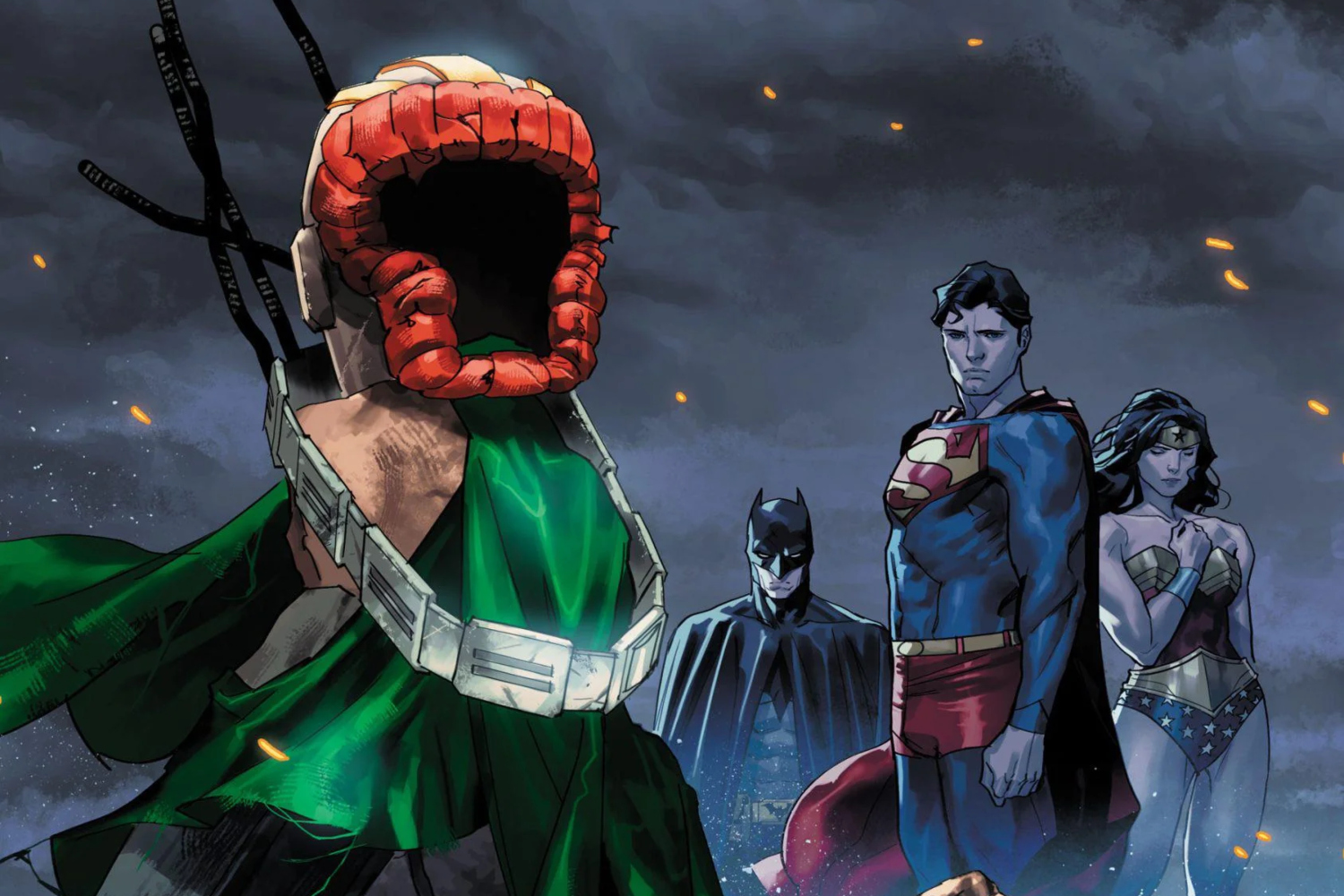
(In addition to Luthor, Illidge said The Dakota Incident also features “Superman, Batman, and Wonder Woman…and there are some characters we haven’t revealed yet, and people will find out when they buy the book. They’re going to get a big thrill out of it.” He also had this offer up: “There are characters in The Dakota Incident that James Gunn should be quite familiar with. And I will leave it at that.”)
On the one hand, Luthor’s presence in The Dakota Incident just makes proper logistical sense.
“Luthor became the president in publishing continuity, I think, in the latest of ’90s or the earliest of the 2000s,” Illidge said. “Somewhere between 1999 and Y2K, right? The Milestone universe in its first iteration ran from 1993 to 1997. The New History of the DC Universe is compressing decades, right? So in this new timeline, those two times interweave at the same time in history So that gives us a dramatic opportunity to really play with things.”
And one of those “things” to play around with is that President Luthor feels very real when compared to his more overtly supervillain depictions elsewhere.
“This is the most real-world version of Luthor that we’re seeing,” Illidge said. “It’s Luthor as the trillionaire industrialist genius. That’s one level…going back to the genius of Marv Wolfman and John Byrne [during] post-Crisis on Infinite Earths turning Luther into that. But Luthor as president takes things to another level.”
Added Illidge, “And what I thought was smart of DC, in addition to that brilliant move, was that just when you think you have a beat on Luther during the ‘Our Worlds at War’ storyline…Luthor actually showed some characteristics that people would consider admirable. He really tried to save the world. He really tried to negotiate Earth survival against different galactic species. So just when you think you have a bead on someone, you learn something else about their character.”

From “Our Worlds at War.” Courtesy of DC Comics.
And, as you might have guessed it, that same thread has some deep connections to Milestone and its creators/leadership.
“Dwayne was really an influential scribe and story manager when it came to how we understand Luthor today,” Illidge said. “Because when Dwayne was running and writing Justice League Unlimited, the long story that he built, and like you said, ending in the climactic battle with Darkseid, Luthor is actually in a heroic position in this story.”
And those same energies are found elsewhere in the DCU. Luthor is a big deal, yeah, but he’s also clearly a channel for some interesting moral exploration.
“When you look at the Brian Azzarello and Lee Bermejo Luthor graphic novel, what that really brings home is the adage that everyone is a hero in their own story,” Illidge said. “Luthor does not wake up in the morning thinking he’s the bad guy. Luthor wakes up in the morning thinking he is the savior of the human race. And whatever it takes to save the human race is a justifiable act.”
He may not be trying to save the world, but Illidge is extra serious about this book. He doesn’t just see The Dakota Incident as being important storytelling, or something that’ll boost his beloved Milestone. No, it’s also quite representative of the exciting and transformative moment happening right now at DC.
The Absolute Limits
Of course, any of that “transformation” must always be rooted in the stories themselves.
“What I really want to put forth to people is this is a Milestone universe story. This is a DC universe story. This is a great saga,” Illidge said. “This fusion of the Milestone and DC universes, and the return of Static, is the perfect impetus for what can come next, and what can come next is anything and everything. And I look forward to seeing that.”
Still, some of that excitement and energy is grounded in some rather specific ideas.
“The possibilities with [Static] are endless,” Illidge said. “I feel like we’re in a very specific moment to have an ongoing Static series and fully explore this character’s position in this vast world. Because, as you said, I’ve conversed before about what it means for the Milestone and DC universes to come together. And one of the things it means is that the historical playground is larger. The cast of people that you can interact with is larger. So having Static in the same world as Nightwing opens up a lot of possibilities right there. There could be similarities between Virgil Hawkins and Richard Grayson.”
Static isn’t the only Milestone stand out, but for Illidge, he represents an important function of the line and even how it relates to DC proper.
“I feel like the Milestone characters have this unique opportunity to be relevant to multiple generations the same way Marvel and DC are relevant to multiple generations,” Illidge said. “And Static, in particular, has the capability to really be a beacon. And I feel like what Miles Morales became, Static can go beyond that. There are three generations of people who know Static, and that multi-generational quality gives him and the Milestone characters that he’s going to pull with him a different type of connection, a different kind of story possibility, and, quite frankly, marketability.”
And while stories come first, you can’t deny the importance of said marketability. It’s how good creators get to keep doing their very good work.
“And I think what’s also important for people to know is that their power as buyers and readers helps impact what books they’re going to get in the future,” Illidge said. “So I really want to see 100,000 copies of The Dakota Incident. Is that 100,000 readers? Is that 70,000 readers, but people buy a bunch of different covers? Enough sales of that book can happen then that tells DC that a new Static ongoing is not optional.”

Variant cover by Yasmine Putri. Courtesy of DC Comics.
And with DC’s recent surge of success, Illidge’s hopes aren’t exactly groundless.
“And DC Comics right now, having recently took the spot as the No. 1 publisher in the direct market, is in an excellent position to basically do what DC did in 1986 post-Crisis on Infinite Earths…we’re going to make the best comics,” Illidge said. “We’re taking this industry by storm. Let’s go.”
Yes, the comics marketplace of 1986 is markedly different than that of today. But Illidge believes that there’s something essential about how DC operates or tells stories that means such growth and market dominance can be possible yet again.
“I really feel like when it comes to the DC universe, the level of excitement happens in stages,” Illidge said. “So I remember Crisis on Infinite Earths. I remember DC Rebirth…going to one of my local comic shops when they had a midnight party. I came home, and I read that at [1 a.m.] That moment where Barry and Wally hug, I almost cried. I remember Wally when he was Kid Flash. I remember Wally when he became the Flash in Crisis on Infinite Earths #12. This is another peak moment for DC. They can do anything.”
And anything is exactly what Illidge means. Milestone not only achieves what makes DC seem vital, but adds onto it in other important ways.
“Milestone has a unique opportunity to combine the fantastic nature of superheroism and the groundedness of the world we live in,” Illidge said. “When I think about DC Comics, I don’t really think about groundedness. I think about Adam Strange, the Challengers of The Unknown, the Doom Patrol. I feel like DC is at its most quintessential when it is bonkers.”
Still don’t believe him about this growth potential and the like? Just peep what’s currently serving as DC’s primary driving force for its recent critical and commercial success.
“Let’s look at Absolute Batman. Yes, Batman has been around since 1939, but somehow Scott Snyder and Nick Dragotta are managing to surprise us and invite an entire generation of readers with Absolute Batman,” Illidge said. “So that’s what Milestone did. And that’s what Milestone has a capability to do, which is to take things that look immediately familiar to you, but they’re not.”
Added Illidge, “So making Hardware into an Iron Man analog invites invitation. But then after you read Hardware #1…this guy’s not Tony Stark. He’s a very specific character with a very specific conflict. I’m not going to call it pulling a fast one, but I’m going to say that they use the familiar to invite you into something unfamiliar. That’s definitely at the core of what I would say is the quintessential Milestone Dakota-verse. And that is what we try to bring back and kick things off with The Dakota Incident.”
Rocket to The Moon
Maybe you’re thinking that, with the book not even out yet, Illidge is getting a wee bit ahead of himself. But then that’s OK: Milestone is a source of great joy and bounty for Illidge. It shaped so much of who he is as a person and a creator. Some of his “goals” may be lofty enough, but he just wants people to see what he’s always known about the Dakota-verse — there’s something massively important here for every single one of us who believes in the power of comics.
So much so that he’s already got his dream project lined up (likely if The Dakota Incident can work its magic and really move folks).
“The dream project would be Icon and Rocket,” Illidge said. “I think there’s so many possibilities there. In the Milestone Returns book that Reginald Hudlin mostly wrote, that was one direction – very dramatic. With these characters firmly in the DC universe, I think there’s another one.”

Courtesy of DC Comics.
And just what is said direction? Something else that DC could use more of if the larger line is really going to fully inspire the next generation of heroes.
“I think there’s something that the DC universe doesn’t have in terms of its perspective on heroism that Icon and Rocket can provide,” Illidge said. “And it’s not deconstructionist and it’s not dark – it’s wondrous and it’s amazing. There are a lot of people out there, and one community would be black girls. I feel like black girls, if you give them a Rocket that speaks to them, then it starts expanding outward. Then it speaks to all the girls.”
But it’s not just young girls, either. What Illidge has already cooked up speaks to every single one of us. It’s an offer of hope at a time when we really, really need it the most. It’s truly smart comics that push boundaries as much as they soothe and comfort. It’s storytelling that defines us individually and still brings us all together. In short, it’s everything championed by that wondrous Milestone Comics.
“And then the whole idea that Rocket created Icon – Icon goes to this alien who’s been on our planet since, like, 1839 with a sketch and says, ‘Hey, let’s be this.’ How meta is that,” Illidge said. “She designs the hero that she becomes and he becomes. What does that say about us as human beings right now?”
Illidge added, “Sometimes things feel hopeless. Can I design the way out? Can I design a better future for me? Can I design a better future for humanity? That’s the story that I would tell.”
New History of the DC Universe: The Dakota Incident #1 is due out February 25.


You must be logged in to post a comment.