

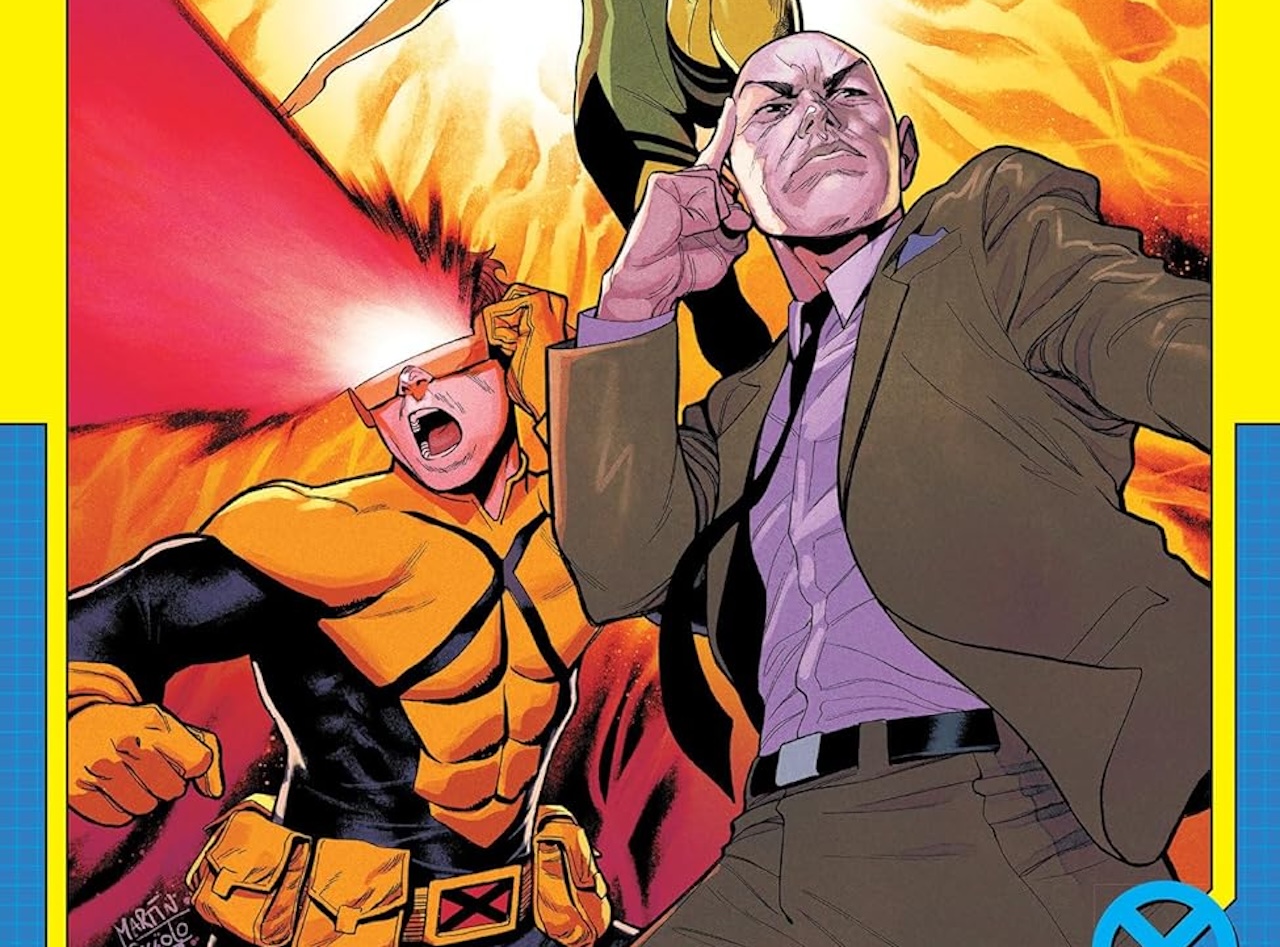

The transition from the Krakoa era to the contemporary line of X-Men books was not an easy one. The epic and world-changing nature of the Krakoan experiment left dangling, unsolvable plot threads, and the new era required rapid reinvention to sustain a new status quo. Not only was Marvel distancing itself from a series of stories that were, at their end, financially and critically questionable, they were also attempting to reverse course almost entirely. The new era of X-Books started cleanly, with each book neatly sequestered in its own establishing stories; it did not happen without friction.
The stories collected in X-Men: From the Ashes, originally published as Infinity Comics on the Marvel Unlimited app (and later reprinted in one-shots like Xavier’s Secret), do some light lifting in attempting to smooth over some of that friction – however shallowly they do so.

Marvel
The book’s first story, “Eversong”, seeks to reinforce the relationship between Cyclops and Phoenix; the former began the new era as a somewhat reactionary leader of his own Alaska-based X-Team, while the latter began her solo book adrift in space, making a go of cosmic adventuring. “Eversong” wants you to know that they are still (problematically) in love, committed to one another despite a distance measured in light-years. It’s a story more rooted in the one-and-done hijinks of an 1980s backup story than it is in either Krakoa or the new era: a one-time baddie interrupts a would-be romantic getaway; psychic battles ensue. It never quite achieves its goal of smoothing out that transition friction.
In “What Charlie Did”, the book’s next chapter, wants you to know that Xavier isn’t half the monster we ended Krakoa believing he was; the conclusion of that story arc saw him slowly manipulating his enemies and setting himself up as an unquestionable bastard. Here, we learn that several pawns in his plan – astronaut casualties, essentially civilian cattle to the slaughter – were really genetic blanks, clones with no souls. The story seeks to wash some of the blood from Xavier’s hands so we could believe him to be, however minutely, some sort of hero.

Marvel
Other stories maneuver characters like Havok or Omega Red to places where they can be more easily accessible for the new wave of creators to pick them up and use them. This is light housekeeping, ever-so-slight rearrangement of elements.
The question isn’t whether these are interesting stories – they almost all are, and they are expertly crafted by artists Diógenes Neves, Phillip Sevy, and Eric Koda – but whether they’re necessary. Marvel Unlimited’s Infinity Comics generally avoid carrying anything as troublesome as continuity progress. Locked as they are behind the app’s paywall, the stories cannot alienate unsubscribed readers by caring too much with the burden of narrative necessity. These stories are no different.
These stories are more for the academically minded, the completists of X-Men chronology. They never quite achieve their goal of easing the friction between the two eras of the franchise, but they do offer small insights into small matters and largely ignored characters like Madelyne Pryor and even Beak and Angel. These are fun if unnecessary diversions, worth a look if you’re keen to know it all.




You must be logged in to post a comment.