

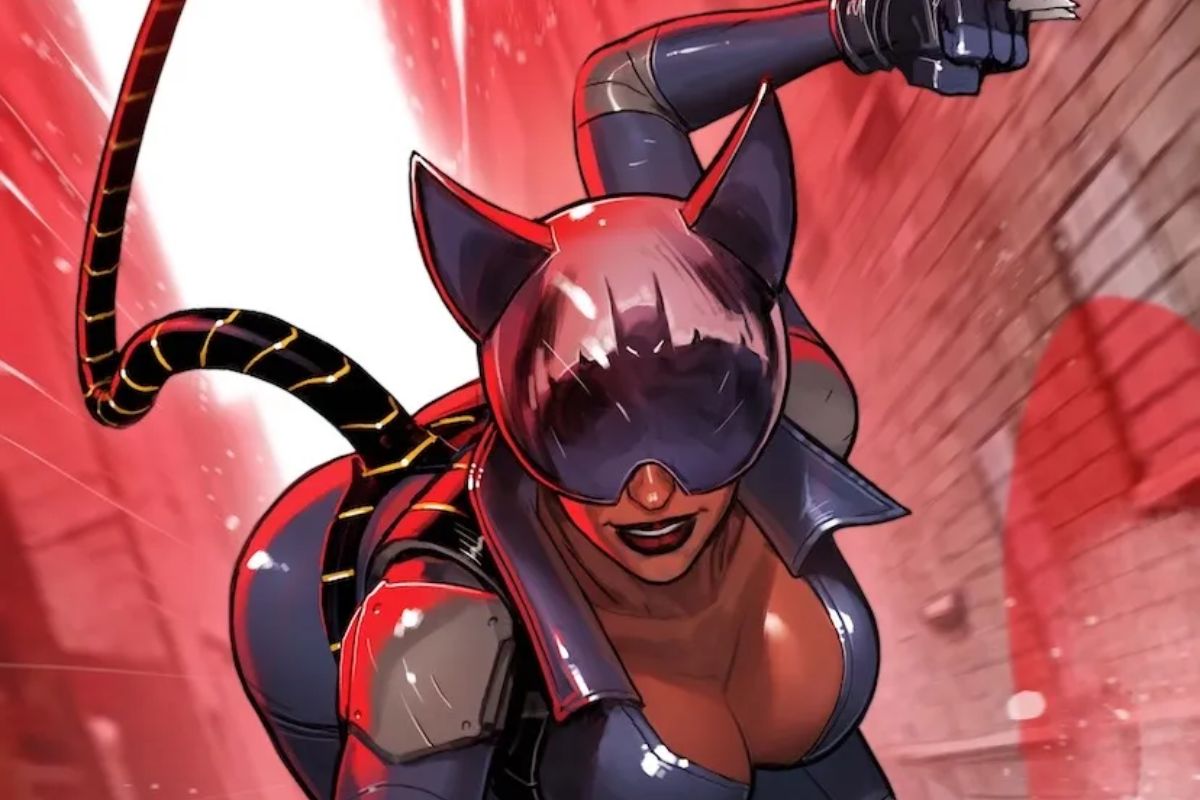

One of my most anticipated books of 2026 is Absolute Catwoman by Che Grayson, Scott Snyder and Bengal. Spinning out of DC’s megahit series, Absolute Batman, Absolute Catwoman #1 leads with a 25-year-old Selina Kyle who has already built the life that she wants and wishes to permanently retire. But like everything else that happens in DC’s Absolute Universe, it’s simply not meant to be, and she’s immediately thrust back into the life she wants to abandon.
Since fans already got glimpses of Selina’s backstory in the first two arcs of Absolute Batman, much of the page space is spent building on those loose threads. This effectively makes Absolute Catwoman #1 an origin story but still builds towards a much bigger arc – one that doesn’t involve Batman, Jack Grimm, or Gotham. This works to elevate Selina in two ways. The first is that it allows her to exist as the hero of her own story and not as an extension of Absolute Batman’s larger storyline. The second way this premise works to elevate Selina is that it expands her world and establishes relationships that matter only to her.

Courtesy DC Comics
One of the chief ways that this is accomplished is by giving Selina two homes on the other side of the Atlantic: one in London and one in Sicily. This does a lot to establish who Selina is outside of the familiar world of Gotham. Whilst her homes in Europe show that she’s living her life like the main DCU’s Bruce Wayne (complete with a “Cat Cave”), it also works to show what truly matters to her, and this is the beat that truly sets her apart from her main DCU counterpart: she values stability far more than material wealth.
Grayson and Snyder successfully execute these ideas first by acknowledging Selina’s own history as a character. Most of it is informed by her post-Crisis history, namely the idea of her being the daughter of Cuban immigrants and being harmed by the foster care system and child services. They also reintroduce a character in Absolute Catwoman #1 who has been a staple of Selina’s character development since the start of DC’s post-Crisis continuity: Holly Robinson.
Outside of establishing that Holly and Selina met as delinquent teenagers instead of as sex workers in Gotham’s red-light district, very little changes about their relationship. This helps keep the characters recognizable to fans whilst taking them in an exciting new direction. The only idea from the pre-Crisis continuity that is introduced in Absolute Catwoman #1 is the idea of Selina having her own cat-themed gang, which actually comes from the Golden Age. But the catsuits of Selina’s former gang are clearly the Darwyn Cooke design from his and Ed Brubaker’s run in the 2000s, which is another major source of inspiration for the story.

Courtesy DC Comics
The other way that Grayson and Snyder successfully execute their ideas is through effective use of flashbacks. Though much of the story takes place in the present, they do insert flashbacks during scenes where Selina and Holly discuss their shared past to help contextualize what’s happening with both characters in the present. This helps maintain an organic flow throughout the story and makes the flashbacks feel additive and not disruptive. They serve an immediate purpose to the story that’s being told in issue #1 and aren’t being used as setup for future storylines, which is a huge plus.
Another big plus of Absolute Catwoman #1 is Bengal’s art with Giovanna Niro’s colors. Bengal does an excellent job at capturing Selina’s youthful optimism but also her experience and resourcefulness when it comes to dealing with the uglier side of life. Bengal excels at fleshing out Selina’s personality and values through effective use of facial expression and body language. The artstyle coupled with Niro’s colors also does a lot to present Selina as an Afro-Latina character with fun homages to the 1990s Catwoman series.
There are also homages to Darwyn Cooke’s art style and panel layout, and to a much lesser extent Jim Balent, especially for Selina’s hairstyle. Bengal and Niro also excel at drawing dynamic action sequences throughout Absolute Catwoman #1, complete with a panel layout that’s easy to follow and makes the action feel fast-paced. Niro also does well to use a warm color palette for sequences involving peril and high emotions, as well as cool colors for calmer sequences, resulting in a well-balanced first issue. Niro also helps set the flashback sequences apart from the main story by using pastel colors to convey a sense of nostalgia.

Courtesy DC Comics
Whilst Absolute Catwoman is off to a strong start in launching its titular hero, it doesn’t completely isolate her from the rest of the Absolute Universe. The first issue does end with the debut of another fan-favorite member of the Batfamily, and fans will immediately know who it is from their body language alone. When the character’s identity is revealed at the end of the issue, it doesn’t just feel earned from the buildup that came before it – it also teases who the character’s mentors are this time around, which could see the introduction of one more fan-favorite DCU character.
All in all, Absolute Catwoman #1 is a strong first issue that does a lot to build on what’s already been established in Absolute Batman, whilst telling a brand-new story altogether. This first issue is also a perfect jumping-on point for new readers unfamiliar with the character and is a real treat for Catwoman fans who loved her solo comics from the 1990s and the 2000s. It successfully subverts what fans know about Selina Kyle without losing sight of why she’s a beloved character.




You must be logged in to post a comment.