

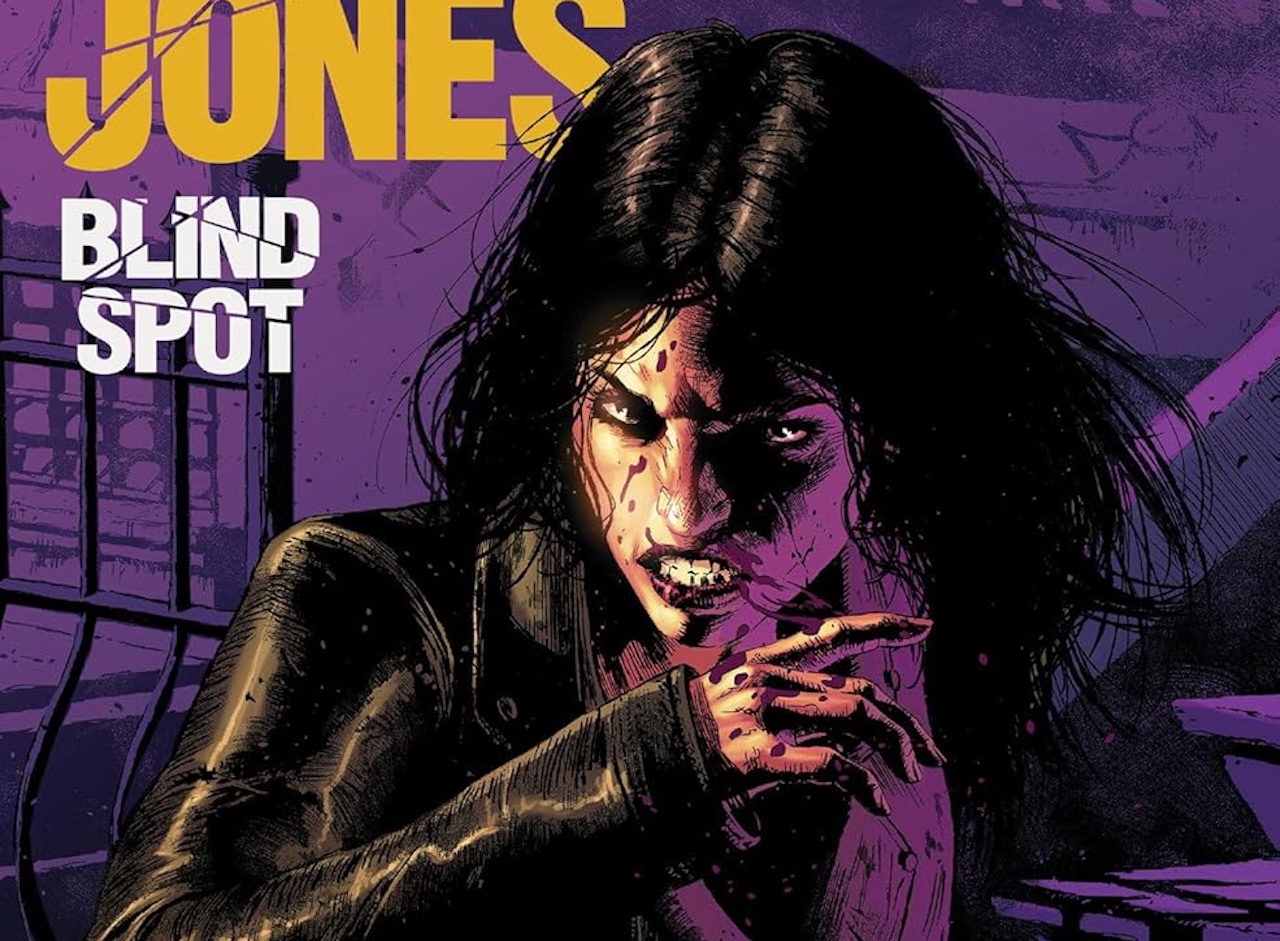

Jessica Jones is a precious character. Written almost exclusively by her co-creator, Brian Michael Bendis, for almost two decades, the character developed a unique, singular tone. This had the effect of making her stories feel somehow more canon, more driven and purposeful. There was a question, when Bendis left Marvel around 2018, whether that purpose could be continued, or whether the character would fade into the sort of half-forgotten half-life that swallows so many comics characters when creator attentions drift elsewhere. Would Jones lose some of her edge, or would that sustained tone falter?

Marvel
Writer Kelly Thompson understood the tone, and she understood the sorts of stories in which Jessica Jones thrives. Stories that center around overcoming trauma – particularly trauma inflicted upon women at the hands of cruel and powerful men. Private eye stories just this side of hardboiled, with just enough superhero color to establish how firmly rooted in the Marvel Universe Jones is.
Thompson understood Jones herself – the somewhat performative bravado, the cold exterior with a feeling, heartbroken core. What drives Jones, or what inspires her to be her best (which often looks like her worst); the sorts of cases that would get under her skin. Thompson fully understood all that.
Blind Spot, the first Jessica Jones miniseries written by Thompson, perfectly pitches all that understanding into a driving mystery. Looking to solve the murder of a girl in trouble, Jones is at her self-destructive, impulsive, but measured best. The book has a who’s who of Marvel’s badass women, from Misty Knight to Mary Jane (with a quick, emotional Spider-Man sighting). It screams ‘girl power’ without being too on-the-nose about it.

Marvel
The second story, Purple Daughter, rolls directly from the first, and this one skews more directly personal to Jessica Jones: it’s a Purple Man story. The source of Jess’s trauma, the Purple Man was crafted into Marvel’s most disgusting and horrible villain, and his legacy lives on in this story. Jess, furious, goes into the mystery half-cocked (but with the perfect backup of Emma Frost), but the story falters at its end: it seems wrong to me that the only way to win was for Jessica Jones to allow her abuser to abuse her further.
Beautifully illustrated by Mattia De Iulis (with stylistic shifts from Marcio Takara and Filipe Andrade), these Jessica Jones stories feel hyper-realized, brighter, and more naturalistic than Jess’s long history under the hand of co-creator Alex Maleev. This is a Jess that, shadows or no, refuses to be obscured. This is noir at its least shadowy but most beautiful.
The two stories in Blind Spot prove that Jessica Jones could faithfully be handled by the right creators, that her singular nature and place in the Marvel Universe could not only continue, but that new stories could be excellent whether her original creator was around or not. These are stories that understand the assignment and look to push the character even further.




You must be logged in to post a comment.