

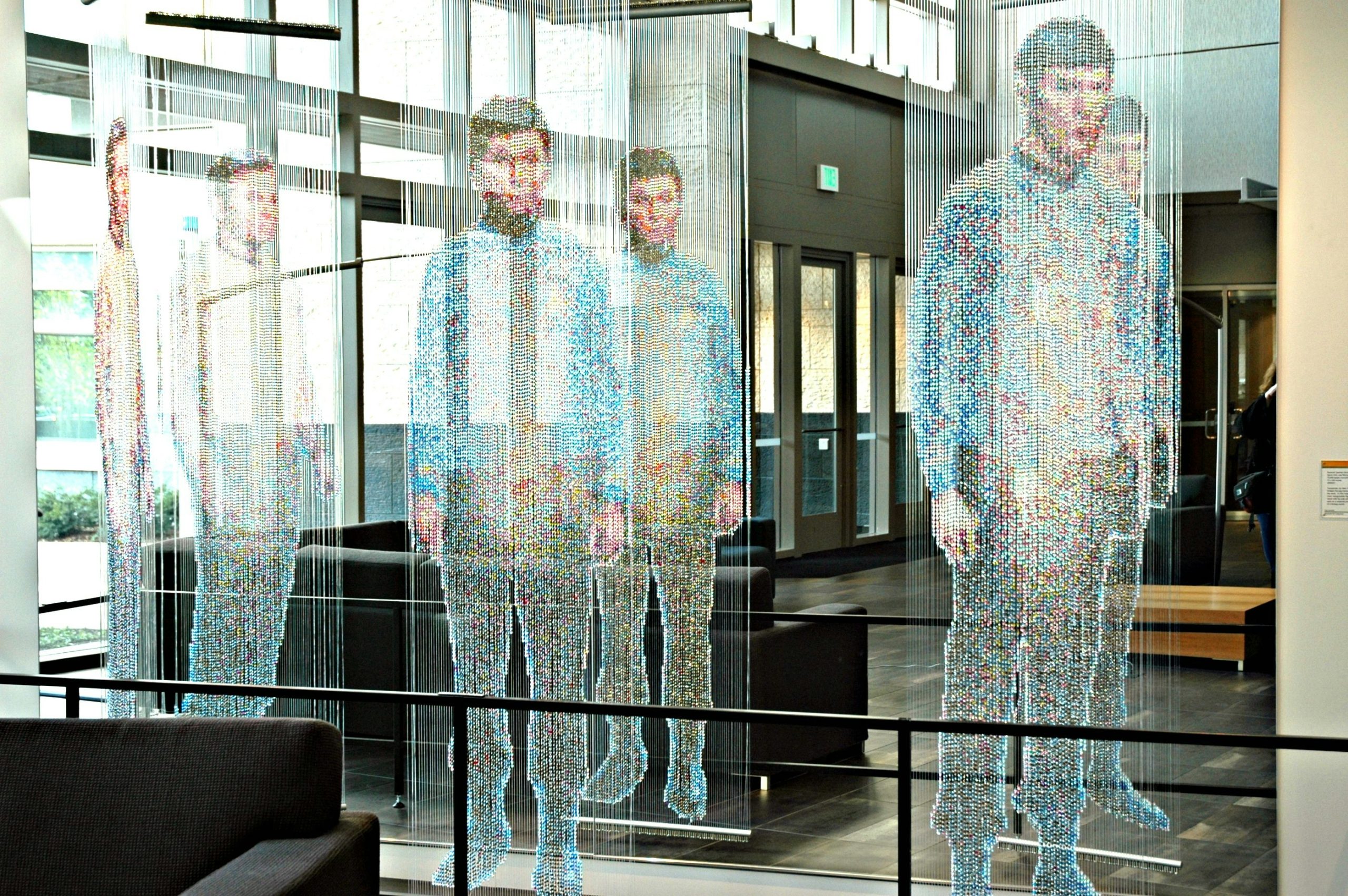

The iconic quote from Star Trek, “To boldly go where no one has gone before,” no longer just refers to space travel. Education is becoming more and more important as it moves toward a more based on technology future. Rapid advancements in virtual and augmented reality are bringing the hitherto fanciful concept of holographic learning, straight from the USS Enterprise’s holodeck, closer to reality. Might the next front in education reflect the Star Trek envisioned world?
Preparing for the Future
The way we approach learning changes as technology develops. Innovations such as augmented reality (AR) and virtual reality (VR) are shaking up education and helping to provide the groundwork for anything resembling the futuristic classrooms shown in Star Trek. From engaging classes to practical activities in replicated settings, the options are many.
Yet, as exciting as this future is, it also brings with it new challenges, particularly in balancing traditional learning methods with emerging technologies. While the idea of holographic classrooms may still seem futuristic, the website https://papersowl.com/ are already helping students take their learning to the next level by offering advanced writing assistance. With the help of professionals, students can focus on the content and creativity behind their learning while outsourcing the more routine tasks. This approach mirrors the kind of efficiency and resourcefulness needed to make Star Trek’s high-tech world a reality. Entering this new age of education, it is obvious that technology may change the way we learn; just like space exploration did.
Examining the present advances in holographic learning can help us to take science fiction and make it into scientific truth.
From Sci-Fi to Science Fact
The holodeck in Star Trek is a training and leisure area where crew members can engage with very realistic 3D reproductions of people, places, and events. It was a means of education, emotional exploration, and problem-solving as well as amusement. The holodeck was the supreme learning laboratory from historical reenactments to tactical warfare training.
Fast forward to today, and we are already witnessing the early iterations of holodeck-inspired teaching. Medical students can do virtual surgery using virtual reality (VR) goggles. Apps using augmented reality (AR) allow students to engage with 3D representations of ancient sites or molecules. Given digital behemoths’ significant investment in mixed-reality technologies, one might easily picture a not-so-distant future in which holographic classrooms are integrated into daily education.
What Would a Holographic Classroom Look Like?
Imagine entering a physics lesson and immediately being transported to the surface of Mars, observing gravity in action. Or entering a history class and standing next to Martin Luther King Jr. during the “I Have a Dream” address. Holographic learning environments would allow students to experience events directly rather than only read about them.
Even if the teacher is on another continent, pupils in such a classroom might engage with real-time holograms of teachers. Group projects could include holographic avatars cooperating in common virtual environments. Learning would not be constrained by physical materials, location, or expense. Star Trek’s vision of infinite discovery would be a borderless, participatory kind of education in which curiosity is the final compass.
The Starfleet Academy Model of Learning
Starfleet Academy prepares future leaders, scientists in the Star Trek universe. An exceptional example of what modern education should develop into, its approach to learning is transdisciplinary, intensely fascinating, and centered on practical experience. Starfleet cadets learn by acting, working together, and investigating new ideas in real surroundings rather than passively absorbing knowledge.
This approach shows evolving emphasis on experiential learning from rote memory to problem-solving, creativity, and emotional intelligence growth. A holographic education system might support this change by offering realistic simulations and demanding tasks that not only build intelligence but also leadership, ethics, and decision-making—essential qualities of any Starfleet officer.
Challenges and Ethical Considerations
Naturally, Star Trek also cautions us about the dangers of technology. Sometimes the holodeck breaks down. Certain people develop simulation addiction. Holographic learning also brings up legitimate issues such data protection, accessibility, and the possibility of substituting human connection for artificial immersion.
Might students lose contact with reality? Would such technology increase the digital gap between rich and impoverished colleges? As we investigate this new frontier, we have to address these vital issues. Star Trek, after all, has always walked the line between optimism and a fair amount of ethical introspection.
Holographic Education and the Spirit of Trek
Fundamentally, Star Trek is about pushing limits, accepting variety, and increasing knowledge. Holographic learning fits this vision not because it’s bright and futuristic but because it promotes greater knowledge, empathy, and creativity. A lecture in biology might happen within a live cell. A literary course may mimic Hamlet’s environment. Only those of our imagination set the boundaries.
Most significantly, hologram education, like Star Trek, motivates us to view learning as a lifelong quest—not only about passing examinations but also about personal and societal development.
The Final Frontier of Learning
Might be holographic? A certain “yes” would be the response should we follow the Star Trek approach. The technologies are being created, the demand for more immersive, interesting learning environments is more obvious than ever, and the desire is rising. Continued investigation of new educational technology might put us on the verge of a learning revolution—one in which students live with knowledge rather than only consume it.
Therefore, to all future students, teachers, and creators: set your phasers to “inspire,” activate your curiosity, and get ready to courageously learn where no one has learnt before.



