

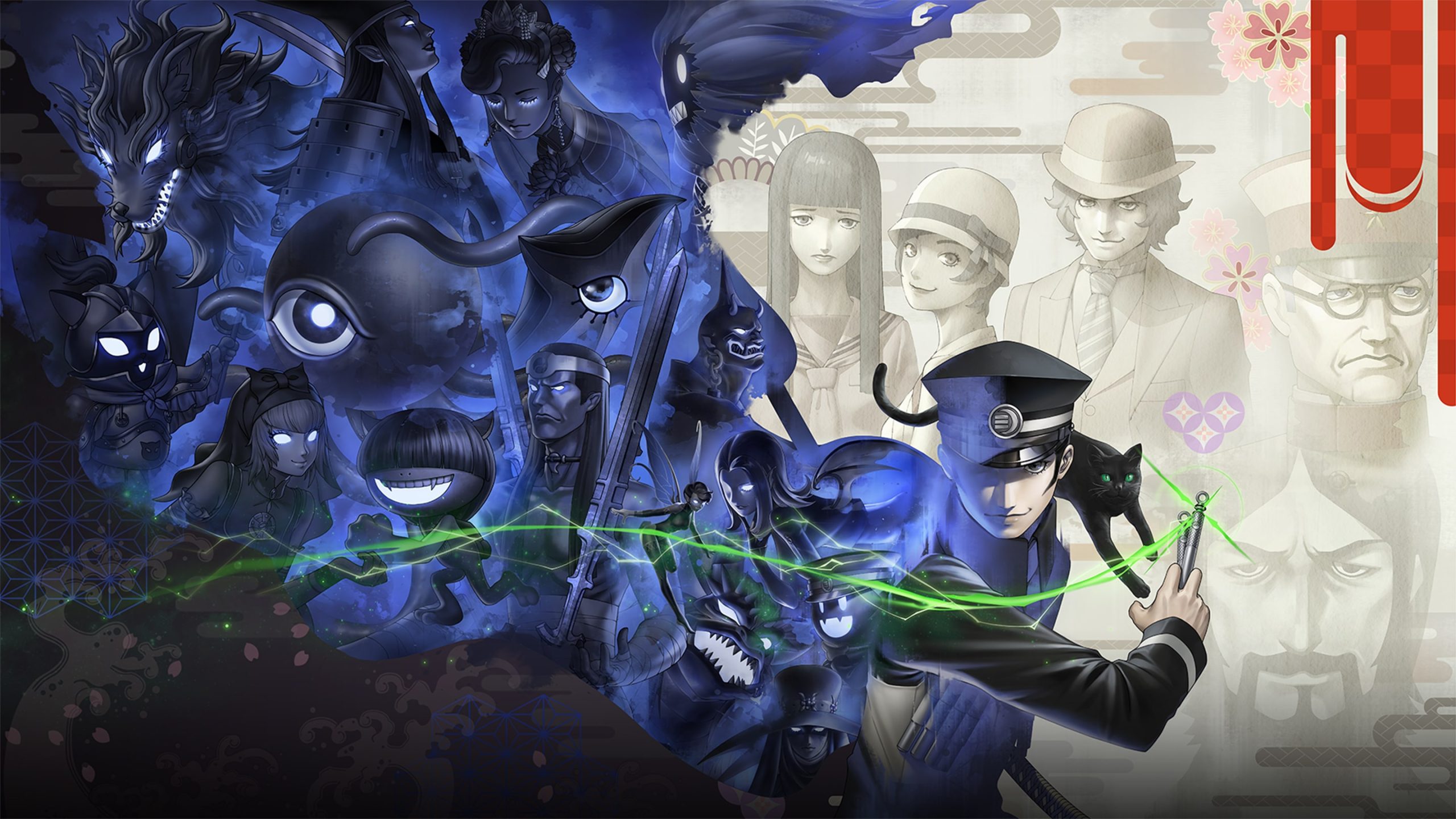

Whenever a new remaster or remake is announced, for any game, there will be some division on the necessity of it. In the case of RAIDOU Remastered: The Mystery Of The Soulless Army, it’s a bit more niche than some of Atlus’ other titles – but perhaps the most fitting to be reintroduced in modern times. The word “modern” is one that holds weight in the setting of Raidou, taking place in an alternate history of Taisho Era Japan. This is a time of rapid industrialization and Western influence, where conflict arises between those who prefer the status quo and those who embrace the changing tides.
The plot follows Raidou Kazunoha XIV, a devil summoner trained to protect the country from demonic threats. As part of that task, Raidou also takes on the role of a young detective – which lets him navigate through the story without anyone batting an eye. This duality offers a unique mixture of hack and slash gameplay as well as some supernatural sleuthing. Early promotional material for the remaster highlighted how much of an overhaul it really was, primarily aiming to enhance the mechanics and visuals. Originally a title for the PlayStation 2, some changes are noticeable for both long-time fans and newcomers alike.
Raidou Remastered new mechanical overhauls are definitely for the better

Raidou Remastered seeks to make the combat more dynamic and fluid for modern players. Sega/Atlus
As far as appearances go, it’s easy to see where the PS2 roots end and the actual remaster begins. The updated character models for Raidou and other named characters actually do look quite nice, which is great for those who appreciate the character artwork of the Shin Megami Tensei style. That being said, they do stand in contrast to the blocky NPCs. The various demons that Raidou summon benefit a lot from their familiar designs, so they blend in pretty well either way. Some backgrounds and cutscenes look smudged or have noticeably less resolution than other parts of the game, which can be distracting while experiencing the story for the first time.
In terms of combat, Raidou takes the hybrid approach. Raidou himself has a katana and revolver at his disposal and can have two demons up to aid him in battle. Players will want to focus on targeting enemy weaknesses for the most part, which will generally call upon capturing and raising multiple demons to be prepared for any situation. There are enough bells and whistles to make the combat enjoyable throughout the game’s 20-30-hour campaign, but it definitely feels more catered to fans of Atlus games who want a little slice of an action RPG rather than vice-versa. That’s not a bad thing, but worth noting for those who are unsure if they’re the target audience or not.

Raidou along side Tsuchigumo, one of the many demons available to summon. Sega/Atlus
Upgrading weapons to unlock additional skills and fusing demons together for even stronger allies gives a pretty decent sense of progression, so there never felt like a need to grind even on the game’s hardest difficulty. While I initially started out on the game’s standard difficulty, I eventually cranked it up by the second chapter. The first big boss was pretty tough, but that was an exception in hindsight. There were still a couple of demons that I was too low-level to summon or confine by the time I got to the game’s final boss. Considering how little of your experience carries over to an NG+ cycle, the idea of filling out the devil chart is less interesting.
On the detective side of things, the game offers multiple side quests in each episode for our main character to solve. This will often entail going back and forth between multiple areas, which offer rewards of varying worth and usefulness. While these quests are called “Case Files”, many of them feel like errands more than anything. Defeat enemies, find an item, etc. Most of the real sleuthing pertains to the main story, where demons can assist in getting to unreachable areas and investigating suspicious characters. Overall, however, there’s not much the player has to think too hard about to keep moving forward. This, and the game’s overall tone, leads to Raidou being a lighter shade of noir than expected.
Raidou Remastered shows improvement, but some things can’t be changed

Tae is certainly likable, but the game can only spare so much time for her. Sega/Atlus
When it comes to the game’s storytelling, Raidou has an interesting approach. With the campaign separated into twelve distinct episodes, it has the appeal of binge-watching a short television series. This can be a double-edged sword. The story builds up its intrigue at an even pace and can tell shorter, bittersweet stories with the citizens that live in the city. However, supporting characters such as Narumi and Tae Asakura don’t really feel that involved despite getting prevalent billing in the game’s intro sequence. While charming with their own motivations, these characters can’t keep up with the scope of the plot. Our silent protagonist’s telepathic cat remains his primary confidant (and mouthpiece) for the majority of the game.
The overall experience of RAIDOU Remastered makes it a bit more palatable for those who want to try it out. The remaster offers a light blend of SMT demon raising and basic action combat, and a story with a cool aesthetic and strange flair. What comes together is a decent game doesn’t overstay its welcome in a new era and a nice morsel for those who simply want a different kind of Atlus game. With hopes that this remaster will pave the way for another remaster of the sequel, or even an all-new original third game, time will tell if Raidou can still have a place in the modern day.




You must be logged in to post a comment.