

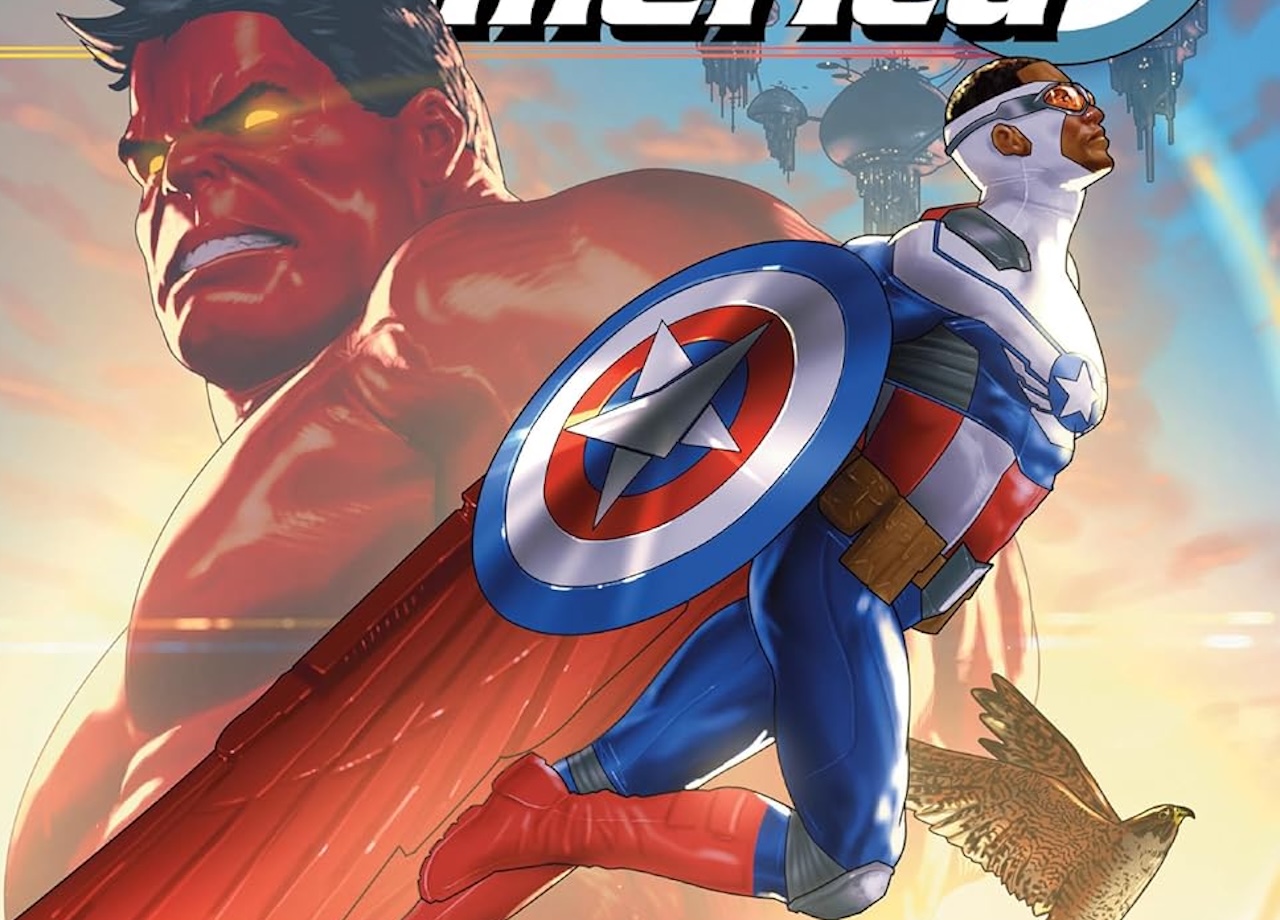

A glance at the cover of Sam Wilson, Captain America: Better Angels is all you need to know why the book was put together. The looming Red Hulk in the background marks the book as a product of brand synergy for the MCU’s lame duck (no pun intended) Captain America: Brave New World. This is a book produced to resemble that movie just enough to draw crossover fans.
There’s a lot more going on in Better Angels than synergy, however. There’s a semi-effective race identity thread running throughout the book, for one: an evil corporation targets marginalized peoples by way of mind control and farming rights long denied their ancestors.

Marvel
This is the sort of cultural injustice Sam Wilson’s turn as Captain America is best designed to battle: as a Black Captain America, he is a representative hero for the long overlooked and screwed over. The book packs itself to the gills with other Black heroes: Patriot, Shadow Soldier, minor appearances from War Machine and Storm. It attempts to be more pointedly forward than its MCU counterpart: it wants to celebrate representation and tell a story that matters.
The trouble with Better Angels lies with the conflict of that story. Stakes swing wildly, repercussions are unclear, and minor hurdles are overcome with little to no true narrative friction. Key plot aspects are buried by needless action sequences with minor, questionably produced villains, and resolutions provide little emotional movement. The evil corporation, who has created flying farming platforms, weaponizes them; we’re told, in dialogue, that there is no reversing their destructive potential. That destructive potential is immediately reversed. Problems are solved, unexplained, between issues – as when the captured Sam struggles in a fight because his wings and shield have been taken from him; he has them by his next appearance. Even this Red Hulk, implied to be a major obstacle, appears as an obstacle only once before being recruited with little to no effort. It’s a book almost designed to be frictionless, to come and go without leaving many ripples in the larger Marvel Universe – not unlike the film it was produced to synergize with.
When the book attempts to make a statement, it does so in flashback, relates it to different characters, or otherwise skips providing a meaningful voice to its not-quite-patriotic hero.
This is the frustration with recent Sam Wilson stories, which either go all-in on representation but fail to stick the landing or provide brilliant, meaningful action but fail to capitalize on the key political power inherent to the character. It sometimes feels as if Sam Wilson is either effective as Captain America or he is effective at pulling together people of color, but he is rarely effective at doing both things concurrently.

Marvel
Sam Wilson as Captain America should feel vital, important to the makeup of the Marvel Universe – or at least vital and important to his own stories. But these stories often feel as if they are being phoned in, delicately handled, or otherwise half-heartedly produced. Nothing happens in Better Angels, and some of its most exciting inclusions – Patriot, for example – serve little purpose to the plot; we need Sam Wilson stories that make statements and take definitive stances. We need Sam Wilson stories that show him being a conflicted, deep symbol of revolution and social justice.
Better Angels never quite defines itself; it certainly doesn’t define its main character.




You must be logged in to post a comment.