


When we spoke recently about We Are Pan, writer Andre R. Frattino made one especially important point:
“I don’t sacrifice history for drama.”
And across the bulk of the 184-page graphic novel, that’s mostly true. The book may invent a cast of characters — brothers Eugenio and Joaquin alongside Willie, Rosa, and Antonia — but Frattino and the team take meaningful strides to immerse us into the real-life Operation Pedro Pan. The TL;DR being that as Castro rose to power in the early ’60s, the U.S. government and Catholic Church relocated some 14,000 teens and young kids from Cuba. The We Are Pan team readily recognizes the history of the operation (and it’s actual Implications and lessons for our own “dealings” with ICE), and respects that all with a genuine depth and intensity.

Courtesy of Top Shelf Productions.
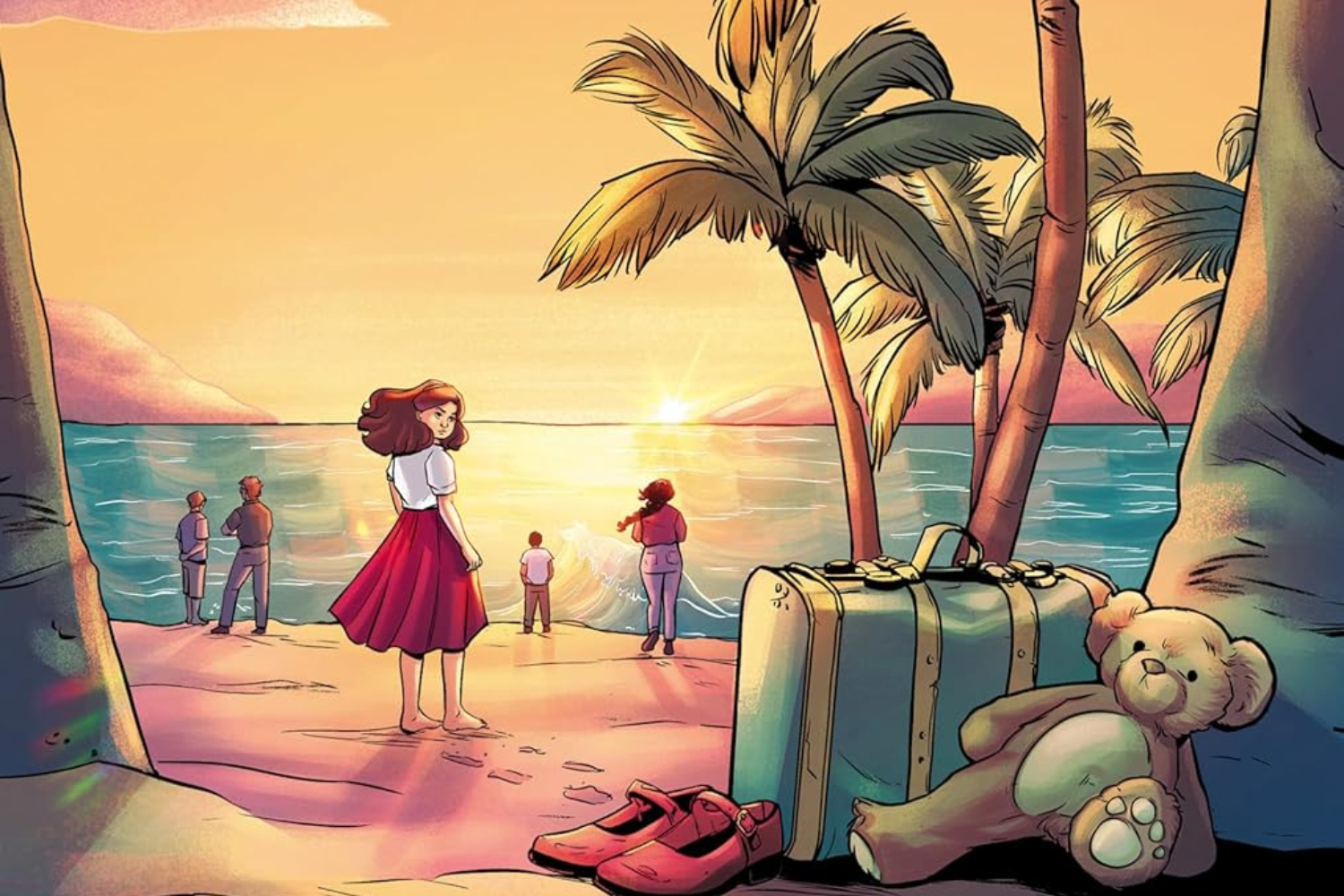
The most obvious instance of said respect and humanity is the art. Yasmín Flores Montañez has such a direct but potent style, like something from the most charming history textbook ever. (Colorist Fabi Marques deserves as much praise, and her colors capture a vividness that’s perfect for ’60s Cuba but are also contrasted with a nostalgic hue that’s the very essence of this story.) Through that lens, we get to traipse around the beaches, markets, and neighborhoods of the entirety of Cuba, feeling as if we’re right next to the kids as the revolution comes and their lives slowly beginning to evolve and complicate. Similarly, that deliberate pacing paired with that specific art style tempers our immersion, and the first half of the book locks us into the happenings in a way that’s about our emotional connection as much as it its fostering a vital historical perspective.
That dynamic extends not just in building this world, but filling it out in a way that’s accurate in all the most important ways. You feel things for our young cast because realism is the defining feature above all else. That means everyone has different ideas and end goals; Eugenio wants to go to art school in Prague, but clashes with his parents’ more grounded take; the waitress Rosa falls in love with Cesar (the cafe owner’s son) and their Romeo and Juliet act proves extra potent; and even the dreamer Antonia, who longs to be just like Elizabeth Taylor, has to eventually face reality itself. The drama isn’t just true for this specific moment, but it comes from exploring this socio-political quagmire with integrity, nuance, and commitment.

Courtesy of Top Shelf Productions.
We Are Pan is also sprinkled with these kind of “interludes,” basically the comics versions of news reels. They clue us in to the real happenings in a way that’s slightly divorced from the evocative, people-centric happenings in the kids’ daily lives. These moments feel especially huge: Not only do they explain and contextualize the struggles of our young cast with grace and precision, but together we get this unwaveringly real dissection of this story. That it happened slowly until it all exploded, and that it consumed everyone’s lives while setting friend against friend and family against family. Even that you can sympathize with everyone even if you saw them as an “enemy.” (That last bit was also hugely important — when we treat history with real respect, what we get is an honesty that connects with us above all else.)
I appreciated that We Are Pan wanted to teach us, and to empower us with the authentic and true understanding possible, Not in a way that ever felt like pandering, or divorced too much from the real personal suffering of this story. Instead, this moment, even as it may be lesser known to some of us (myself certainly included), nonetheless altered thousands of lives and is essential in understanding a huge chunk of the political happenings in the mid-20th century. This book taught us because to forget what happened here isn’t just bad for our shared history, but it makes us think that something like this can’t happen ever again.
Whereas we in America are painfully aware that time is flat circle, and this kind of shared existential suffering can happen all the time as movements shift and power diverts itself. That to be honest with the ins and outs, ups and downs of this period is to actually tell ourselves, “I see history as the story of what we were and what we will become, and I will honor that whenever I can.”

Courtesy of Top Shelf Productions.
Yet for all the historical might and power of We Are Pan‘s sustained dedication to realism, the book soars when it leaves some of that behind. The book basically shifts (toward the last 90-ish pages), and while it doesn’t abandon real-world happenings and ideas, it does become a wee bit more akin to wish fulfillment. Even the art itself takes on a slightly different quality: Marques’ colors reach a new level of bright and dreamy and endearing, bringing some of that magic from Cuba stateside in a way that expertly picked up on the longing and connective desire these kids obviously experienced. Similarly, some of the designs and look/feel of America (from Flores Montañez) circa 1961 seemed to exude some Cuban influence and energies.
Sure, it was never enough to feel overly fantastical, but again it really honed in on the emotionality of this tale, and how these kids may have felt and experienced this strange new world.
In the previous part of We Are Pan, these kids experienced not only separation and loss, but great violence and even death. (There’s a scene at the Havana airport before they left that is the right amount of exaggerated but also packed with the real-world violence and upheaval of this sustained social aggression.) Stateside, however, it was mostly family dinners, choir concerts, and watching TV. Again, there’s real suffering experienced in this time (Antonia becomes a kind of lens, and her role is dazzling here). But overall it’s about giving them hope and love and even trying to help them use their new home to overcome those lingering shards of pain and loss. And while I get anywhere would’ve beaten Cuba, this emotional empowerment feels especially overt.
Without revealing too much, things turn out well enough for our cast. It’s not all perfect, obviously, but there’s enough hugely positive developments her to call it all a happy ending where people found their dreams and their loved ones and made futures that manifested the sometimes hokey, often exaggerated promise of coming to America for a fresh start. Heck, the ending itself is basically a Peter Pan-ian fantasy, and it works to uplift when it could’ve easily felt phony and forced.

Courtesy of Top Shelf Productions.
And never once was I ever mad that We Are Pan pivoted as it did into the realm of sociopolitical fairytale. Frattino’s whole edict was never once countered — drama never once took away from history. But once most of history had already been told, that didn’t mean drama couldn’t take then hold in a magical way. I could make the comparison to dinner as a kid: The first half is the green bean casserole that gave you vitamins and made sure you became tall and strong, and the second half was the sweetest, pinkest ice cream you’ve ever head.
This book did its job — tackling a moment in time with precision and intent — but it also wanted us to feel good afterward. At some point, the story goes that 10% of kids were never reunited with their biological families. Part of me wanted to hear about that 10%, but part of me was so glad the actual figure (at least in this story) was so darn high.
Because I think if you understand history well enough, you grow and learn from it. But We Are Pan didn’t just want to honor this story with facts and perspective — they wanted to honor this spirit of it all. That you can overcome your suffering and grow because you survived the worst parts. That you can’t even make it through Hell in the first place if you don’t get to see a bit of Heaven. And that sometimes the best way to swallow the truth is with a thimble of sugar as a chaser.

Courtesy of Top Shelf Productions.
None of that denies what has come and how those vet same events and social undercurrents are very much still real in mid-2026. But it does affirm something about our larger humanity, and how we can overcome not by denying history but embracing it and keeping hold of the love, respect, and dignity that ultimately defines us. Wars aren’t won with weapons, but instead the goodness we hope we carry on our backs through even the worst of times.
We Are Pan isn’t just some historical drama; it’s history and drama, ebbing and flowing in a way that makes it possible to keep your boots in the mud and your head in the clouds. If you know the true story of Operation Pedro Pan, that fantastical turn might just make these hard lessons worth it. And if you’re coming in unaware, then maybe there’s a good case made for the true power of studying history. Either way, We Are Pan is firm in its efforts to teach us both the good and bad of ourselves, and to do so in a way that feels thoughtful and respectful without ever coming off wishy-washy.
It ain’t Neverland, but We Are Pan is a dream of a history book, that’s for sure.




You must be logged in to post a comment.