

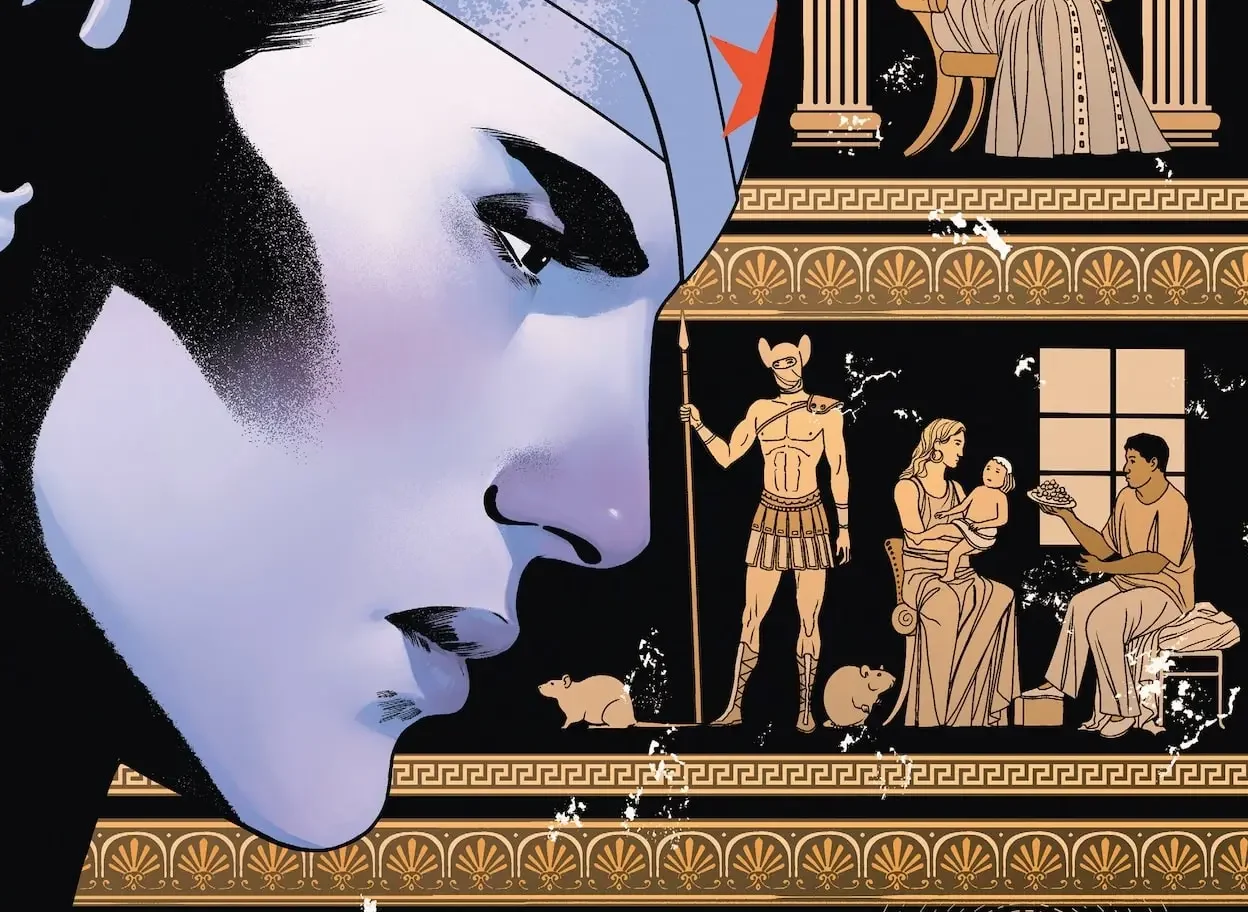

There’s a trend in superhero comics where every other character is written as incompetent or less-than, so that the protagonist is all the more exceptional in comparison. It’s a cheap trick that, unfortunately, is used to its most gratuitous effect in Wonder Woman #25. Tom King is notorious for doing this, having heroes or villains either praise whichever protagonist is in the book’s title or be punching bags for their benefit. He has done this in Penguin, Jenny Sparks, and now Wonder Woman.
Understandably, a comic book cannot give every character in it a spotlight, and superheroes don’t have to be shown in a flattering manner all the time, but this begs the question: why put them there in the first place if all their purpose is to make your protagonist look good? The end result can’t help but feel artificial. And it hurts Wonder Woman because what makes her a good character is overshadowed by superficial shows of strength. There is no ideological or internal challenge that she has to face. She’s just already the best, period, and everybody knows it — which doesn’t make for an engaging read.

DC
To start from the beginning, this issue jumps to a future 20 years later, where every DC superhero, except for Wonder Woman, is beaten by the newly introduced villain, Matriach. This is a lazy trope that attempts to make the new character seem instantly intimidating and powerful.
Instead of showing why Wonder Woman is a compelling character or why readers should be invested in Matriarch, the book just tells us through other heroes that they’re just so much better than anyone else.
The future setting is such a cop out to me that it makes the story told in the present, with Wonder Woman in Mouse Man’s territory, if not groundbreaking, look good in comparison.
Just like the previous two issues, the people in Mouse Man’s fascist state are only able to speak the phrases: “Mouse Man knows” and “mice have ears.” Tom King has used repeated phrases to great effect before. I can’t say that it’s the case here. It worked wonders in Mister Miracle, and even to a lesser but still interesting extent in Batman: I am Suicide.

DC
In the pages of Wonder Woman, it just comes off as lazy after being used for multiple pages at a time. The allegory of tyranny stripping free speech gets thin and tiring after the twentieth copy-and-paste speech bubble. By the end, there’s a payoff to the phrase, but I can’t say if it’s worth the three-issue ordeal. On the bright side, King has been the most successful at reinventing silly characters, i.e., Kite Man, rather than making new ones from scratch, and making Mouse Man a far-right influencer is a stroke of genius.
Before the last page, the present arc plants seeds for Matriarch’s apocalyptic future, and it links back to the very first issue of King’s Wonder Woman. Readers will be hooked for the next issue, no doubt. But the way this issue treats its characters, old and new, soured me on any potential future.
It’s a shame, too, since the two-hit combo of Daniel Sampere on art and Tomeu Morey on colors stuns as usual. Not to mention Jorge Fornes coming in to draw pages of the dire future, bringing a trademark darkness that works for the story.
Wonder Woman #25 looks undeniably gorgeous. Unfortunately, it is also emblematic of the series’s worst habits. Good looking but shallow, which is everything Wonder Woman is not supposed to be. A new villain is introduced at the expense of other characters, and I worry that the series has already run out of interesting things to say.




You must be logged in to post a comment.