


Introduced in Longshot #3 in 1985 by creators Ann Nocenti and Art Adams, the comically outrageous Mojo is one of X-Men’s most infamous and loathsome villains ever conceived. Obsessed with the endless pursuit of new and exciting content for his endless stream of television programming, Mojo was a portentous prediction of the rise of reality television and a media landscape in which ratings are more important than creativity and artistic achievement.
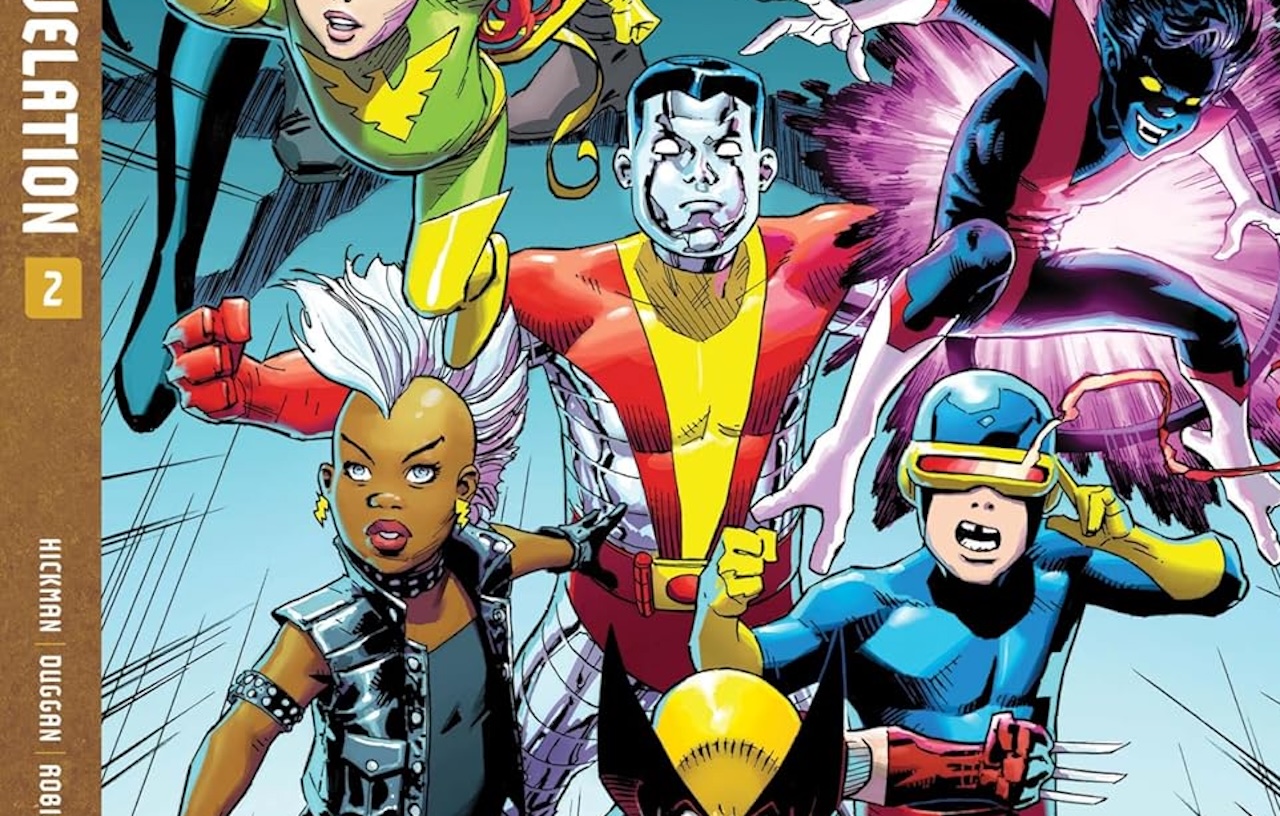
Mojo returns in the pages of Longshots #1 to once again grace the X-Men with his unpleasant face. In this miniseries, Mojo is determined to produce a new hit TV show after the detonation of 3K’s gene bomb that devastated the planet and left no television networks remaining. In order to create his new show, Mojo casts a peculiar cast of familiar faces from the Marvel universe: Bishop, Hellcat, Wonder Man, Kraven, and Rhino. Together, they are dubbed the “Longshots”, much to the chagrin of Longshot, who doesn’t take kindly to Mojo “borrowing” his name in this way. Mojo also recruits the adorable “X-babies”, pint-sized versions of the X-Men, to help with production.

Marvel Comics
Longshots #2 kicks off with Spiral barging into the Office of Subscriber Data, demanding a certain file from “baby Uatu”, suspecting password sharing and that she and Longshot are victims of a conspiracy. Meanwhile, the Longshots have arrived at a mysterious metal structure. A message on the door in Krakoan script reads “Just knock twice”. The Longshots do not operate very well as a team, partially due to being gathered together against their will, and also because the Longshots are a mix of strong personalities that do not mesh very well. However, part of the fun of this book is watching those personalities clash with one another.

Marvel Comics
The Longshots also have trouble trusting each other. Specifically, Wonder Man suspects that Bishop is hiding something, due to Bishop saying odd things and having a metal arm that bears an uncanny resemblance to Cable’s metal arm. Wonder Man also suspects that Bishop painted Cable’s arm to make it look more like Bucky Barnes’ metal arm. After Bishop forcibly enters the structure, we see him talk to someone off-panel, and then an explosion obliterates Bishop (R.I.P.), leaving only the metal arm. Kraven and Rhino then fight over which of them gets to claim the arm. After they both grab onto the arm, the pair disappear in a flash of blinding light, leaving only Hellcat and Wonder Man.
Mojo is furious at this new development, exclaiming that Wonder Man and Hellcat cannot lead a series, which is ironic considering that the Wonder Man series will premiere on Disney+ on January 27th, 2026. With no cast and nowhere else to turn, a desperate Mojo is forced to agree to Longshot and Spiral’s terms. Will Longshot finally make his triumphant return as a member of the “Longshots”? What twists will Mojo throw at this motley crew of hastily assembled heroes and villains? Tune in next month for an exciting conclusion in Longshots #3.
Loaded with satire and humor, the major strength of this book is the comedy. With joke after joke, beat after beat, and bit after bit, Gerry Duggan and Jonathan Hickman have brought to us a Mojo story that is as fun as it is entertaining. Longshots is not precious with its characters or source material and is not afraid to poke fun at or make light of the Marvel universe. The book never takes itself too seriously and consistently delivers what is promised: outlandish humor and violence that borders on cartoonish. Despite the Longshots being the central protagonists of the book, they are more secondary characters in service of Mojo and his story. Like any good Mojo series, this book works as an effective commentary on the current media landscape in which network television is becoming less relevant as social media becomes the main source for content, news, and entertainment. Even Mojo, master of television that he is, struggles to adapt in this changing landscape.




You must be logged in to post a comment.